

14 min 18 sec
Available in: English
 ไทย
EnglishไทยHit Refresh: The Quest to Rediscover Microsoft’s Soul and Imagine a Better Future for Everyone
Satya Nadella shows how listening, empathy and openness to rivals helped him rebuild trust inside a struggling Microsoft. He also argues that companies must automate responsibly, and he draws his lessons from cricket, migration and fatherhood.
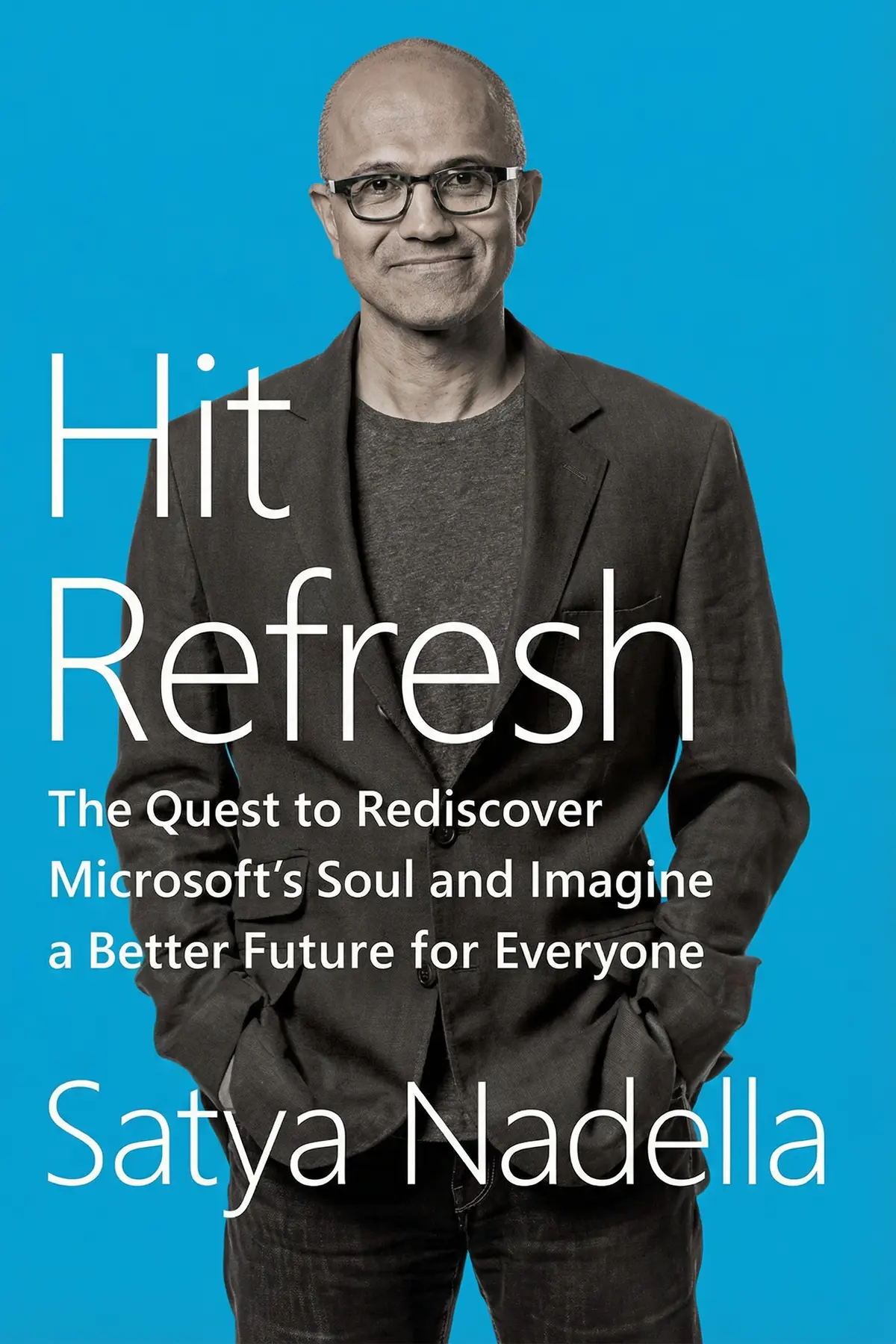
Table of Content
1. Introduction
50 sec
Many managers assume leadership is a toolkit you learn in business school. In Hit Refresh, Satya Nadella, Microsoft’s third CEO, traces his own style to a cricket field in Hyderabad and to the hospital wards where he sat beside his disabled son. In 2014 he took over a company whose own staff doubted it could still innovate, and he turned it around with the habits those places had taught him.
His story makes one case. The skills that renewed Microsoft were human ones, trust inside the company and openness outside it, and they grew out of ordinary life. Follow him from a cricket-mad boy to the CEO’s office and you get a working model for leading a team that has stopped believing in itself. You also get a clear position on automation and the jobs it should create.
2. Say yes to the move that scares you
1 min 42 sec
A teenager who cared only about cricket ended up studying computing in a freezing American city he never planned to see. The choice that sent him there came down to a long shot and a pile of sweaters.
3. Three cricket rules for leading under pressure
1 min 52 sec
A frightening opponent, a sulking star and a captain who gave the ball away each left a mark on a future CEO. Together they make up a leadership code that never mentions business.
4. Rebuild a broken team by listening first
1 min 49 sec
Microsoft wanted to overtake Amazon in the cloud, but its own unit leaders had stopped talking to each other. The fix Nadella chose was so simple that most managers would skip it.
5. Lead with empathy to become a stronger leader
1 min 47 sec
Years of intensive care wards taught Nadella that some problems have no fix. Then, on one hospital visit, he looked at the machines keeping his son alive and saw his own company’s software.
6. Turn a company around by meeting its customers
1 min 54 sec
Five smartphones were shipping for every PC, and most Microsoft employees thought their company had lost its way. The new CEO’s answer started with an email and a field trip.
7. Treat rivals as partners and both sides gain
1 min 37 sec
In front of a stunned audience, Microsoft’s new chief pulled out a rival’s phone and praised it. What looked like a stunt was the opening move in a partnership few had thought possible.
8. Automate your work without leaving people behind
1 min 44 sec
Workers everywhere fear machines will take their jobs. A small bicycle company in South Carolina found that automation could bring work home, as long as someone took responsibility for what came next.
9. Conclusion
1 min 03 sec
Hit Refresh adds up to a claim that leadership is personal. Nadella renewed Microsoft by bringing habits from a cricket field and a hospital ward into a company that had lost faith in itself. Look past your awe of a stronger opponent. Put the team first. Hand the ball back to someone whose confidence is low. Remember the person on the other end of your work. Those habits lie behind a $20 billion cloud business, an iPhone held up on a Microsoft stage and a view of automation that counts the workers.
You can start small, and soon. If the people you lead have stopped talking, sit with each one and hear their concerns before you announce anything. If your work feels far from the people it serves, go and meet them, the way Microsoft’s teams met teachers and hospital staff at their retreat. And when a rival owns the platform your customers love, think about building for it.
The boy who once wanted only to play cricket became Microsoft’s third CEO, and he never stopped playing for the team.
About this book
What is this book about?
When Satya Nadella became Microsoft's third CEO in 2014, the company was losing ground. Smartphones were replacing PCs, and most of its own employees believed it was heading the wrong way. Hit Refresh is his account of how he set out to change that, and of where his way of leading came from. Nadella traces his methods to everyday life. Cricket in Hyderabad taught him three rules: compete when you feel outmatched, put the team first and play to your teammates' strengths. Moving to Wisconsin opened his view of the world. The birth of his son Zain, who has lifelong disabilities, taught him empathy and showed him how much depends on technology working. The book follows those lessons into business. He rebuilt a cloud team whose leaders had stopped talking and turned it into a $20 billion business. He sent Microsoft's teams out to meet customers and held up an iPhone on stage to signal a truce with Apple. Readers get a human model of leadership, practical ways to rebuild trust in a team, and a sober argument that companies which automate jobs owe their workers new and better ones.
Book Information
Who it's for
Managers of distrustful teams
Managers who have inherited a team that has stopped talking or trusting each other.
Leading through market shifts
Founders and executives trying to steer a company whose market is moving away from it.
Curious about Nadella's rise
Professionals curious how a cricket-loving engineer from Hyderabad came to lead Microsoft.
About the Author
Satya Nadella
Satya Nadella was born in 1967 and left Hyderabad, India, on his 21st birthday to study for a master's degree in computer science in the United States. He joined Microsoft in 1992 and led a range of consumer and enterprise products. He then ran the company's cloud and enterprise group before succeeding Steve Ballmer as CEO in 2014. He became chairman in 2021. He holds three degrees, including an MBA from the University of Chicago. He is a husband, a father and a keen cricketer.
Ratings & Reviews
Ratings at a glance

What people think
Listeners find this work offers excellent perspectives on business and leadership, with one review praising its remarkable examination of the modern world. Furthermore, the writing is high quality and listeners deem it a valuable resource, especially for those in senior leadership roles. They appreciate the transparent and motivating material, and one listener pointed out its emphasis on empathy within the corporate sphere. Additionally, Satya Nadella’s personal story is captivating, and listeners prize the title's outlook on technology and how it depicts significant global transformations.
Top reviews
Chon
Finally got around to reading this, and the focus on empathy is truly refreshing in an industry often defined by ruthless competition. Nadella’s story is not just about software; it is about the fundamental human connections that power innovation and progress. I was deeply moved by how his personal challenges as a parent shaped his leadership philosophy at Microsoft. Seeing him hold an iPhone on stage to demonstrate cross-platform collaboration was a pivotal moment for the brand’s image. This book captures that spirit of transformation perfectly, showing that even the largest ships can turn if the captain is willing to listen. The insights into the future of artificial intelligence and quantum computing are mind-bending and essential for understanding the next decade. It is an honest, inspiring look at a man who successfully hit refresh on a legacy company. Truly a must-read for any modern leader.
Show moreEmma
What an incredible analysis of the world today and where we are headed with the rapid advancement of artificial intelligence. Satya Nadella has a unique ability to weave personal anecdotes from his upbringing in India with high-level business strategy and ethical considerations. This book is a masterclass in leadership, showing that being 'soft' on culture can actually lead to being 'hard' on results. I was especially struck by the honesty with which he discusses his early years at the company and the mistakes made along the way. The focus on building a collaborative ecosystem—even with competitors—is a lesson every modern business should take to heart. It’s an inspiring journey that highlights how empathy and a growth mindset can transform even the most rigid organizations. For senior leaders, this is an essential guide to the future. It is well-written, deeply thoughtful, and surprisingly humble.
Show moreSupaporn
Satya Nadella presents a surprisingly human perspective on what it means to lead a tech giant through a period of stagnation. The book centers on the idea of empathy, not just as a soft skill, but as a core business driver that helps teams rediscover their 'soul.' I found the sections on his childhood in India and his love for cricket to be particularly grounding, providing a lens into his resilience. However, there are moments where the prose feels a bit like a polished corporate brochure, smoothing over some of the rougher edges of the company’s history. Despite that, it remains a worthwhile read for anyone interested in organizational change and the future of the cloud. It’s rare to see a CEO be this vulnerable about their personal life, especially regarding his son's health. This vulnerability makes the transformation of Microsoft feel more authentic and less like a simple marketing stunt.
Show morePairot
The chapter on the intersection of technology and privacy alone is worth the price of admission for this book. Nadella handles the complex relationship between big tech, government surveillance, and user trust with a surprising amount of nuance and foresight. He argues that for technology to be truly beneficial, it must be trusted, and that trust is earned through transparency and empathy. This isn’t just a book about Microsoft; it’s a meditation on how we should navigate the upcoming age of AI and ubiquitous computing. I appreciated the specific details regarding their legal battles over data privacy and the collaborative shift toward working with old rivals. The prose is clear and accessible, though it does occasionally repeat its core themes a few too many times. Still, it’s a fascinating behind-the-scenes look at how a legacy brand reinvented itself for the cloud era. Highly recommended.
Show moreSuthee
As someone who has followed Microsoft’s trajectory for years, seeing the shift in 'soul' described here is fascinating and quite revealing. The transition from the aggressive, siloed culture of the past to a more collaborative, 'learn-it-all' environment is the heart of the story. Nadella uses the metaphor of 'hitting refresh' effectively, showing how legacy companies can reinvent themselves without losing their original purpose. I particularly enjoyed the sections where he discusses the global economic impact of technology and the need for inclusive growth. There is a sense of genuine curiosity in his writing that makes even the denser technical subjects feel engaging. Some might find the tone a bit too smoothed out, but the strategic insights provided are invaluable for anyone in a leadership role. It’s a book that asks big questions about where we are going as a society.
Show moreRin
Picked this up on a whim and was struck by how much the psychology of cricket influenced Nadella's management style. He draws fascinating parallels between the pitch and the boardroom, emphasizing teamwork, resilience, and the importance of supporting your teammates. The central theme of empathy being the bedrock of innovation is powerful, and he makes a compelling case for it throughout the text. I also appreciated the deep dive into how Microsoft is positioning itself as a leader in AI and quantum computing while trying to maintain user privacy. The writing is simple and direct, which makes it easy to digest despite the complex subjects involved. There are a few sections that feel a bit too much like a sales pitch for Azure, but the overall message is strong. It’s a thought-provoking look at how a massive corporation can find its way back to being relevant and innovative.
Show moreSomchai
Is this a business manifesto or a personal memoir? It struggles to decide, often pivoting between deep dives into AI policy and nostalgic reflections on cricket fields in Hyderabad. While I admire the shift toward a 'growth mindset' that Nadella has spearheaded, the tone can occasionally come across as a bit superior. Frankly, the narrative feels sanitized for a public audience, skipping over the more grueling aspects of corporate restructuring. It’s an informative read for those curious about how Microsoft survived the mobile revolution, yet it lacks the raw honesty found in other business biographies. If you are an employee, you’ll likely find it inspiring, but outsiders might feel the PR vibe is a bit heavy. The technical sections on privacy and the Snowden era were the highlights for me. I just wish there was a bit more grit to the story.
Show moreSuvannee
Look, I appreciate the optimism, but the narrative feels a little too corporate at times for my personal taste. Nadella is obviously a visionary, and he has done an incredible job steering the Microsoft ship away from the rocks of the early 2010s. However, the book often leans into a 100% PR style that makes it difficult to find the actual person behind the CEO title. The constant repetition of the word 'empathy' starts to lose its impact by the middle of the book, feeling more like a branding exercise than a lived reality. That said, the reflections on how cricket taught him about team dynamics and individual resilience are quite charming. It’s a solid book if you want a high-level overview of Microsoft’s current strategy and philosophical shift. Just don't expect a deep, warts-and-all confession about the struggles of the tech world. It’s a very safe, professional read.
Show moreSebastian
Truth is, I expected more behind-the-scenes drama regarding the transition from the Ballmer era to his own tenure. While there are some interesting observations on culture change, much of it feels like a very long memo to employees rather than a gripping memoir. The book is at its best when Nadella talks about his personal life, specifically his children, which adds a layer of depth I didn't expect. Those moments of vulnerability are the highlights, but they are often buried under pages of corporate-speak and buzzwords. The discussion about the Snowden whistleblowing and its impact on the cloud industry was informative, if a bit dry. It’s not a bad book by any means, but it does feel like it was written with a heavy hand from the communications department. I would recommend it for Microsoft enthusiasts, but casual readers might find it a bit too focused on company-specific initiatives.
Show moreMaksim
To be fair, this felt more like a long internal memo than a book intended for a broad, diverse audience. While Nadella speaks eloquently about culture and 'empathy,' his vision seems to exclude a massive portion of the workforce—the contractors and vendors who keep the lights on. It’s hard to swallow a message about a unified company soul when thousands of workers are treated like second-class citizens without access to the 'culture' he praises. The writing is technically sound but lacks the vulnerability needed to make the 'empathy' theme feel like more than just a buzzword. Look, the guy is clearly brilliant, and he has done wonders for the stock price, but this book is too polished. It glosses over the friction and pain that usually accompanies such massive organizational shifts. I wanted more anecdotal evidence and fewer grand proclamations about the future.
Show moreQuestions about this book
What is Hit Refresh by Satya Nadella about?
It is Nadella’s account of his life and of his effort to renew Microsoft after he became CEO in 2014. He traces his leadership style to everyday experiences: cricket in Hyderabad, moving to Wisconsin and raising his son Zain, who has lifelong disabilities. He argues that trust inside the company and openness toward customers and rivals were what brought Microsoft back.
What leadership lessons did Nadella learn from cricket?
He names three rules. Compete even when you feel intimidated, as he learned when a coach made him study a strong Australian batsman up close. Put the team first, a lesson from a gifted bowler whose sulking hurt his side. And know your teammates’ strengths, which he learned when a captain handed the ball back to him after a bad spell and he went on to take seven more wickets.
How did Nadella turn Microsoft's cloud business around?
When he took over the Server and Tools Business in 2011, its leaders worked in isolation and had stopped communicating. He began by meeting each one alone and asking about their worries and problems. Those conversations rebuilt trust and openness in the group. Within six years, Microsoft’s cloud business was worth $20 billion, even though Amazon had led the market when he started.
What does Hit Refresh say about automation and jobs?
Drawing on MIT economist Daron Acemoglu, Nadella argues that the real danger is automation removing more jobs than it creates. Companies that automate have a responsibility to create new skilled jobs. His example is Kent International, a bicycle firm that used automation to bring 140 jobs from China back to Manning, South Carolina, in 2017 and now plans to add 40 positions a year.
How can I apply the ideas in Hit Refresh at work?
Start by listening. If your team has gone quiet, hold a private conversation with each person before changing anything. Send your team to meet the customers they serve, as Microsoft did at its annual retreat. Consider working with competitors where your customers already are, as Nadella did with Apple. And before automating a task, plan what better work the people doing it will move to.
Readers also enjoyed


A Bigger Prize: How We Can Do Better Than the Competition
Margaret Heffernan

A River in Darkness: One Man’s Escape from North Korea
Masaji Ishikawa


A Spy Among Friends: Philby and the Great Betrayal
Ben Macintyre




A Year in the Life of William Shakespeare: 1599
James Shapiro
AUDIO SUMMARY AVAILABLE
Listen to Hit Refresh in 15 minutes
Get the key ideas from Hit Refresh by Satya Nadella, plus 5,000+ more nonfiction titles.
- 5,000+ titles
- Listen as much as you want
- 7-day free trial
- Cancel anytime









