
13 min 45 sec
Available in: English
 ไทย
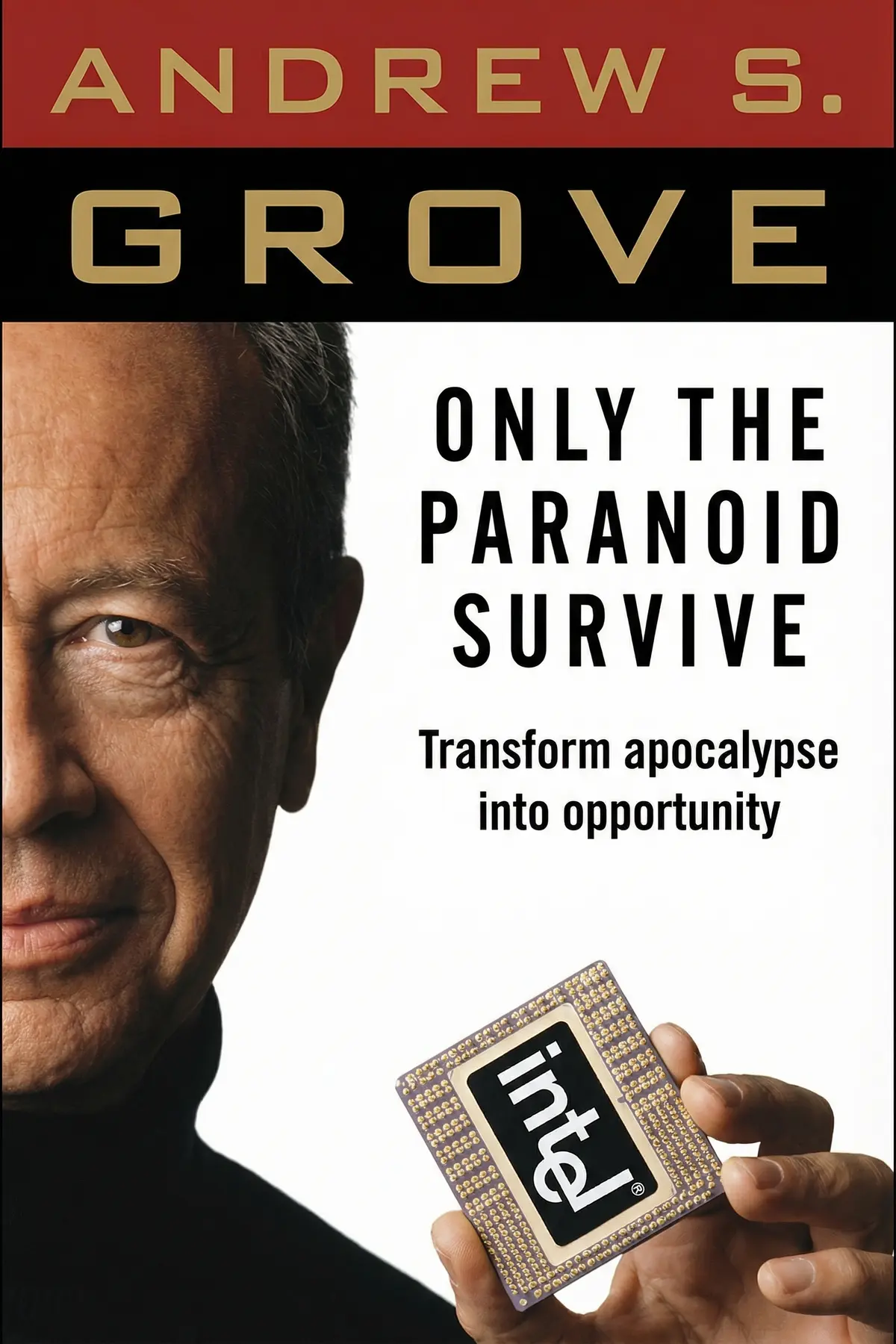
EnglishไทยHigh Output Management
Shows managers how to raise their team's output by treating work as a production process. You learn which numbers to watch, how to use meetings and how to fit motivation and supervision to each person.
Table of Content
1. Introduction
56 sec
A manager is judged on her own skills and performance, yet Andrew S. Grove says what her team achieves counts toward her rating as well. In High Output Management, the former Intel chief executive makes that case with an unlikely model: a waiter serving a boiled egg, toast and coffee on time, at the right quality and without wasting money. The breakfast, in his view, captures what managing production really involves.
The argument runs like this. A manager raises output by treating work as a production process and people as individuals. That means finding the slowest step, watching a few honest numbers, using meetings to learn and decide, and matching motivation and supervision to each person.
Grove’s tools are small enough to try this week. They range from five numbers to read each morning to a single question that tells a skills problem apart from a motivation problem.
2. Find the slowest step and plan around it
1 min 38 sec
A breakfast order looks trivial, but it holds every demand a factory faces. One step in it sets the timing for everything else, and a manager has to weigh each possible fix for a jam by what it costs.
3. Read five numbers each morning to see everything
1 min 32 sec
No manager can be in the storeroom, the kitchen and the dining room at once. Grove’s fix is a short morning report, but the numbers only start talking when you read them a particular way.
4. Your real score is what your team delivers
1 min 30 sec
A manager can plan perfectly, spot every error and still fail. Grove names the three duties that decide whether a team performs, and one of them cannot be done through emails or announcements at all.
5. Make meetings the place where managing gets done
1 min 49 sec
A famous management thinker called heavy meeting schedules a sign of disorder. Grove disagrees, and his reasons change how you might view a calendar that is half full of conversations.
6. Tell a skill gap from a motivation gap
1 min 47 sec
When someone keeps falling short, managers often guess at the cause and pick the wrong remedy. Grove’s test involves a violin, a long run and an imagined emergency, and it takes seconds.
7. Raise effort with a scoreboard and a coach
1 min 37 sec
Intel’s cleaning crews did poor work for years before anything changed. What finally improved every building offered no reward beyond beating the other teams, and it says a lot about how a manager should behave after a win.
8. Loosen supervision as each person's readiness grows
1 min 48 sec
Decades of research never crowned one best management style. Grove points instead to one measure that tells you how closely to guide a person, and it can change from one task to the next.
9. Conclusion
1 min 08 sec
Grove’s picture of management is plain and practical. The manager runs a production line made of people, and her own output is whatever that line produces. Her real work is finding where it slows, reading the signs before trouble spreads and giving each person the right mix of challenge, feedback and freedom.
Some of this can start tomorrow. Pick the five numbers you want on your desk each morning and pair each with another that keeps it honest. When someone falls short, ask whether they could do the work if everything rode on it, and let the answer point you toward training or toward motivation. Before handing out a task, judge the person’s maturity for that task alone.
Grove also leaves a question every manager must answer personally: can you be friends with the people you manage? His test is to imagine giving a close friend a critical performance review. If you could do it honestly, the friendship may even strengthen the working relationship. If not, keep some distance.
In every kitchen, the egg sets the pace for the whole breakfast. A good manager knows which egg that is.
About this book
What is this book about?
Many managers feel pulled in every direction. They are expected to plan, decide, listen, motivate and fix problems, all at once. Andrew S. Grove, who helped build Intel into the world's largest semiconductor maker, offers a calmer way to see the role. A manager is rated on the team's achievements as well as her own, and the work behind them behaves like a production line. Grove explains the idea through a simple breakfast order: a boiled egg, toast and coffee, served on time, at good quality and low cost. From there he builds a practical method. Find the slowest step and plan around it. Read a handful of indicators every morning and compare them in pairs. Treat meetings as the main tool of management, not a distraction from it. The second half turns to people. Grove gives a one-question test that separates a skills problem from a motivation problem, explains why money stops motivating past a certain point, shows how friendly competition lifted performance at Intel, and introduces task-relevant maturity, a way to decide how closely to supervise each person on each task.
Book Information
Who it's for
New managers feeling stretched
New managers promoted from strong individual work who feel pulled in every direction.
Leads wanting better one-on-ones
Team leads who want a clear way to diagnose underperformance and run better one-on-ones.
Leaders of growing teams
Founders and operations managers looking for simple numbers and habits to keep a growing team productive.
About the Author
Andrew S. Grove
Andrew S. Grove was born in Hungary in 1936 and left at 20 during the 1956 revolution, finishing his education in the United States. He was Intel's third employee and later its third CEO, leading it to become the world's largest semiconductor maker. Time magazine named him Man of the Year in 1997. He also taught at the Stanford University Graduate School of Business and died in 2016.
Ratings & Reviews
Ratings at a glance
What people think
Listeners find this management resource exceptionally helpful for its practical guidance and frameworks, labeling it an essential read for anyone leading a team. It delivers a superb summary of foundational management principles, remains simple to digest, and stays pertinent across any business sector. Listeners value the clear, punchy prose and logical arrangement, as one listener pointed out its talent for deconstructing complicated organizational theories. Listeners also respect the book’s sincerity, with one listener remarking that it is 100% based on experience.
Top reviews
Caleb
This book is essentially the holy grail of Silicon Valley management for a reason. Andy Grove writes with the precision of the engineer he was, stripping away the usual corporate fluff to focus on high-leverage activities. I particularly appreciated the section on 'managerial leverage' and how it redefined my view of meetings. Instead of seeing them as time-wasters, Grove treats them as a platform for increasing the output of the entire organization. Some readers might find the manufacturing analogies a bit dated, but the core logic remains flawlessly applicable to modern knowledge work. It is a dense read, yet every paragraph offers a practical framework you can implement tomorrow. Frankly, it’s refreshing to read a leadership book that prioritizes actual results over vague inspirational quotes. If you are responsible for the output of others, this is non-negotiable reading.
Show moreSirirat
Picked this up after seeing it on every 'must-read' list for tech leads, and it lived up to the reputation. The breakfast factory metaphor at the start is a brilliant way to explain production flow and identifying the 'limiting step' in any process. While Grove’s tone is very methodical and clinical, that’s exactly what makes it so useful for people who hate traditional management speak. He treats a team like a system that can be optimized through training and clear objectives. The chapter on one-on-ones alone is worth the price of the book. I realized I had been running my meetings all wrong for years. To be fair, the mentions of 'state-of-the-art' 1980s technology are a bit funny now, but the human psychology elements haven’t aged a day. It is an absolute masterclass in organizational efficiency.
Show moreNoi
Ever wonder why certain companies scale while others collapse under their own weight? Grove provides the answer by focusing on the manager’s output as the sum of their subordinates' results. This shift in perspective is simple yet profound. I loved the emphasis on training as a high-leverage activity; most managers today outsource training, but Grove argues it’s one of the best uses of your time. The book is structured logically, moving from basic production principles to complex organizational structures. Even the sections on Maslow’s hierarchy felt fresh because they were tied to actual business outcomes rather than just abstract theory. It’s a concise, no-nonsense guide that respects your time. I’ve already recommended it to three of my colleagues who are struggling with their team’s productivity. This is 100% based on real-world experience.
Show moreLuckana
Wow. I didn't expect a forty-year-old business text to feel this immediate and applicable to my daily grind. Grove has an amazing clarity of thought that most modern business gurus lack. He doesn't hide behind buzzwords; instead, he uses simple metrics to measure success. The idea that a manager should be a teacher and a role model is woven throughout the entire text. I found his discussion on 'managerial meddling' versus 'monitoring' to be a very helpful distinction. It's so easy to slip into micromanagement, but Grove provides a framework to avoid that trap while still maintaining high standards. This book is a must-read for anyone in a leadership position, regardless of the industry. It’s short, punchy, and packed with actionable advice that has stood the test of time.
Show moreSue
Finally got around to reading this classic, and it’s clear that Grove’s genius lies in his ability to simplify the complex. He takes the messy reality of human interaction and applies a logical framework that just makes sense. The concept that 'reports are more a medium of self-discipline than a way to communicate information' was a total 'aha' moment for me. It changed how I view the weekly updates I ask from my team. Every sentence feels intentional and weighted with years of experience on the front lines of one of the world's toughest industries. Personally, I think every new manager should be handed a copy of this on their first day. It won't tell you how to inspire people with a speech, but it will tell you how to run an organization that actually works. It is the ultimate handbook for the pragmatic leader.
Show moreGiulia
After hearing Ben Horowitz rave about Andy Grove for years, I finally dove into the source material. It’s a fascinating look at the internal engine of Intel during its most pivotal years. The most impactful takeaway for me was the concept of Task-Relevant Maturity. It explains why a great employee might struggle when given a new project and how your management style must adapt to their specific experience level. My only gripe is that the writing is dry as sand and crackers, making it hard to power through more than twenty pages at a time. It’s not a breezy beach read by any means. But the practical advice on performance reviews and giving negative feedback is pure gold. It’s an essential manual for anyone who wants to move beyond just being a 'boss' and actually start building a high-performing team.
Show moreTuck
As someone transitioning from an individual contributor to a lead role, Grove’s systematic approach was exactly what I needed. He doesn't just tell you to 'be a leader,' he gives you the specific algorithms for how to spend your day. The advice on how to handle a disgruntled employee who is planning to quit was particularly eye-opening. However, I’ve got to say that some of the manufacturing examples felt a bit disconnected from my world of software development. It takes some mental effort to translate his assembly line logic into the creative chaos of a modern startup. Still, the core principles regarding delegation and monitoring are universal. It’s a well-structured book that cuts through the noise. Just be prepared for a very dry, engineering-focused prose style that requires your full concentration.
Show moreJoshua
The chapter on 'The Players' really changed my perspective on how to handle motivation within a team. Grove uses Maslow's hierarchy to explain why salary raises eventually stop being a primary motivator for high achievers. He argues that once basic needs are met, people are driven by self-actualization and the need to 'beat the clock.' This insight alone helped me rethink our compensation and recognition strategies. While some of the middle chapters on organizational structure felt like they were written specifically for 1980s middle managers at large corporations, the ending is incredibly strong. He reminds us that we are all 'sole proprietors' of our own careers. In my experience, this is one of the few management books that actually lives up to the 'cult classic' label. It’s a bit of a slog in the middle, but the gems are worth the effort.
Show moreGai
Not what I expected given the insane hype this gets in startup circles. Look, I understand why CEOs love this—it treats employees like components in a machine that can be tuned for maximum output. However, as an individual contributor, I found the tone a bit cold and lacking in empathy. Grove’s 'thou shalt' style feels like a relic of a different era where the boss's word was law. The terminology is also strangely archaic, using words like 'chairman' for simple meeting organizers. While the concepts like Task-Relevant Maturity are intellectually interesting, the book is littered with complex diagrams that make simple ideas feel like a calculus midterm. It is definitely dated in parts, especially when he discusses the 'cutting edge' potential of email. It’s worth a skim for the historical context, but there are more human-centric management books available today.
Show moreJoseph
Truth is, I found the prose incredibly dry and the manufacturing analogies a bit of a stretch for my creative team. While I respect Andy Grove's legacy at Intel, this book reads like a technical manual for a piece of heavy machinery. Everything is about optimization, metrics, and 'output,' which can feel a bit dehumanizing if you aren't careful. He sees people as variables in an equation. To be fair, some of the advice on conducting meetings and performance reviews is solid, but you could probably find the same tips in a ten-minute YouTube summary. The book is lauded as a masterpiece, but it often confuses 'simple' with 'easy.' Many of his suggestions, like 'training your subordinates,' are obvious in theory but incredibly difficult in practice. It’s a decent historical document, but I prefer management books with a bit more heart and modern context.
Show moreQuestions about this book
What is the main idea of High Output Management?
Andrew S. Grove argues that a manager’s output is the output of the team. He treats work like a production process, explained through a simple breakfast order, and asks managers to find the slowest step, watch a few key indicators and catch problems early. He then turns to people: motivating them, using meetings well and adjusting supervision to each person’s experience with a given task.
What is task-relevant maturity in High Output Management?
Task-relevant maturity, or TRM, combines a person’s drive toward responsibility and achievement with their education, training and experience. It depends on the task, so someone can be highly mature in sales and inexperienced in production. Grove advises detailed instructions when TRM is low and less involvement, with continued monitoring, as it rises, much as parents give a teenager more freedom than a toddler.
How does Andrew Grove tell a skills problem from a motivation problem?
He proposes asking if the employee would be able to carry out the job when facing a threat to their own survival. If yes, the issue is likely motivation, since a person could run six miles to escape danger even if out of shape. If no, the issue is skill, since no one can play the violin well without training. The answer tells you whether to train the person or change their working conditions.
What does High Output Management say about meetings?
Grove treats meetings as the medium through which management works, not a waste of time. He separates mission-oriented meetings, called to solve a specific problem and decide, from process-oriented meetings held regularly to share information. The one-on-one is his key example: about an hour, weekly for inexperienced staff, held near the employee’s desk, where the workspace itself reveals how organized or interrupted they are.
Featured in
Readers also enjoyed




A Year with Peter Drucker: 52 Weeks of Coaching for Leadership Effectiveness
Joseph A. Maciariello



Acting with Power: Why We Are More Powerful Than We Believe
Deborah Gruenfeld

All In: How Great Leaders Build Unstoppable Teams
Mike Michalowicz


AUDIO SUMMARY AVAILABLE
Listen to High Output Management in 15 minutes
Get the key ideas from High Output Management by Andrew S. Grove, plus 5,000+ more nonfiction titles.
- 5,000+ titles
- Listen as much as you want
- 7-day free trial
- Cancel anytime









