

A Planet of Viruses
Carl Zimmer
 English
 ไทย
Giulia Enders explains how the gut digests food without your conscious help, why it growls, where allergies and lactose intolerance may begin, and how its microbes may shape mood and cravings, plus which foods feed them.
1 min 01 sec
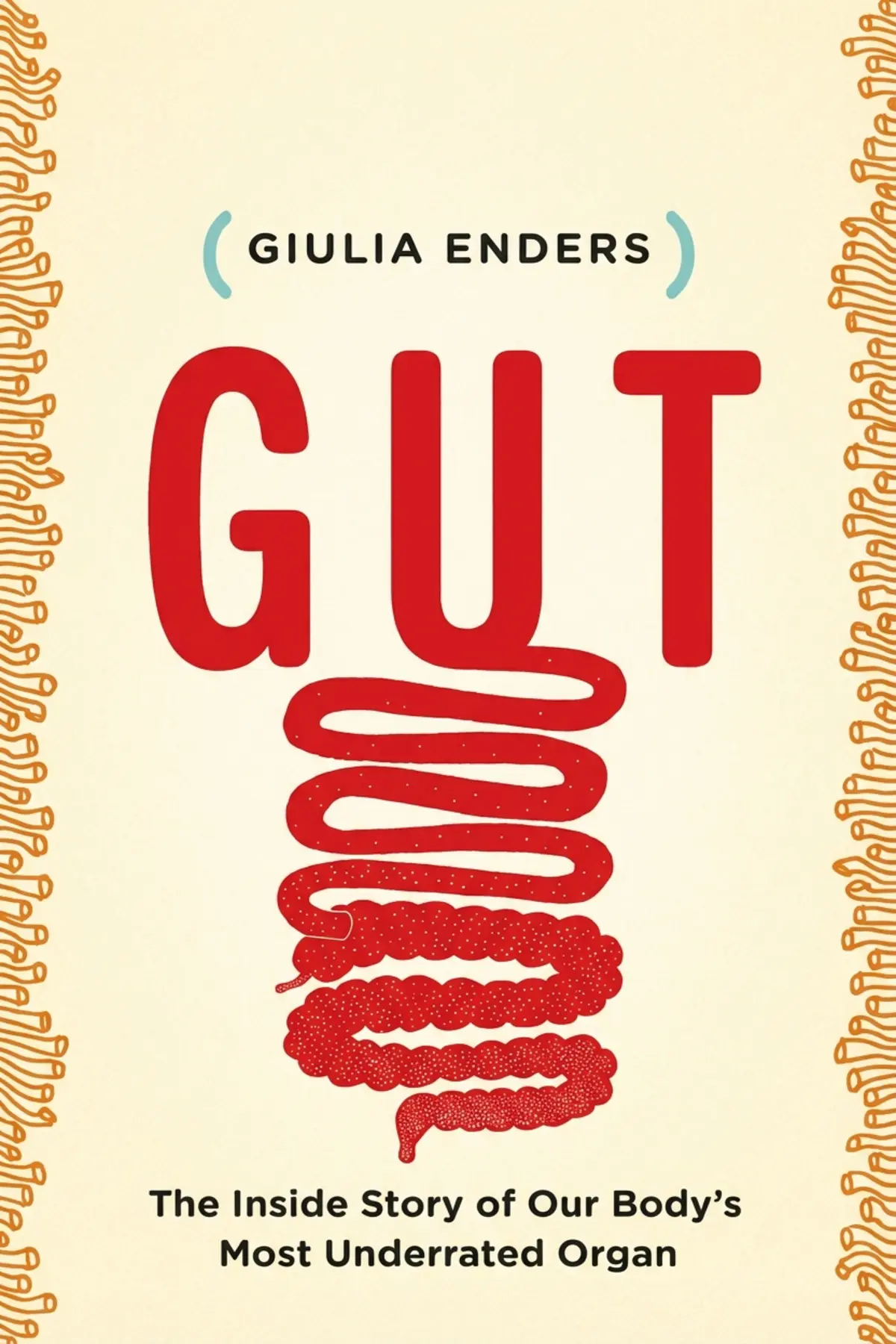
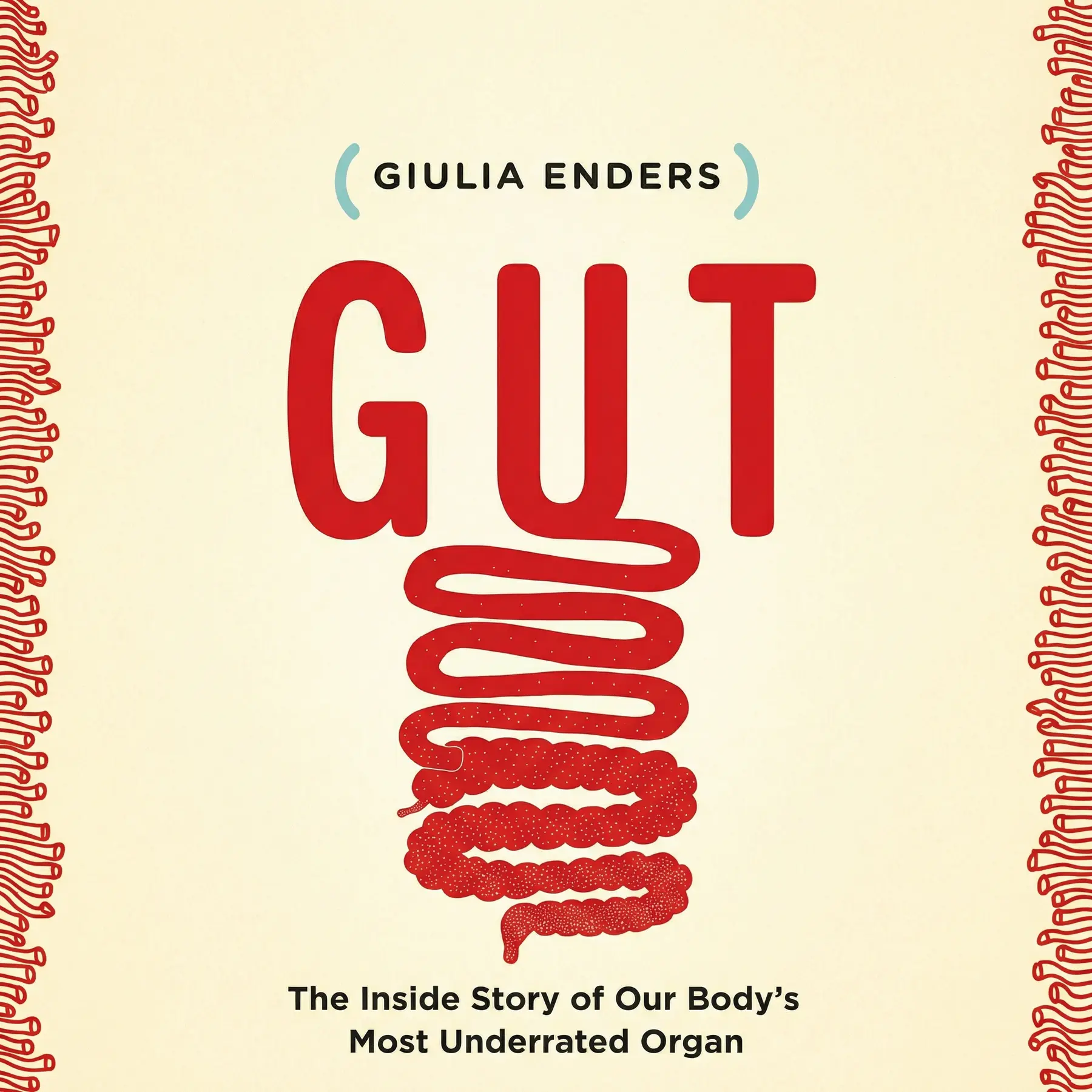
Most of us think about our gut only when it hurts, yet it runs on about 500 million nerve cells of its own and does most of its work without consulting the brain. In Gut, Giulia Enders, who did doctoral work in microbiology, argues that this overlooked organ deserves the respect we usually save for the brain. Her case is that the gut is a complex, partly independent system whose nerves and microbes shape digestion, immunity and possibly our moods. The few moments where we do take charge, what we eat and when we go to the toilet, are exactly where we can help it.
To make that visible, Enders follows a single slice of cake from a bakery window to the toilet. On the way she explains why a growling stomach is not asking for food, why milk upsets so many adults and how gut bacteria changed the behavior of depressed mice. What you gain is a working map of your own insides and a few food choices that make the whole system run better.
1 min 46 sec
The decision to eat a slice of cake is made partly before you know it, and most of what follows happens without you at all. Only two moments stay in your hands, and one of them is often mishandled.
1 min 48 sec
That rumble in a quiet meeting sends most people looking for a snack. Enders explains what the sound actually is, and how stress and anxiety can show up in the belly as a tightened stomach, ulcers or diarrhea.
1 min 48 sec
A hazelnut fragment taking the wrong exit, or a missing enzyme further down the line, can make an ordinary food feel like an enemy. Most adults end up on one side of this change.
1 min 42 sec
Depressed mice changed their behavior after a dose of gut bacteria, and one surgical detail revealed how the effect reached their brains. It suggests your mood has more than one home in the body.
1 min 41 sec
You arrived in the world entirely human, and within moments that stopped being true. What happened in your first three years still shapes what your body digests well today.
1 min 36 sec
Some cravings may be requests from tiny residents with their own interests. A parasite that makes rats seek out cats shows how far that kind of influence can go when the wrong microbe moves in.
1 min 52 sec
A baby formula that matched breast milk perfectly still made infants ill. The missing ingredient changed how scientists think about bacteria, and it points to a simple daily choice on your plate.
1 min 11 sec
Gut leaves you with a different picture of your own body. Behind the embarrassment sits an organ with half a billion nerve cells, a stomach that sets its own pace, about 80 percent of the immune system and a crowd of microbes, cultivated in the first three years of life, that may help decide what you crave and how you feel. Most of it runs without you. The cake that tempted you at the bakery window spent ten hours or more being handled by a system that never asked for your opinion.
That makes the conscious moments count. You choose what goes in, and you choose when to let it out. Fiber-rich foods like oats, leeks, garlic or green bananas move you toward the 30 grams a day most people miss. Answering the call to the toilet, instead of postponing it, keeps the inner sphincter working as it should. And when your stomach growls after lunch or tightens before a hard conversation, you can hear it for what it is: a second nervous system reporting in.
Enders asks for one more change, in attitude. The organ we flush away in silence is busy keeping us alive every hour of the day, and it has earned a little gratitude, and a better slice of bread.
Most people think about their digestive system only when something goes wrong, and few would raise it over dinner. Giulia Enders argues that this embarrassment hides one of the most complex organs in the body, one with its own nervous system, most of the immune system and a vast population of microbes. To show what happens after we swallow, Enders follows a slice of cake from a bakery window through the esophagus, stomach and intestines to its final exit. Along the way she explains why a growling stomach is not a hunger signal, how stress reaches the belly, how a theory places the origin of allergies in the gut and why three in four people lose the ability to digest milk sugar as they age. She then turns to the microbes: how breast milk seeds them in the first years of life, how experiments on mice link gut bacteria to mood and how microbes may even influence what we crave. Readers finish with a clear picture of their own insides and simple food choices that help their gut bacteria.
Curious readers who feel awkward about digestion and want a clear, friendly tour of what happens after they swallow.
People dealing with bloating, a sensitive stomach or trouble with milk who want to understand the mechanics.
Anyone interested in how gut bacteria may affect mood, cravings and everyday food choices.
Giulia Enders was born in 1990 in Mannheim, Germany, and did doctoral work at the Institute for Microbiology in Frankfurt. In 2012 she won first prize at science slam competitions with a talk about the gut called Charming Bowels. That talk led to the offer to write Gut, which has sold more than two million copies to German readers and appeared in English in 2015 alongside several other translations. Her older sister, Jill Enders, drew the illustrations.
Listeners find this work exceptionally educational regarding digestive health and simple to grasp, with one listener pointing out it is tailored for those without a medical background. They enjoy the playful writing and witty perspective, as one review emphasizes its informal, chatty quality. The text includes charming drawings, and one listener characterizes it as a tremendous resource for understanding the complete digestion process.
Finally got around to reading this after seeing the author's viral Science Slam talk online. Giulia Enders takes a subject that most people find taboo—basically what happens in the bathroom—and turns it into a genuinely charming narrative. I never thought I would spend a Tuesday evening learning about the exact physics of the anal sphincter or why squatting is better than sitting, yet here we are. To be fair, her sister’s quirky illustrations really help break up the heavy biological details. It’s an easy, breezy read that actually makes you want to treat your bacteria better. I’ve already started eating more yogurt and sourdough!
Show moreEver wonder why you get butterflies in your stomach when you’re nervous or why you feel sluggish after a round of antibiotics? This book has all the answers delivered with a witty, no-nonsense attitude that makes even the grossest parts of digestion feel fascinating. Enders explains the complex world of probiotics and prebiotics without making your head spin. I especially liked the section on poop shapes; it’s basically a diagnostic tool for your daily life. Honestly, I’ve never thought so much about my internal microbes before reading this. It’s a wonderful resource for anyone who wants to understand their body better without needing a medical degree.
Show moreAs someone who appreciates a good British translation, David Shaw did a brilliant job capturing Enders' voice in this edition. The book is an 'enterological cornucopia'—a phrase I borrowed from another reader because it’s just so accurate. I learned so much about the relationship between our gut health and mental states like depression and anxiety. It’s empowering to realize that something as simple as making strategic alterations to your diet, like increasing fiber or fermented foods, can have such a profound and lasting effect on your overall mood. This is pop-science at its absolute best—accessible, funny, and life-changing.
Show moreNot what I expected at all, in the best possible way. I thought this would be a dry medical text, but it’s actually more like a conversation with a very smart, very funny friend. The fact that our gut produces 95% of our body's serotonin is a statistic that I will be quoting at parties for years to come. Personally, I found the advice on probiotics and the importance of varied gut flora to be the most practical takeaway. It’s rare to find a book that is this educational while still being a legitimate page-turner. If you have a body, you really ought to read this.
Show moreAfter hearing so many comparisons to Mary Roach’s Gulp, I had high expectations for this one. While Roach focuses more on the bizarre narrative anecdotes, Enders stays closer to the actual biological mechanics of the alimentary canal. Frankly, it is refreshing to read someone so young and enthusiastic about such a 'gross' topic. The way she explains the enteric nervous system—our 'second brain'—was absolutely mind-blowing to me. My only slight gripe is that the conversational tone occasionally feels a bit too simplified for a deep-dive science book. However, for a layperson, it is a fantastic entry point into human biology.
Show moreThis book manages to be both informative and hilarious, which is a rare feat for any science book. I was particularly struck by the discussion on Toxoplasma gondii and how it might actually influence human behavior and risk-taking. It’s wild to think that tiny organisms in our bellies could be pulling the strings on our personalities. To be fair, some of the jokes in the translation felt a little forced, but the overall enthusiasm of the author carries the day. It’s a great companion for anyone interested in health, though you might want to avoid reading it while eating your lunch. The descriptions are very vivid!
Show morePicked this up because I’ve been struggling with some digestive issues, and it’s been more helpful than half the doctors I’ve seen. Enders breaks down the mechanics of the esophagus and the stomach in a way that actually makes sense. Not gonna lie, I was a bit skeptical about a 25-year-old writing a definitive guide to the gut, but her passion is contagious. The illustrations are simple but perfect for explaining things like how the appendix actually works as a reservoir for good bacteria. It’s a bit light on the hard data in some spots, but as a general guide, it’s top-notch. I’ll be recommending this to my whole family.
Show moreGotta say, I never expected to find a book about bowels so 'charming,' yet here we are. The German title 'Darm mit Charme' really describes it better than the blunt English title 'Gut.' Giulia Enders handles topics like constipation, vomiting, and flatulence with such grace and scientific curiosity that you forget to be embarrassed. I found the section on the 'not-my-toilet' syndrome particularly relatable and funny. While it’s not as narrative-driven as a Bill Bryson book, it moves along at a very brisk pace. It’s a solid choice if you want to understand the engine room of your body a bit better.
Show moreThe truth is, while the information in Gut is undeniably interesting, the writing style didn’t always land for me. Enders uses a lot of personification for bacteria and organs, which can feel a bit juvenile if you are looking for a rigorous medical text. I found myself wishing for more formal citations or footnotes to back up some of the bolder claims about the gut-brain connection. It’s definitely a pop-science book meant for the masses rather than a scientific resource. That said, the chapter on how antibiotics wipe out our internal ecosystem was quite eye-opening. It’s a decent primer, but maybe a bit too bubbly for my personal taste.
Show moreLook, I know everyone loves this book, but I found it incredibly repetitive and a bit too 'cute' for the subject matter. I was expecting a serious look at intestinal health, but instead, it felt like a series of blog posts written for a teenager. The constant exclamations and the 'mumsy' joviality really started to grate on my nerves after the first hundred pages. If you’ve already read a few books on the microbiome, you likely won't find much new information here. I ended up skimming the last third because I just couldn't deal with the tone anymore. Not for me.
Show moreEnders argues that the gut is one of the body’s most complex and underrated organs. It has its own nervous system of about 500 million neurons, holds 80 percent of the immune system and hosts up to 100 trillion microorganisms. Most of digestion happens without our conscious control, but what we eat shapes the microbes living there, and those microbes may influence our health, our cravings and even our mood.
Enders explains that the growling usually comes from the small intestine cleaning itself after it has finished digesting a meal. It is a sign of tidying rather than a demand for food. Eating as soon as you hear it may actually interrupt that cleaning. The small intestine moves food forward with rhythmic contractions driven by tiny electric pulses, and a portion of cake spends about an hour there.
Enders describes experiments in which depressed, inactive mice were given bacteria that support digestion. They soon became more active, showed less stress and did better on learning and memory tests. When the vagus nerve, the main connection between gut and brain, was cut, the bacteria had no effect. Enders sees this as support for the idea that a healthy gut helps produce a healthy mind.
Enders recommends prebiotic foods, which are fibers the small intestine cannot digest, so they travel on to the large intestine and nourish the healthy bacteria living there. Her examples include artichokes, asparagus, green bananas, garlic, onions, parsnips, leeks, whole wheat, rye and oats. The recommended amount is 30 grams of prebiotics a day, while many people eat only about half. A simple swap is choosing whole-grain bread instead of a white baguette.
The enzyme that breaks down milk sugar is made by cells along the small intestine. When there is too little of it, lactose reaches the large intestine undigested and feeds gas-producing bacteria, causing wind, cramps and diarrhea. Enders writes that as people age, 75 percent of the population go through a genetic change that switches off production of this enzyme, which is why the problem is so common in adults.
Carl Zimmer

Bill Bryson

Jeff Hawkins




Lisa Kaltenegger



AUDIO SUMMARY AVAILABLE
Get the key ideas from Gut by Giulia Enders, plus 5,000+ more nonfiction titles.









