

15 min 48 sec
Available in: English
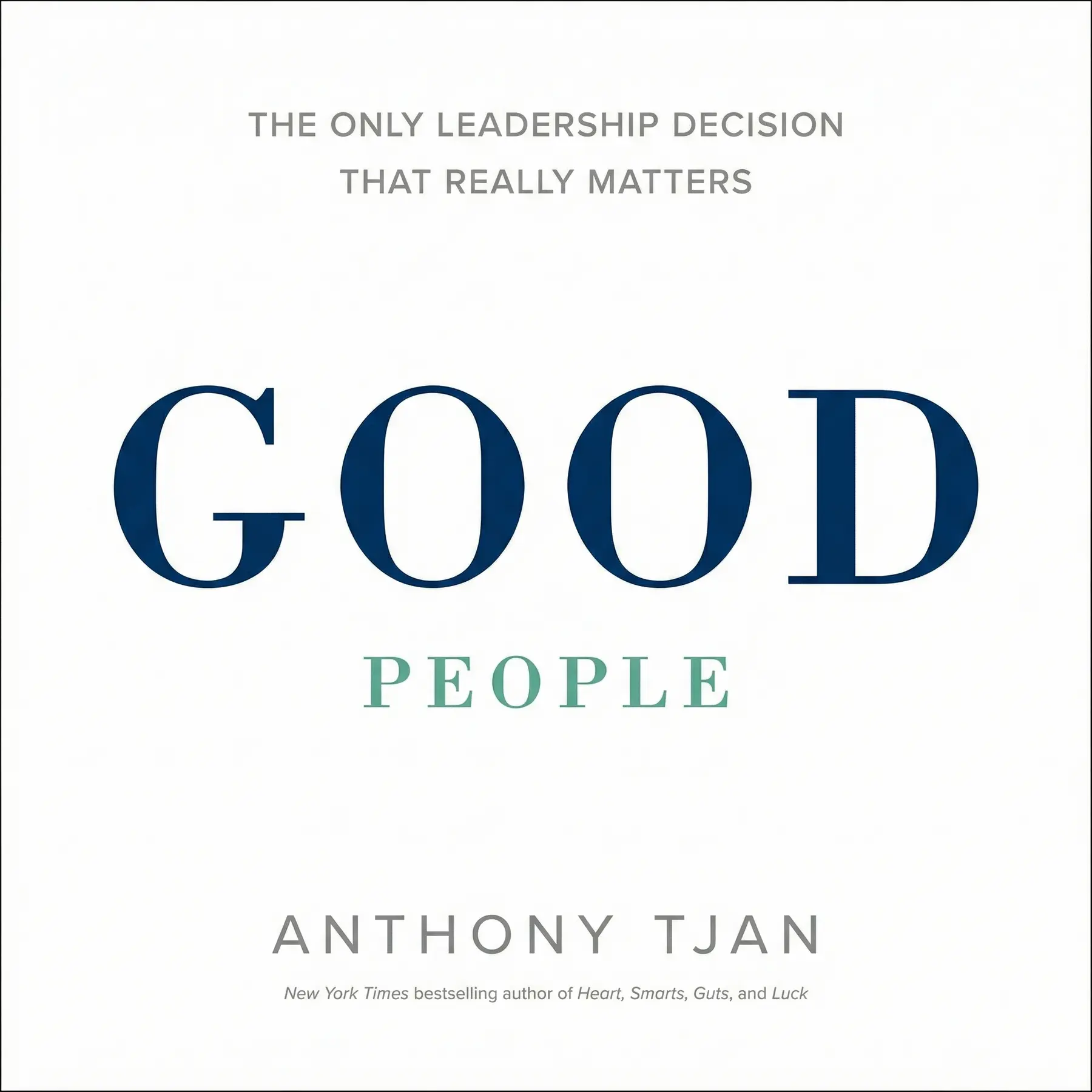
Good People: The Only Leadership Decision That Really Matters
By Anthony Tjan
Shows leaders why character predicts more than credentials, and gives them a shared language for goodness at work, a method for hard decisions and five questions that make mentoring honest and useful.
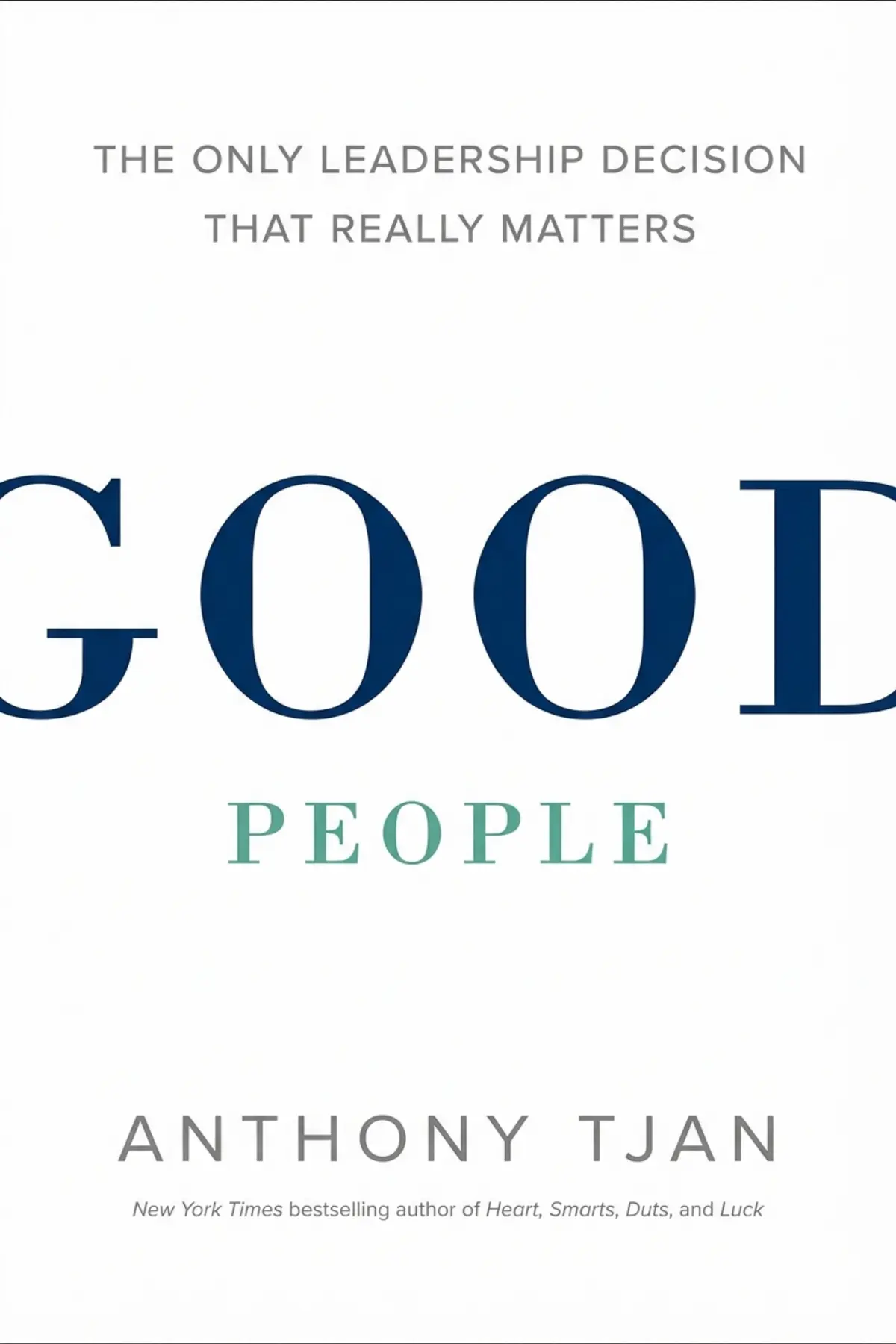
Table of Content
1. Introduction
1 min 00 sec
Most managers claim that the quality of a firm depends on its staff, then hire and promote based on skills alone. In Good People, venture investor Anthony Tjan argues that this habit gets the order wrong: a person’s values say more about their future than their credentials do, and putting character first is a sound business decision rather than a soft one.
Tjan, who founded the internet services company ZEFER and helps lead the Boston venture firm Cue Ball, offers a shared language for what goodness means at work. His case is that choosing and growing good people is the leadership decision that matters most, and that goodness can be defined and practiced like any other skill.
Along the way come a pyramid of nine values, a grid Benjamin Franklin filled in every week, an airline apology after an ice storm, a four-step method for hard decisions and five questions that can turn any mentoring conversation into a real one.
2. Spot the goodness that resumes never show
1 min 44 sec
Most job interviews test spreadsheets and industry knowledge and never touch what a candidate believes. A maker of household products took the opposite path, and its numbers on staff loyalty and company value are hard to ignore.
3. Put people ahead of ideas and profits
1 min 43 sec
A Harvard professor noticed that most people, offered a choice, bet on the exciting idea over the strong team. He thought they had it backward, and his reasoning sets the first of five rules for leading well.
4. Keep honest score of your own values
1 min 35 sec
Leaders lose trust the moment their words and actions drift apart. Benjamin Franklin used a cheap, almost childlike method to catch that drift every week, and anyone can copy it with a sheet of paper.
5. Compassion helps your team perform better
1 min 49 sec
Hiring meetings love the motto hire slow, fire fast, and kindness is often read as weakness. A simple waiting rule and a finding about medical students suggest the soft option may be the stronger one.
6. Win lasting loyalty with love, respect and wisdom
1 min 42 sec
The peak of goodness is a search that never fully ends. An airline facing public anger after an ice storm shows what one of its three parts looks like when the pressure is real.
7. Resist the pull of quick wins
1 min 41 sec
In 1999 critics mocked a famous investor for sitting out the hottest market of the decade. What happened a few months later says a lot about how leaders should treat the people they manage.
8. Make hard calls with a four-step method
1 min 49 sec
Hard choices tend to get made in a rush or not at all. A four-step method, illustrated by a newly independent nation and a nail care company, gives them a calmer and more reliable shape.
9. Mentor well with five honest questions
1 min 40 sec
Most mentoring sessions open with a routine how are you that nobody really answers. Replacing that habit with five plain questions can change what a mentee hears, and what a mentor learns about them.
10. Conclusion
1 min 05 sec
Tjan’s book works as a correction to a habit most organizations never question. Skills are easy to count, so they get counted, while character, which shapes how people treat each other over years, goes unmeasured. His answer is to make goodness as concrete as any competency: five working rules, a pyramid of nine values and a method for the moments when those values collide with deadlines. WD-40’s loyal staff and billion-dollar value suggest the payoff reaches the balance sheet.
The habits are small enough to begin today. Spend one whole day without phatic language, and when you do ask someone how they are, mean it and give the answer your full attention. Draw Franklin’s grid for a week and tick only the values you actually kept. Before you dismiss the next idea a colleague brings you, wait at least 24 seconds and look for what is good in it.
None of this will ever appear on a resume. Over time, it decides whether the people around you trust you enough to give their best.
About this book
What is this book about?
Most companies say their people are their greatest asset, then hire, judge and promote on skills alone. Anthony Tjan, an entrepreneur and venture investor, argues that this gets the order wrong. Skills are easy to measure, so they get measured. Values are harder to see, yet they shape how a team works together and how a business performs over years. Tjan gives goodness a working structure. Five rules he calls the Good People Mantra guide behavior. A three-level Goodness Pyramid defines what goodness means: truth at the base, compassion in the middle and wholeness at the top, each built from three values. A four-step decision method helps when those values clash with targets and deadlines. The examples range from Benjamin Franklin's weekly integrity grid to WD-40's people-first culture, an airline apology after an ice storm and Warren Buffett's refusal to chase the dot-com bubble. Readers get practical tools: a waiting rule before judging ideas, a decision journal, and five questions that turn a routine mentoring chat into a real conversation.
Book Information
Who it's for
Managers questioning team culture
Managers and team leads who hire on skills and wonder why their culture still feels off.
Founders building first teams
Founders building a first team who want a clear way to judge character, not just experience.
Mentors and HR staff
Mentors and HR people looking for questions and habits that build real trust.
About the Author
Anthony Tjan
Anthony Tjan is an entrepreneur, consultant and author who holds a leadership role at Cue Ball, a venture capital firm in Boston. He founded the Internet services company ZEFER in 1996 and served as its CEO, after starting his career at McKinsey and Company. He was a senior partner and vice chairman at The Parthenon Group and advised The Thomson Corporation on strategy for seven years. He holds an AB and an MBA from Harvard, writes for Harvard Business Review and co-authored Heart, Smarts, Guts, and Luck.
Ratings & Reviews
Ratings at a glance
What people think
Listeners find the writing accessible and appreciate the leadership insights, with one person noting that the book provides real-world ideas for application. They value how easy it is to digest, and one listener mentions its particular importance for those in management.
Top reviews
Tanyaporn
Ever wonder why some leaders inspire fierce loyalty while others just manage by the book and fail to connect? This book answers that by focusing on the 'net energy giver' concept and the importance of human capital over short-term profit. I found the section on wholeness particularly moving, especially the idea that we must be at peace with our roles to truly serve others. Tjan’s writing is accessible and filled with heart, reminding us that being professional shouldn't mean being less human or stripping away our idiosyncrasies. It’s a rare business book that actually makes you want to be a better person in your personal life too. The R.I.S.E. decision-making process is a fantastic tool that I’ve already started using to evaluate my own leadership tensions.
Show moreChatchai
Not what I expected from a typical corporate leadership manual, as it leans heavily into philosophy and the concept of 'wholeness.' I was struck by the quote about how there is nothing noble in being superior to your fellow man, and how true nobility is being superior to your former self. Tjan makes a compelling case that goodness isn't just a soft skill, but a habitual practice that requires constant discipline and reflection. I loved the focus on being a 'student first and teacher second,' which is a perspective too many CEOs lack today. This book resonated with my own experiences in high-growth startups where culture often gets sacrificed for speed. It’s a powerful reminder that if you focus on the right people with the right values, the rest usually resolves itself.
Show moreSook
While the author definitely likes to remind you of his impressive background, the core message about prioritizing human connection over cash remains vital and timely. Anthony Tjan defines good people as those committed to helping others become the fullest versions of themselves, which is a beautiful way to look at management. The R.I.S.E. framework is useful, but the real value is in the shift of mindset he encourages regarding 'net energy.' Are you a giver or a taker? This question has changed the way I approach my morning meetings and my interactions with my mentees. It’s a book that asks you to be brave enough to be vulnerable and to choose kindness over being right. I finished it feeling inspired and ready to actually put these values to work in my own firm.
Show moreSatit
As a manager struggling with a high-pressure culture, this book felt like a much-needed deep breath of fresh air. Tjan argues convincingly that we’ve been conditioned to value a person’s workflow wizardry over their actual character, which is a recipe for long-term disaster. The distinction between goodness as a competency and goodness as a set of values really stuck with me throughout the week. While some parts of the prose are a little wordy, the specific questions he suggests for mentors—like 'What’s slowing you down?' and 'How can I help?'—are immediately applicable. It’s a savvy business book that manages to stay human. I think every HR department should at least consider his framework when they are building out their recruitment and interview processes.
Show moreWachira
The chapter on mentorship alone is worth the price of admission for anyone in a coaching or leadership role. Tjan emphasizes that we often overestimate short-term effects but massively underestimate the long-term power of investing in people's character. I especially liked the focus on 'active vulnerability' and how taking risks is essential for reward in business building. Not gonna lie, some of the corporate-speak gets a little thick in the middle, but the core questions he provides to identify lifelong strengths are gold. This is the kind of book you keep on your desk to flip through when you're feeling burnt out by the transactional nature of modern work. It reminds you that people—real, flawed, idiosyncratic people—are the only thing that actually matters in the end.
Show moreNuk
Picked this up on a recommendation and found the distinction between 'goodness as competency' and 'goodness as values' to be quite profound. In most workplaces, we are taught to be well-organized perfectionists, but Tjan argues that true leadership requires being a 'good person'—one who is modest and listens to subordinates. I loved the specific case study on Jumpcut’s core values and the idea of 'signing your name' on your work like a masterpiece. It's a very practical guide for entrepreneurs who want to build a company that lasts longer than a single product cycle. My only minor gripe is that the author’s personal stories can sometimes feel a bit detached from the reality of entry-level workers, but the overarching message remains incredibly strong and necessary.
Show moreGun
Anthony Tjan attempts to codify something as elusive as 'goodness' into a structured business framework, and the result is a bit of a mixed bag. The Goodness Pyramid—comprising Truth, Compassion, and Wholeness—is a solid enough mental model, but most of the advice feels fairly intuitive to anyone who has spent time in a healthy workplace. Frankly, there isn't much here that feels revolutionary or practically new compared to classic leadership texts like those by James Macgregor Burns. I did appreciate the fresher case studies, particularly the mention of WD-40 and their culture, yet I still walked away feeling like I lacked actual tools to implement these changes. It’s an easy read and certainly well-intentioned, but it lacks the 'teeth' needed to transform a standard corporate environment into a values-driven one.
Show moreMaja
Truth is, we’ve been conditioned to look at resumes first and character second, which is exactly the habit Tjan tries to break in this volume. The book is an easy read, which makes it perfect for busy executives, but I do wish there was more 'how-to' and a little less 'what-is.' I appreciated the discussion on the tension between pragmatism and idealism, as that’s a daily struggle in my industry. However, the framework of Truth, Compassion, and Wholeness felt a little bit like a Sunday school lesson translated into corporate jargon. It's a good book for a team book club to spark conversation, but don't expect it to provide a step-by-step blueprint for fixing a toxic culture. It's more of a philosophical nudge in the right direction.
Show moreJames
Look, I really wanted to love this, but it felt like a long-form article stretched into a full-length book. While the core message about prioritizing character over competency is important, the text is incredibly repetitive and could have been summarized in a tenth of the time. To be fair, Tjan makes some great points about 'goodness' as a primary leadership criterion, but I found myself checking the page numbers constantly to see if I’d already read the section. He also tends to mention his personal accomplishments on nearly every page, which eventually starts to feel like a humble-brag marathon rather than helpful advice. If you're looking for a quick summary of why values matter in business, just find an interview with the author online and skip the 200-plus pages of fluff.
Show moreJob
To be fair, the 'Goodness Pyramid' is a decent enough concept, but I struggled to get past the author's tone. Tjan is clearly very successful, yet the constant references to his high-level meetings and elite circles felt more like a resume padding exercise than a humble guide. The book rehashes a lot of common sense about being an honest person and a good listener, which is fine, but it doesn't offer the rigorous analysis I was hoping for. The writing style is quite repetitive; I felt like the same few points about values-first leadership were being hammered home in every single chapter without much evolution. It's a nice sentiment, but ultimately, it feels like a collection of anecdotes that don't quite add up to a cohesive manual for change.
Show moreQuestions about this book
What is the main idea of Good People by Anthony Tjan?
Tjan argues that workplaces have learned to value competence over character, mainly because skills are easier to measure. He believes values matter more, both for culture and for financial results, and that choosing and growing good people is the decision that matters most for a leader. He offers a framework to define goodness, put it into practice and handle the tensions that arise when it meets real targets.
What is the Goodness Pyramid?
It is Tjan’s three-level model of goodness. Truth forms the base and is made of humility, self-awareness and integrity. Compassion sits in the middle, built on openness, empathy and generosity. Wholeness is the peak, made of love, respect and wisdom, and Tjan calls it a search that never fully ends. Each value comes with practices, such as Benjamin Franklin’s weekly grid for checking integrity.
What is the RISE framework in Good People?
RISE is a four-step method for hard decisions. Recognize the situation and set realistic expectations. Internalize it by studying the problem and its possible outcomes in depth. Share your thinking with a small group of trusted people. Then execute with conviction, writing down the decision and your reasons so you can learn from it later. Tjan illustrates it with Lee Kuan Yew’s Singapore and his own company MiniLuxe.
How can I apply Good People as a mentor or manager?
Start by connecting with people and their values before training their skills. Drop routine phrases such as how are you when you do not truly want the answer. Ask Tjan’s five questions: what the person is really trying to achieve, what is working, what is slowing them down, what they will change tomorrow and how you can help. Then listen fully to each answer.
Readers also enjoyed




A Year with Peter Drucker: 52 Weeks of Coaching for Leadership Effectiveness
Joseph A. Maciariello



Acting with Power: Why We Are More Powerful Than We Believe
Deborah Gruenfeld

All In: How Great Leaders Build Unstoppable Teams
Mike Michalowicz

AUDIO SUMMARY AVAILABLE
Listen to Good People in 15 minutes
Get the key ideas from Good People by Anthony Tjan, plus 5,000+ more nonfiction titles.
- 5,000+ titles
- Listen as much as you want
- 7-day free trial
- Cancel anytime









