

13 min 49 sec
Available in: English
Feminine Intelligence: How visionary leaders can reshape business for good
By Elina Teboul
Shows why empathy, intuition and presence belong at the center of leadership. It offers a four-part model for slowing down, listening deeply, facing uncertainty and handling emotion so that power serves people and the long term.
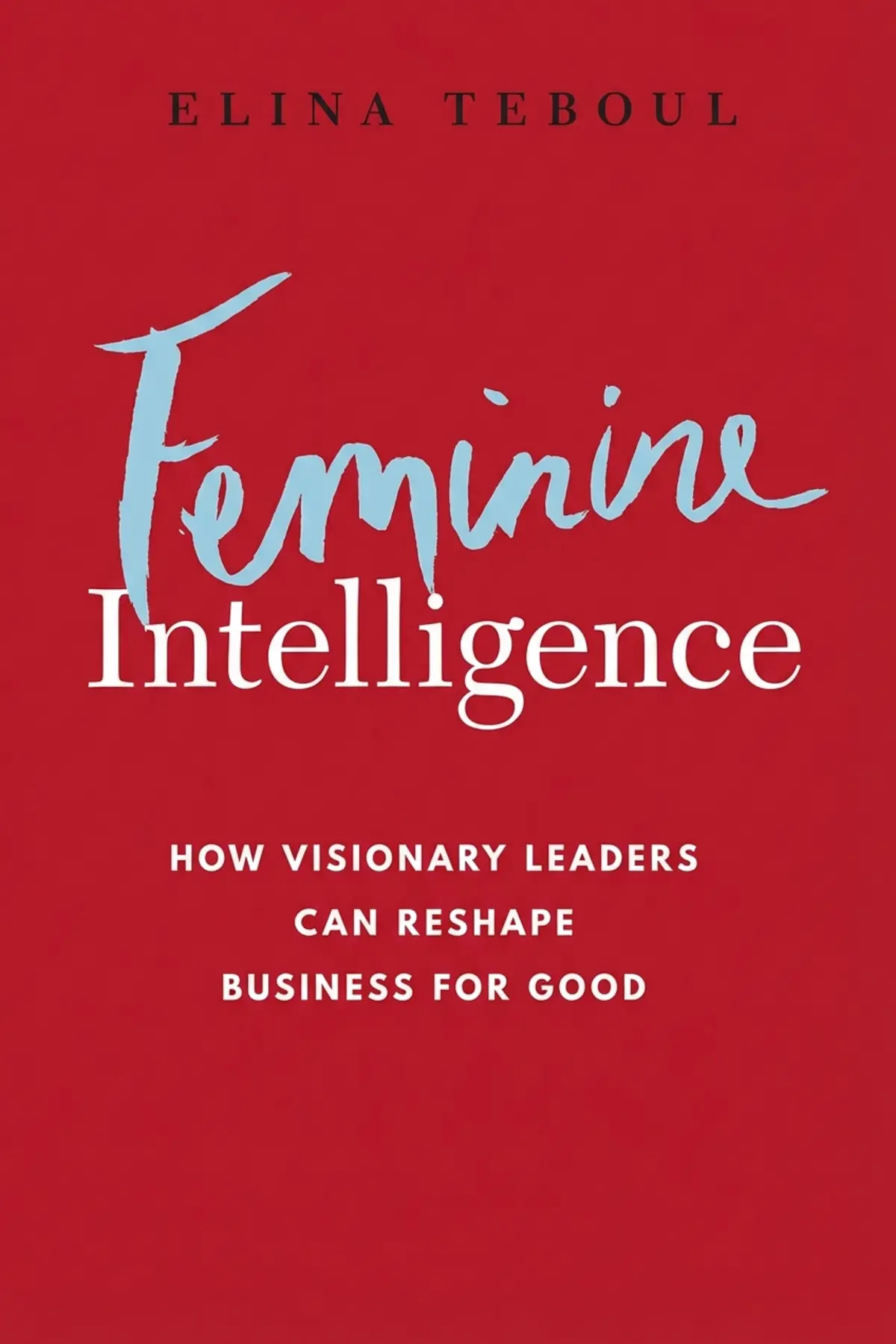
Table of Content
1. Introduction
1 min 06 sec
If your leadership runs on control, speed and hard numbers, and it is leaving you or your team exhausted, Elina Teboul thinks the missing piece is something other than more drive. In Feminine Intelligence, the lawyer turned organizational psychologist argues that empathy, intuition, presence and emotional depth, the skills business calls soft, are what visionary leaders need most right now. She calls them feminine intelligence. She also insists they have nothing to do with gender: everyone carries both masculine and feminine qualities, and anyone can strengthen the neglected side.
Her case is that the strongest leaders combine the two, pairing analysis and decisiveness with care, and that this produces better results for people, companies and even countries. The evidence runs from a soldier in Iraq who defused a crowd by kneeling to a South African investor who gave his profits away for good. Along the way comes a four-part model for slowing down, listening deeply, facing uncertainty and handling emotion at work.
2. Calm a tense situation by doing less
1 min 53 sec
A crowd was closing in on armed soldiers, and one wrong gesture could have started a shooting. The officer in charge chose a surprising response, and after two minutes of silent stillness the crowd slowly drifted away.
3. Strong leaders blend masculine and feminine thinking for better results
2 min 01 sec
A Harvard researcher had most of her left-brain function wiped out by a stroke and found something unexpected in the silence. Her story, and a striking figure about peace talks, point to what one-sided leadership misses.
4. Slow down enough to see what matters
1 min 48 sec
Seminary students rushing to give a talk on compassion walked past a man in distress. The study reveals what hurry does to attention, and the first two habits that can win it back.
5. Face the unknown and your feelings without fear
1 min 43 sec
Most workplaces reward leaders who measure everything and show nothing. Teboul argues that the harder skills are tolerating the unknown and naming what you feel, and she offers practices for both, from simple to radical.
6. What altered states may teach a leader
2 min 05 sec
Lying on the ground in nature, a former corporate lawyer felt the planet speak. The experience led her to a legal question, and to claims about creativity and empathy that many leaders will find provocative.
7. Build a business that outlives quarterly pressure
2 min 11 sec
An investor offered to give away a fifth of his firm under apartheid and was turned down. What he did next, and what a tiny kingdom decided in 1972, challenge how success gets measured.
8. Conclusion
1 min 02 sec
Teboul’s book adds up to a claim about strength. The qualities modern business filed under soft, slowing down, listening, feeling and caring about the long run, turn out in her telling to be the ones that calm a crowd, keep a peace deal alive and let a fortune go on working for a country long after it was made. Control and analysis still have their place. What she rejects is the habit of letting them run alone.
The practical start is modest. Take three slow breaths the next time a meeting turns sharp, and listen for what the other person is leaving unsaid. Put your best hours of the day on your calendar before anyone else can claim them, and keep one slot each week for reflection. When you report results, place one measure of trust or well-being beside the numbers.
The Princeton students who stepped over a suffering man were not cruel. They were late. Her whole argument begins with making enough time to stop.
About this book
What is this book about?
Most leaders were trained to value control, competition and constant performance. Elina Teboul argues that this model helped build global markets, but it has also left behind burnout, disconnection and damage to the environment. In Feminine Intelligence, she makes the case that the so-called soft skills of empathy, intuition, presence and emotional depth are now the core of visionary leadership. Teboul, a corporate lawyer turned organizational psychologist, stresses that feminine intelligence has nothing to do with gender. Everyone has masculine and feminine qualities, and the best leaders combine analysis and decisiveness with care and inclusion. She supports the idea with stories and studies, from a soldier who calmed a crowd in Iraq by kneeling to research on peace talks that include women. She also offers TRUE, a model built on Time, Relationships, Uncertainty and Emotions. The book then moves onto less conventional ground, including the author's own experience with psychedelics and her interest in legal rights for nature. It closes with two examples of power used with conscience: the South African investor Allan Gray and the kingdom of Bhutan. Readers get practical habits for slowing down and listening, and a wider view of what organizations could choose to measure.
Book Information
Who it's for
Managers feeling the strain
Managers and team leads who feel that pressure, speed and targets are wearing out their people and themselves.
Founders wanting lasting companies
Founders who want a company built to last beyond the next quarter.
Curious about leading differently
Professionals curious about mindfulness, emotional skills or psychedelic research as tools for better leadership.
About the Author
Elina Teboul
Elina Teboul studied psychology and law at Columbia University. She began her career as an attorney at Davis Polk and Wardwell and also taught at Fordham Law School. She later moved into organizational psychology and founded a leadership advisory practice in London. In philanthropy, she has worked as a global philanthropic advisor at the Allan and Gill Gray Foundation, and she has sat on the advisory board of the Earth Law Center. She writes about psychedelic medicines in mental health and business leadership. Feminine Intelligence is her first book.
Ratings & Reviews
Ratings at a glance
What people think
Listeners find the spiritual themes within the work appealing, highlighting its focus on emotional attunement and ties to nature. Furthermore, the leadership development portion receives positive reviews, as listeners praise how the author transforms complex concepts into practical guidance while prioritizing conscious leadership.
Top reviews
Por
Wow, this was exactly the perspective shift I needed after ten years of grinding in the financial sector. Elina Teboul doesn't just suggest we be "nicer"; she argues that feminine intelligence is a rigorous, strategic advantage that we’ve been ignoring for far too long. The idea that power is about presence rather than control hit me like a ton of bricks. Not gonna lie, I’ve been wearing my burnout like a trophy, but this book helped me see how unsustainable and counterproductive that mindset truly is. The TRUE model gave me a specific roadmap to rebuild my professional relationships based on authenticity rather than just networking. It’s a beautiful, tactical, and deeply spiritual guide that every modern leader should have on their desk. This is more than a business book—it’s a call to evolve.
Show moreFort
The way Elina Teboul breaks down the "TRUE" model for mastering time and relationships felt incredibly relevant to my current role as a project manager. To be fair, some of the sections on spirituality felt a bit detached from the grit of day-to-day office politics, but the core message is solid. I particularly appreciated the focus on emotional attunement as a strategic tool rather than just a soft skill. It challenges the "command and control" style that many of us were taught to emulate. While I found some of the nature analogies a little repetitive, the shift toward "presence over control" is a game-changer for anyone struggling with burnout. This is a solid guide for anyone looking to modernize their leadership style without losing their soul in the process.
Show moreChokdee
The chapter on the TRUE model alone makes this book worth the purchase for any aspiring entrepreneur or college student. Teboul has a way of taking these "soft" concepts like emotional attunement and showing how they actually drive better business outcomes and more innovative approaches. Frankly, it’s about time we stop pretending that being "tough" is the only way to lead a successful company. The writing style is engaging, with a mix of short, punchy sentences and deeper, more reflective passages. My only minor gripe is that the connection to nature felt a bit forced in certain sections, but the overall message of authenticity remains very powerful. It’s a timely and tactical roadmap for anyone who wants to lead with more than just a spreadsheet.
Show moreSukit
Picked this up after seeing a few colleagues mention it, and I have mixed feelings about the overall execution. On one hand, the "TRUE" model is a fantastic framework that helps simplify very complex emotional dynamics into something you can actually use during a board meeting. On the other hand, the transition between corporate strategy and spiritual connection felt a little jarring at times. Look, I think the author is onto something important regarding the "feminine side" of decision-making, but the book could have used more diverse case studies beyond the ones provided. The focus on avoiding the "burnout-as-a-badge" culture is timely and much needed in today’s world. It’s a decent read if you want to reflect on your own "presence," though it lacks a bit of the "masculine" structure it seeks to balance.
Show moreNuk
Ever wonder why corporate culture feels so draining even when you're hitting your KPIs and getting the promotions you wanted? Feminine Intelligence attempts to answer that by advocating for a shift toward "conscious leadership" and emotional attunement with our teams. I gotta say, the parts about shifting from a "musculine" command-style to a more curious, listening-based approach really resonated with my own experience. However, the book dives very deep into spirituality and connection to the natural world, which might alienate some of the more data-driven leaders in the room. It’s a bold attempt to merge two very different worlds. While it doesn't always succeed in bridging that gap perfectly, it offers enough unique perspectives to make it worth the time. The reflection questions at the end of each chapter are particularly helpful for self-growth.
Show moreAroon
As a corporate leader, I’m always looking for ways to improve my team’s sustainable growth, and this book offers some interesting ideas on balancing leadership strengths. The discussion on "musculine" vs. "feminine" sides of human intelligence is a fresh take on the standard EQ discourse we see everywhere. To be fair, the book can be a bit repetitive, and I think the author could have shortened the sections on spirituality to make more room for corporate examples. I did enjoy the story about the youth growth initiative in South Africa, as it provided a concrete example of these theories in action. It’s a good starting point for reflection, even if it feels a bit unpolished in its delivery. It’s a solid 3-star read that will make you think, even if you don't agree with every point.
Show moreTaw
Finally got around to reading this, and I find myself agreeing with the author's premise that we need a new workforce paradigm. The current system is clearly broken, and the emphasis on "presence" and "connection" offers a potential way out of the cycle of constant burnout. That said, I found some of the language to be a bit flowery, which occasionally distracted from the very practical tools like the TRUE model. It’s a bit of a balancing act itself—trying to be both a spiritual guide and a tactical manual. I think it’s a must-read for those who feel disconnected from their work, though more traditional leaders might find it a bit too "out there." It’s an insightful look at how to bring more humanity back into the office.
Show morePim
While I appreciate the sentiment behind reconnecting with nature and ancient wisdom, this book felt a bit too abstract for a fast-paced corporate environment. Truth is, I was looking for more tactical advice and less emphasis on spiritual alignment and "conscious leadership." The story about Alan in South Africa was touching, but I struggled to see how that translates to a tech startup facing rapid scaling issues. Personally, I found the writing style a bit dense in the middle sections, which made it hard to stay engaged. There are some good nuggets here about emotional intelligence, but they are buried under layers of philosophical musing that didn't quite land for me. It might suit someone in a more creative or philanthropic field better than a traditional business setting.
Show morePop
Not what I expected from a book marketed toward the corporate world, as it leans heavily into spiritualism and nature connection. In my experience, leadership development requires a bit more structure than what Teboul provides here. While I liked the concept of "feminine intelligence" as a way to round out the rough edges of corporate culture, the execution felt a little too "new age" for my taste. The anecdotes were nice, but they lacked the depth needed to truly convince a skeptic. I think there is a good 50-page book hidden inside this 200-page one. It's not a bad read, but it didn't quite deliver the "game-changing" experience that the blurb promised. It's okay for a light weekend read, but don't expect a masterclass in management.
Show moreLaor
Honestly, the business world has enough buzzwords without adding "Feminine Intelligence" to the pile of vague concepts we're supposed to care about. I found the book to be mostly fluff, filled with anecdotes that don't seem to have much application in a high-stakes, competitive environment. The author talks a lot about "presence" and "ancient wisdom," but where is the data to support these claims? To be honest, it felt more like a self-help book for the soul than a leadership guide for an enterprise. I was disappointed that the practical guidance was so overshadowed by spiritual talk and nature metaphors. If you are looking for a rigorous analysis of leadership metrics or organizational psychology, you should definitely look elsewhere. It simply didn't provide the substance I was expecting.
Show moreQuestions about this book
What is feminine intelligence according to Elina Teboul?
Teboul uses the term for a leadership approach rooted in empathy, intuition, presence, emotional depth and collaboration, in contrast to a model built on dominance and control. She stresses that it has nothing to do with gender. Everyone has masculine qualities such as analysis and hierarchy and feminine ones such as creativity and intuition, and she argues that the best leaders integrate both.
What is the TRUE leadership model?
The letters of TRUE stand for Time, Relationships, Uncertainty and Emotions. To master time, you protect your calendar and leave space for reflection. Relationship mastery means deep listening and understanding people’s stories. Mastering uncertainty means meeting the unknown with inner peace in place of fear. Emotional mastery means naming your feelings and working through the body with practices such as exercise, yoga or breathwork.
Does Feminine Intelligence say women make better leaders?
No. Teboul argues that feminine intelligence is available to anyone, regardless of gender. She does cite evidence about women in leadership, such as research suggesting that peace agreements involving women are far less likely to fail, and the high happiness rankings of countries like Finland, Denmark and Iceland. Her main point is about combining masculine and feminine qualities in every leader.
What does the book say about psychedelics and leadership?
Teboul describes her own experience with mushrooms in nature and credits psychedelics with reconnecting her to intuition and emotion. She cites claims that they increase brain connectivity, empathy and environmental concern, and mentions Kary Mullis crediting LSD for his PCR insight. She frames them as one option for deeper work, taken under professional supervision, alongside practices such as holotropic breathwork.
How can I apply Feminine Intelligence at work?
Start small. Take three slow breaths when a situation turns tense, schedule your most important work for the hours when you think best, and block time for reflection. Listen for what colleagues leave unsaid and learn their stories. Name your emotions instead of only analyzing events. If you set targets, look beyond financial results, as Bhutan did by measuring well-being and Allan Gray did by building philanthropy into his firm’s ownership.
Readers also enjoyed

A Bigger Prize: How We Can Do Better Than the Competition
Margaret Heffernan





A Year with Peter Drucker: 52 Weeks of Coaching for Leadership Effectiveness
Joseph A. Maciariello



Acting with Power: Why We Are More Powerful Than We Believe
Deborah Gruenfeld
AUDIO SUMMARY AVAILABLE
Listen to Feminine Intelligence in 15 minutes
Get the key ideas from Feminine Intelligence by Elina Teboul, plus 5,000+ more nonfiction titles.
- 5,000+ titles
- Listen as much as you want
- 7-day free trial
- Cancel anytime









