
14 min 41 sec
Available in: English
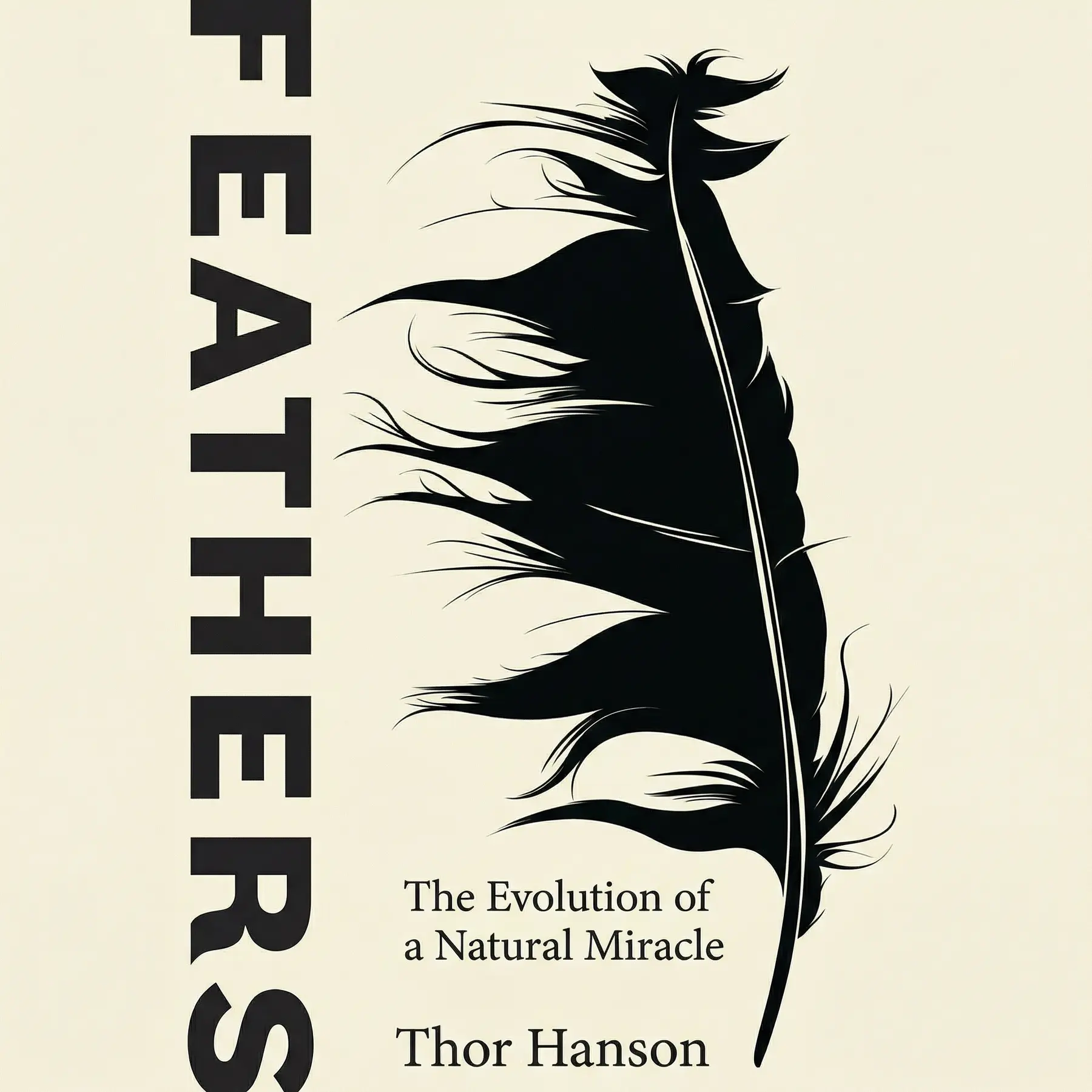
Feathers: The Evolution of a Natural Miracle
By Thor Hanson
Shows how one structure, the feather, links birds to dinosaurs, powers flight, wins mates and beats Antarctic cold. Hanson also follows it into human history, from the first aviators to the dancers who wear feathers to be noticed.
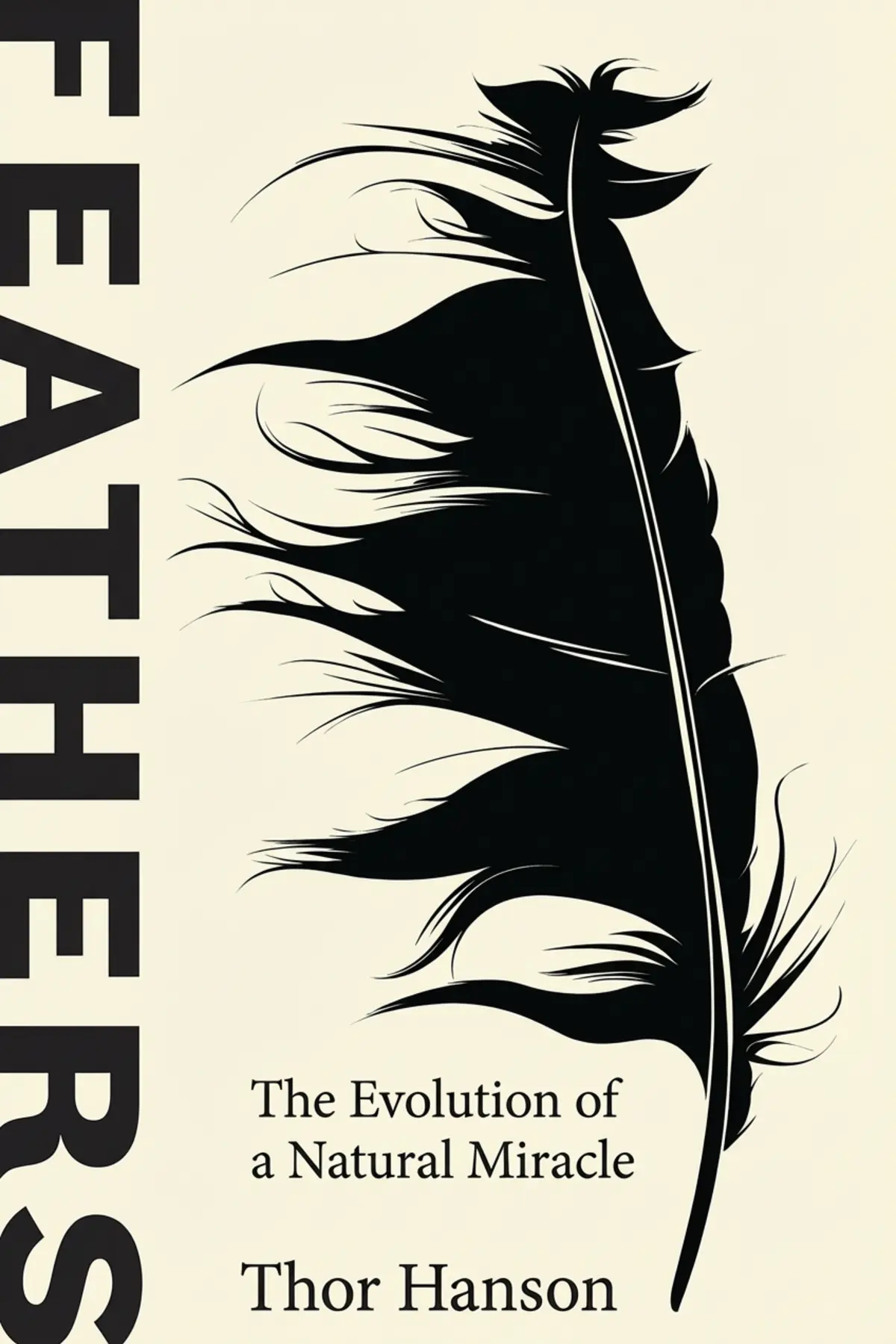
Table of Content
1. Introduction
1 min 03 sec
Most adults walk past birds every day without a second look, though as children the sight of a swooping swallow felt like magic. In Feathers, Thor Hanson, a Guggenheim Fellow and winner of the John Burroughs Medal, argues that the thing worth looking at again is the feather itself, a structure no other living animal grows. Feathers let birds fly, keep them warm on every continent and dress them in colors meant to win a mate. They also hold the evidence that birds descend from dinosaurs.
That is the thread Hanson follows. One small, ancient invention explains where birds came from and how they live, and it even explains how people learned to fly and to dress for attention. Follow it and the pigeon on a windowsill turns into three things at once: a living fossil, a flying machine and a fashion show. Along the way comes a practical lesson in how nature solves hard design problems, and how to borrow its solutions.
2. Read the fossil trail from dinosaur to bird
2 min 11 sec
For generations, scientists argued about where birds came from with almost nothing to look at. Then a volcano in ancient China did something no museum could, and the answer turned out to have arrived one step at a time.
3. Weigh the two rival stories of first flight
2 min 08 sec
One theory has dinosaurs sprinting and flapping like farmyard chickens. The other has them dropping out of trees. Each explains something the other cannot, and after all the digging, nobody has settled the argument.
4. What a bright feather tells a choosy female
2 min 05 sec
A bird of paradise dances in colors humans can barely describe, and a flamingo has to eat its way to pink. Behind the beauty sits a hard question about why anyone, bird or person, trusts a flashy signal.
5. Stay warm without weighing yourself down
1 min 59 sec
Penguins shrug off Antarctic winds that would kill most animals, and they do it without the heavy coat a mammal would need. Their trick also explains why no flying bird could ever have worn fur.
6. Learn how copying a wing's shape got people flying
2 min 12 sec
At first the Lilienthal brothers copied birds too literally, gluing feathers onto an early prototype before finding that the curved wing shape mattered more. What finally lifted them was one detail hiding in plain sight on every bird’s wing.
7. Discover the problem showgirls and birds of paradise share
1 min 57 sec
A Las Vegas dancer under a towering headdress and a male bird of paradise in full plumage face the same risk every night. Their balancing act reveals how much display is too much.
8. Conclusion
1 min 06 sec
Hanson takes a single structure and makes it explain a great deal. The feather is how scientists showed that birds are the living heirs of dinosaurs. It sits at the center of the unsolved riddle of first flight. It is the price a male pays to be chosen, the down that keeps a penguin warm, the light insulation that lets flying birds take off and the curve that carried Otto Lilienthal into the air. People have even carried it onto stages from New Guinea to Las Vegas.
The feather also leaves some habits worth keeping. When a design looks too elaborate to have been planned, look for the simple working versions it grew from, the way the plain quill came before the flight feather. When you borrow from something that works, hunt for the one principle doing the job instead of gluing on every feather. And when you need to stand out, make your display cost something real, but never so much that you can no longer compete.
Next time a pigeon lands beside you, look closely at its wing. That design began on a dinosaur, and birds still use it every day.
About this book
What is this book about?
As children we stare at birds in wonder. As adults we barely see them. Thor Hanson argues that this is a loss, because the thing that makes birds special, the feather, is one of the most inventive structures in the natural world. Hanson follows the feather from rare fossils of feathered dinosaurs, including volcanic finds in northeastern China, to the open debate over how flight first began. He explains why birds wear such bold colors and why a flamingo has to eat its pink. He shows how a penguin's two-layer coat keeps it warm where fur would fail, and how Otto Lilienthal's experiments with curved wings turned bird design into human flight. The book then turns to people. The Obena men of Papua New Guinea and the showgirls of Las Vegas both wear plumes to be chosen, and both face the same trade-off as a bird of paradise. Readers come away seeing an ordinary bird as a living link to the dinosaurs, and they also get some useful lessons in design, signaling and borrowing from nature.
Book Information
Who it's for
Curious about birds again
Curious readers who stopped noticing birds and want to see them as living dinosaurs again.
Curious about nature's solutions
Designers, engineers and founders interested in borrowing proven solutions from nature.
Students of evolution
Students of evolution who want a concrete case of how one trait shaped flight, color and survival.
About the Author
Thor Hanson
Thor Hanson is a Guggenheim Fellow and a Switzer Environmental Fellow. His honors include the John Burroughs Medal and the Phi Beta Kappa Award in Science. He wrote Feathers and The Triumph of Seeds, has written for children and has contributed to periodicals and other media. He has appeared on the radio programs Fresh Air and Science Friday and co-hosted the television series American Spring Live.
Ratings & Reviews
Ratings at a glance
What people think
Listeners find this book to be a captivating study of bird feathers, featuring deeply researched material and an abundance of scientific data. The prose is highly immersive, and one listener notes how the author balances factual details with delightful personal stories. Furthermore, the book receives praise for its thorough exploration of the subject, with one review describing it as gripping as the best fiction. Additionally, listeners value it as an ideal present for bird enthusiasts.
Top reviews
Den
Ever wonder how a tiny bit of keratin can be both a heat shield and a musical instrument? Thor Hanson explores this and more in a book that reads more like a series of interconnected mysteries than a dry textbook. I was particularly struck by the history of the South African ostrich trade—it’s wild to think feathers were once as valuable as diamonds or gold. While the author does insert himself into the narrative frequently, his passion is what makes the science accessible. Frankly, his enthusiasm for things like the club-winged manakin’s violin-like feathers is infectious. If you enjoy popular science that blends biology with human culture and history, this is a must-read. It’s the perfect gift for anyone who spends too much time staring at the sky or wondering about the evolution of flight.
Show moreViolet
Thor Hanson writes with a rare kind of infectious enthusiasm that turns a niche subject into a gripping narrative. I’ve read my fair share of nature writing, but the way he connects the microscopic structure of filoplumes to the massive history of the Aztec and Inca feather garments is nothing short of brilliant. He manages to make the complex biology of the "helical growth" of barbs sound like a poetic dance rather than a lab report. Not everyone will love his personal storytelling style, but I found it grounded the high-level science. Personally, I think the section on how feathers advanced human aerodynamics and flight theory was the strongest part. It’s a deep dive that never feels like it's drowning you in jargon or unnecessary academic padding.
Show moreLuckana
The chapter on the club-winged manakin playing its wings like a violin was worth the price of admission alone. I had no idea that feathers could be used to create such complex sounds, and Hanson’s description of the morphology involved was just stunning. This book is a celebration of nature’s ingenuity, covering everything from the warmth of down to the vibrant yellows of extinct honeycreepers. The truth is, I’ll never look at a common backyard bird the same way again after reading about the complexity of follicle collars and helical growth. It’s rare to find a book that is this well-researched yet remains as gripping as the best fiction. I highly recommend it to anyone with even a passing interest in the natural world or the evolution of beauty.
Show moreLuke
Few authors can bridge the gap between hard biology and human history as seamlessly as Hanson does in this volume. From the way feathers revolutionized writing with the quill to their essential role in modern fly-fishing, the scope of this book is truly impressive. I especially appreciated the deep dive into the sensory roles of filoplumes; it’s amazing to think of feathers as high-tech data sensors for flight adjustments. Not gonna lie, I was worried it would be too niche, but the narrative flow is so smooth that the pages just fly by. Whether he’s talking about the greed of the Victorian fossil trade or the chemistry of pigments, Hanson keeps you hooked. It’s an elegant, insightful, and deeply rewarding exploration of one of nature’s most complex and beautiful structures.
Show moreNiphon
Finally got around to this after seeing it recommended on several birding blogs, and for the most part, it lived up to the hype. The book covers everything from the early evolution of feathers on dinosaurs to their use in Victorian fashion and high-altitude insulation. Hanson has a knack for finding the "weird" in nature, like grebes eating their own feathers to protect their stomachs from sharp fish bones. Not gonna lie, some of the personal stories felt like they could have been edited down to keep the focus purely on the avian biology. Still, the prose is elegant and the hand-drawn illustrations are a beautiful touch that adds a lot of character to the work. It’s a fascinating look at a natural miracle we often take for granted in our everyday lives.
Show moreChatri
As an amateur birder, I thought I knew the basics of plumage, but this book proved there is so much more beneath the surface. Hanson takes you on a global journey from the fossil beds of Bavaria to the royal courts of Hawaii to explain why feathers are so unique. The detail about King Kamehameha’s golden cloak, requiring feathers from 80,000 birds, was heartbreaking and fascinating at the same time. In my experience, many science books struggle to balance history and biology, but Hanson does it quite well here. My only real gripe is that the diagrams are all tucked away at the end instead of being integrated into the relevant chapters. It’s a small flaw in an otherwise excellent and informative read that I’ve already recommended to several friends in my local Audubon chapter.
Show moreBo
Picked this up on a whim and was immediately drawn in by the story of how a doctor’s medical bill led to the discovery of the Archaeopteryx. It’s stories like that which make history come alive, and Hanson is a master at finding those little nuggets. The book covers a surprising amount of ground, from the industrial dyeing of feathers to the physics of how they repel water. I found the discussion on the 'birds are not dinosaurs' debate particularly interesting, even if the consensus is mostly settled now. Frankly, it’s refreshing to read a scientist who isn’t afraid to show some personality, even if he goes off the rails occasionally with his personal anecdotes. It makes the harder science of aerodynamics much easier to digest for a layperson like me.
Show moreHugo
Truth be told, science books can often feel like a slog, yet Hanson manages to keep the pace brisk with personal anecdotes. He explores the incredible insulation properties of feathers, explaining how penguins can survive -80 degree wind chills without needing massive layers of fat. That part blew my mind. He also dives into the territory of biological aesthetics, discussing how courtship and visual display have shaped the natural world just as much as survival has. While some readers might find the author’s tone a bit too "cutesy" or self-deprecating, I thought it added a much-needed human element to the research. It’s a solid 4-star read that covers a vast amount of territory without ever becoming too academic or dry for the average reader.
Show moreYok
This book is a bit of a mixed bag for me because I loved the science but hated the filler. The sections explaining the "WAIR" theory of evolution and how feathers act as sensory telltales were genuinely enlightening. Yet, the author spends so much time talking about his own hobbies and his personal chicken coop that I started skimming by the third chapter. Look, I get that he wants to be relatable, but sometimes it felt like he was just puffing up the page count with irrelevant fluff. The writing itself is quite light and airy—feather-light, you might say—which makes it a quick read for the weekend. If you can ignore the unnecessary diversions, there’s a lot of great information about thermal insulation and color physics hidden inside these pages.
Show moreSupachai
Look, I really wanted to like this, but the tangents were just too much for me to handle. Why did I have to read several pages about the history of the Sonic the Hedgehog video game just to learn about a gene named after it? It felt like Hanson was trying too hard to be quirky rather than sticking to the science of flight and evolution. To be fair, I did learn a few interesting things about the Archaeopteryx fossil and how the first feathers weren't even for flying. However, the author's constant self-insertion and "look at me" anecdotes really bogged down the pacing. If you want a concise book about ornithology, this probably isn't the one for you. The cover is stunning, but the content needs a much tighter edit to be truly effective.
Show moreQuestions about this book
What is the main idea of Feathers by Thor Hanson?
Hanson argues that the feather, a structure only birds have, is one of nature’s greatest innovations. It links birds to their dinosaur ancestors, makes flight possible, gives birds the colors they use to attract mates and keeps them warm without adding weight. It has also shaped human history, from early aviation to the feathered costumes people wear to be noticed.
How do fossils show that birds evolved from dinosaurs?
Feathers rarely fossilize, but in the nineteenth century Archaeopteryx, a dinosaur-like animal with feather imprints on its arm, suggested a link. In the 1990s, Xing Xu found feathered theropod fossils in Liaoning, China, preserved under volcanic ash. They showed that feathers developed in stages, from simple unbranched quills to asymmetric flight feathers, with each stage tying those dinosaurs more firmly to modern birds.
How did birds start flying according to Feathers?
Hanson presents two theories. The ground-up view says fast theropods ran and flapped their way into the air, but they lacked the flight muscles and flexible shoulders that takeoff requires. The tree-down view says forest animals glided from branches, but gliders like bats and flying squirrels use skin membranes, which makes feathers look overbuilt. Scientists remain unsure, and flight may have drawn on both.
Why are some birds so brightly colored?
Hanson points to sexual selection. Males compete for females, and birds see a broad range of colors, so bright plumage gets attention at gatherings called leks. Females may prefer it because costly feathers signal a strong, healthy male, or simply because the colors are beautiful. Some colors come from diet: flamingos stay pink only by eating algae and crustaceans rich in beta-carotene.
What can I apply from Feathers in everyday life?
The book offers a few design lessons. Complex things grow through simpler working stages, as feathers did. When copying a successful model, find the single principle that matters, the way Lilienthal found that the wing’s curve counted for more than the feathers he glued on. And signals persuade when they are costly, but too much display can weaken you, as birds of paradise and Las Vegas showgirls both discover.
Readers also enjoyed

A Life Decoded: My Genome: My Life
J. Craig Venter

A Planet of Viruses
Carl Zimmer

A Short History of Nearly Everything
Bill Bryson

A Thousand Brains: A New Theory of Intelligence
Jeff Hawkins




Alien Earths: The New Science of Planet Hunting in the Cosmos
Lisa Kaltenegger


AUDIO SUMMARY AVAILABLE
Listen to Feathers in 15 minutes
Get the key ideas from Feathers by Thor Hanson, plus 5,000+ more nonfiction titles.
- 5,000+ titles
- Listen as much as you want
- 7-day free trial
- Cancel anytime









