

A Theory of Justice
John Rawls
 English
 ไทย
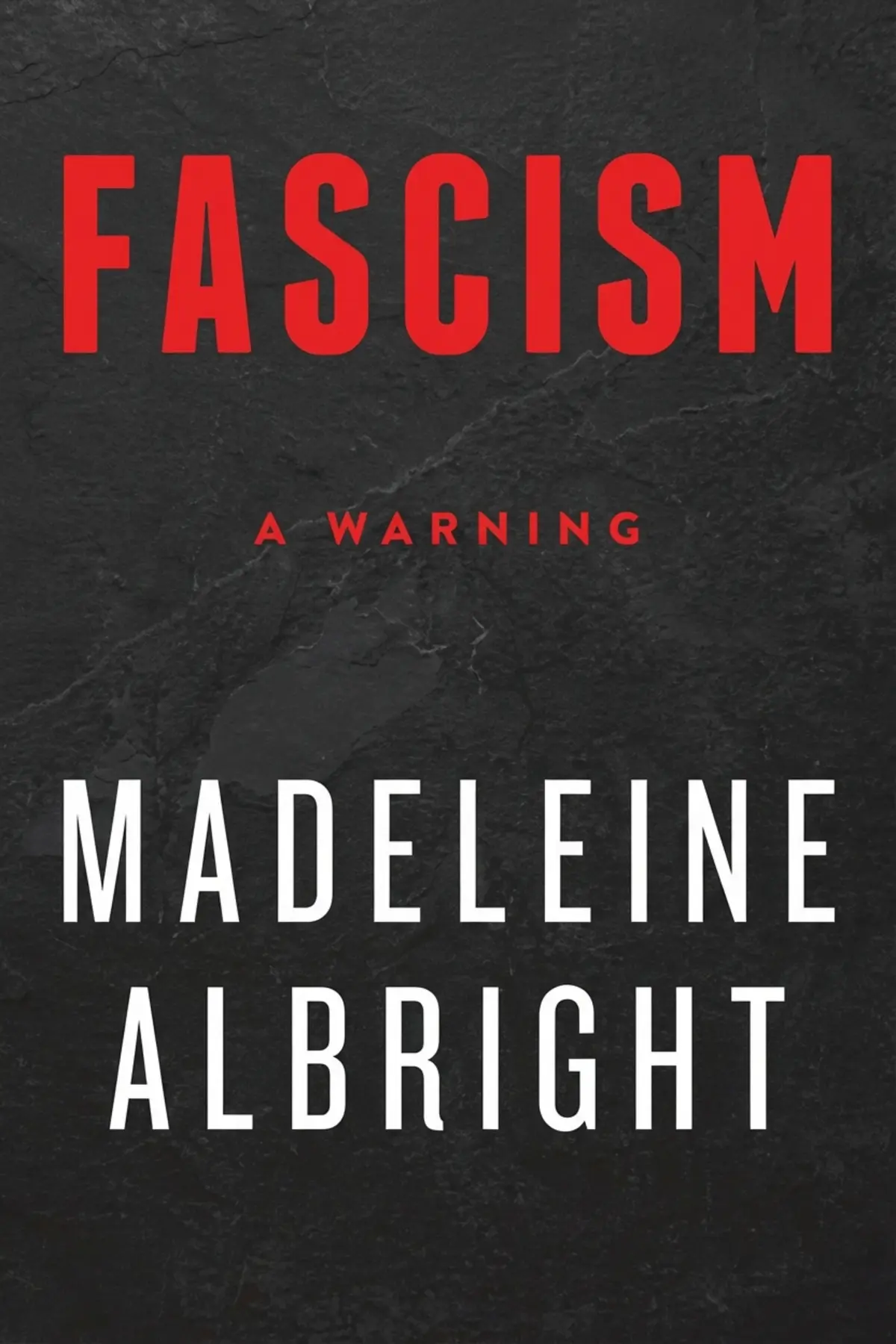
Shows how fascism works as a method of seizing power, not a fixed ideology, how it grows from public anger through legal steps, and how to recognize its warning signs in today's democracies.
1 min 02 sec
If the political news leaves you uneasy but unsure whether the alarm is justified, Madeleine Albright offers a way to judge. In Fascism: A Warning, the former US secretary of state argues that fascism is best understood as a method of taking and keeping power, and that it can appear on the left or the right. That changes what you watch for. The useful question becomes what a leader does with anger, with the press, with the courts and with the crowd.
Her central claim is unsettling. Fascism is a normal, recurring part of history; it feeds on grievance and usually arrives step by step through legal means, so it is easiest to stop before most people notice it. Albright traces that pattern from Hitler and Mussolini to Turkey, Venezuela, Hungary and the United States. What remains is a handful of warning signs you can test against any government, including your own, and a reason to stay alert precisely when things seem safe.
1 min 43 sec
The same insult gets aimed at police officers, feminists and vegans, which makes it almost useless. Albright replaces the label with a few behaviors that reveal far more than any party program ever could.
1 min 44 sec
A soldier blinded by gas regained his sight in time to watch his country lose a war. What he did with that humiliation, and with millions of frightened voters a decade later, set a pattern still in use.
1 min 45 sec
Mussolini had a barnyard image for how a dictator should take control. Hitler and, decades later, Turkey’s Erdoğan both followed it, and neither needed to break the rules at the start.
1 min 44 sec
Britain remembers itself as freedom’s defender, yet uniformed fascists once rallied in its streets. The movements of the interwar years were far more common, and their promises far more familiar, than most people assume.
1 min 41 sec
Chávez raised wages and improved health care. Orbán came to office through democratic elections. So why does Albright still see warning signs in Venezuela and Hungary, and what should voters watch instead of the benefits on offer?
1 min 38 sec
The cheering at the Berlin Wall has given way to something colder. Polls, jobless graduates and a very old trick from Benjamin Franklin explain why so many people are now curious about alternatives to democracy.
1 min 51 sec
A phone call to Manila and a ban on a few reporters had effects far beyond Washington. Albright traces how one president’s words traveled abroad, and why a slogan from 1940 still carries heavy baggage.
1 min 34 sec
Albright put a blunt question to her Georgetown graduate students, and one student’s answer turned the usual reassurance upside down. It suggests the most dangerous belief a democracy can hold is the one that sounds most comforting.
1 min 11 sec
Albright’s book works like a field guide to a danger most people think belongs to old newsreels. Fascism, in her account, is a recurring way of taking power that looks almost ordinary while it grows. It starts with real grievances, a lost war, a lost job, a sense of being ignored, and a leader who turns them into a single enemy and a cheering crowd. It advances through elections and legal steps, each defensible alone. By the time its shape is clear, the institutions that could have stopped it are already gone.
That is why her warning aims at calm moments. Watch the referees in your own country, and when courts, election officials, civil servants or the press are weakened one after another, count the feathers, however popular the leader is. Slow down whenever a story offers one villain for many problems. Keep talking with people outside your bubble, since a divided public is the easiest to stir.
Mussolini wanted his chicken plucked so quietly that nobody would notice. Noticing is still our job.
Fascism sounds like a word for black-and-white newsreels of Hitler and Mussolini. Madeleine Albright, a former US secretary of state who came to the United States as a child after the communist coup in Czechoslovakia, argues it is a live danger. Governments from South America to Europe are drifting away from democracy, and some are flirting with fascism outright. Her angle is to define fascism by what it does. It can come from the left or the right. What marks it is a leader who channels public anger, controls information, claims to speak for the whole nation against outsiders and wants the crowd stirred up. It usually arrives slowly and legally, as Hitler's rise and Erdoğan's Turkey show, and it has surfaced in Britain, India, Venezuela and Hungary. Albright then turns to the conditions behind democracy's slide, from youth unemployment to disinformation on social media, and to Donald Trump, whose praise for strongmen and America First rhetoric she sees as dangerous encouragement. Readers get a clear set of warning signs and a firm case against complacency.
Readers uneasy about the news who want clear criteria for when politics turns dangerous.
Students of history and politics looking for links between the 1930s and today.
Voters in any democracy who want to know which institutions to watch closely.
Madeleine Albright was born in Prague in 1937 and came to the United States as a child after the 1948 communist coup in Czechoslovakia. She earned a PhD from Columbia University, served as US ambassador to the United Nations and was secretary of state under President Bill Clinton from 1997 to 2001. She later chaired Albright Stonebridge Group, taught diplomacy at Georgetown University and wrote the bestsellers Madam Secretary and The Mighty and the Almighty. She received the Presidential Medal of Freedom in 2012 and died in 2022.
Listeners consider this work exceptionally accessible and thoroughly researched, with one mentioning it is written in everyday language. The text delivers a comprehensive history of fascist leadership and offers a significant critique of the current political landscape. Listeners describe the experience as stimulating and revelatory, while one review emphasizes that it forces an evaluation of historical perspectives. Although listeners find the subject matter alarming, they value its significance to the modern world.
As a student of history who grew up hearing vague definitions of autocracy, I found Albright’s perspective incredibly grounding. She doesn’t just lecture from a podium; she shares harrowing family stories about fleeing Prague that make the political theory feel deeply personal. The way she draws parallels between Mussolini’s "draining the swamp" rhetoric and modern populist movements is genuinely eye-opening, if not a bit terrifying. Her writing style is remarkably accessible for someone with such an intimidating resume, avoiding the dense jargon you’d expect from a former Secretary of State. While the book was written during the Trump era, its warnings about the "herd mentality" of global leaders feel even more relevant today. It’s a sobering reminder that democracy is fragile and requires constant, active defense from every citizen.
Show moreHave you ever wondered why we throw the word ‘fascist’ around so loosely these days? Madeleine Albright takes that question to her graduate students and uses their insights to build a terrifyingly clear picture of what the term actually means. The chapter on Kim Jong-Un is particularly chilling because she describes meeting his father and seeing the cult of personality firsthand. Frankly, it’s rare to find a book that manages to be both a rigorous history lesson and a pulse-pounding warning about our current trajectory. She captures the "us against them" mentality that fuels these movements with surgical precision. It’s not just about the big dictators; it’s about the small, incremental steps that lead a society toward the brink. If you care about the future of global stability, you need to read this immediately.
Show moreAfter hearing Albright speak in an interview, I decided to grab the audiobook, and hearing her voice deliver these warnings made the experience much more powerful. She has this way of speaking—and writing—that makes you feel like you’re sitting in one of her Georgetown seminars. The history of the Arrow Cross in Hungary and the rise of Milosevic in the Balkans provided context I was sorely lacking. Not gonna lie, some sections regarding the Holocaust and the murder of her family members are incredibly difficult to get through, but they are necessary. She effectively argues that fascism isn’t a fixed ideology but a method for seizing and holding power through fear. The book is a masterful blend of memoir and political science that should be required reading.
Show moreThe chapter comparing McCarthyism to current political tactics was worth the price of the book alone. Albright draws on her decades of experience in the State Department to show that the US isn't immune to the same "bully" tactics that destroyed European democracies. Truth is, her personal connection to the material—as someone whose family was twice driven from their home—gives the book an emotional weight that a standard history book lacks. She vividly describes the "little measures" that citizens often fail to notice until it’s too late for the constitution to save them. While she is clearly critical of Trump, she also looks at the systemic issues, like globalization and automation, that create the "economic stress" fascists exploit. It’s a comprehensive, frightening, and deeply patriotic book that asks us to be better citizens.
Show moreThis wasn’t exactly the light reading I was looking for, but it’s easily one of the most important books I’ve picked up this year. Albright uses everyday language to dismantle complex historical shifts, making the rise of the Third Reich feel less like a distant memory and more like a repeatable pattern. To be fair, she is quite open about her bias against the previous administration, which might alienate some readers looking for a strictly neutral historical text. However, her analysis of "strongman" psychology—from Turkey’s Erdogan to Russia’s Putin—is masterfully done and supported by her own diplomatic encounters. It’s frightening to see how easily democratic safeguards can be eroded when a leader prioritizes ego over institutions. I did feel that her definition of fascism remained a little bit vague toward the end, but the overall message is impossible to ignore.
Show moreWow, this was a heavy hitter. Albright’s metaphor of fascism being a wound that we keep picking at really stuck with me throughout the entire read. She writes with a level of urgency that is infectious, likely because she has seen the worst of humanity during her childhood in Czechoslovakia and her time at the UN. I appreciated how she didn't just focus on the 1930s but looked at modern-day Poland, Hungary, and Venezuela to show that this isn't a dead ideology. Look, the comparisons to Donald Trump are frequent and pointed, so if you’re a fan of his, you’ll probably hate this. But for everyone else, her observation that he acts as a "bully" who mimics the tactics of historic autocrats is well-researched and hard to dismiss. It's a thought-provoking look at how easily we can lose our way.
Show moreThe most striking thing about this book is how Albright balances her optimism with genuine dread. She calls herself an "optimist who worries a lot," and that tone permeates every chapter. Her firsthand accounts of negotiating with Vladimir Putin were the highlight for me, offering a glimpse into the mind of a leader who uses democratic tools to undermine democracy itself. I did find her treatment of socialism a bit "muddy," as she doesn't always distinguish between different left-wing movements clearly enough for my taste. However, her core argument about the "macho" posturing of modern leaders is spot on. It’s an eye-opening survey of how the world has shifted toward authoritarianism while we were busy being complacent. The prose is lean and punchy, making it a very quick but intellectually taxing read.
Show moreFinally got around to reading this prescient work, and it’s amazing how much of what she predicted in 2018 has come to pass. Albright writes in a very accessible, everyday style that makes the complex history of European conflict easy to digest for a general audience. I particularly enjoyed the "Foxworthy-style" list of fascist traits she developed with her students—it was a clever way to illustrate a very dark subject. My only minor gripe is that she occasionally goes easy on the foreign policy failures of the US that might have contributed to global instability. Still, her point that a leader's instincts matter more than their specific party platform is a crucial takeaway. It’s a well-researched call to action that reminds us that "it can happen here" if we aren't vigilant.
Show moreActually quite surprised by how much I enjoyed this, despite the depressing subject matter. Albright’s writing is surprisingly conversational, which helps when you’re wading through the atrocities of Hitler and Stalin. She makes a compelling case that we are living through a period where "solidarity" has become a dirty word, which only helps autocrats gain a foothold. Personally, I would have liked more focus on China’s rising influence, as they seem to fit her criteria for authoritarianism perfectly. But the sections on Erdogan and Duterte provide a necessary global perspective that we often miss in the US-centric news cycle. It made me nostalgic for a time when the US was more respected on the world stage for its commitment to human rights. It's a solid, thought-provoking read.
Show morePicked this up because of the author’s reputation, but I ended up feeling a bit underwhelmed by the actual analysis. While I respect Albright’s incredible career and her family’s history, the book felt more like a collection of anecdotes than a cohesive political warning. She spends a lot of time being nostalgic for the Clinton era, which sometimes distracted from the historical comparisons she was trying to make. The truth is, I wanted a more rigid, academic definition of fascism rather than the "I know it when I see it" approach she takes here. It’s definitely readable and contains some interesting tidbits about Franco and the Balkans, but it didn't quite provide the "solid warning" the title promised. It’s a decent primer for those who don’t know much about 20th-century history, but seasoned political junkies might find it a bit surface-level.
Show moreAlbright argues that fascism is a method of seizing and holding power, not a fixed ideology, and that it can come from the left or the right. It feeds on public anger, controls information, claims to speak for the whole nation against outsiders and stirs up the crowd. Because it is a normal, recurring part of history that grows slowly, she urges citizens to defend democracy whenever it is challenged.
Usually step by step and often through legal means. Mussolini compared it to plucking a chicken one feather at a time. Hitler pursued a policy of legality, made electoral gains and became chancellor before dismantling the state. Erdoğan won a fair election in Turkey in 2002, then arrested officers, took over media, appointed loyal judges and, after a 2016 coup attempt, won the power to rule by decree.
No. She writes that fascism is not what the United States currently faces and that its institutions are holding firm. She does argue that Trump is anti-democratic: he praised leaders such as Rodrigo Duterte, excluded reporters in a way Cambodia’s government cited, used a rhetoric of national victimhood and revived America First, a slogan tied to a 1940 committee that included Nazi sympathizers. She sees this as encouragement to strongmen.
Judge leaders by their methods rather than their labels. Watch what happens to courts, election bodies, the civil service and the press, since weakening them one by one is the classic path. Be wary of anyone who reduces many problems to one enemy. Check who produced a political story before sharing it, and keep listening in good faith to people outside your own media bubble.
John Rawls

Ben Macintyre




James Shapiro

Miles Taylor

Ben Macintyre

Charles C. Mann
AUDIO SUMMARY AVAILABLE
Get the key ideas from Fascism by Madeleine Albright, plus 5,000+ more nonfiction titles.









