
11 min 24 sec
Available in: English
Everybody Writes: Your Go-To Guide to Creating Ridiculously Good Content
By Ann Handley
A practical guide to writing clearer, more engaging content for the web and for work. It covers setting a goal, surviving the ugly first draft, editing in two passes, sharper openings, better-timed posts and customer-centered About Us pages.
Table of Content
1. Introduction
1 min 07 sec
Most professionals write all day in emails, posts, product pages and proposals without ever thinking of themselves as writers, and their readers can tell. In Everybody Writes, Ann Handley, chief content officer of MarketingProfs, starts from a blunt observation. A beautiful, technically brilliant website is wasted if its words are dreadful, because nobody stays to read them. Her answer is reassuring: good writing, she argues, is a learnable process with a handful of rules, not a gift reserved for the naturally talented.
The thread running through her advice is simple: write for the reader at every step. Know what you want to say and the facts behind it, let the first draft be rough, edit in two passes, put the point first, and meet your audience where and when they are paying attention. Along the way come a public health sentence rescued by moving one number, a boutique that built 55,000 fans on $40 a day, and a test for any About Us page you have ever written.
2. Know your point and your facts before writing
1 min 36 sec
Most people start typing and hope the purpose shows up somewhere along the way. Handley reverses that order, and a small assignment about a new restaurant shows how much of a text gets written before the first sentence.
3. Let the first draft be ugly
1 min 21 sec
Writer’s block looks like a lack of ideas, yet Handley traces it to something else entirely. A nervous film reviewer and a lump of dirty marble show why the worst version of your text is a necessary step.
4. Edit twice: once for meaning, once line by line
1 min 32 sec
A text can be polished sentence by sentence and still leave readers confused. Handley describes two approaches to editing, one taking a broad view of the draft and one combing through it line by line.
5. Put the point in your first few words
1 min 42 sec
A government sentence about adult literacy contained an alarming number, and almost nobody would have reached it. Handley’s fix changes no facts at all, only their order, and the difference is striking.
6. Write for the audience that's actually online
1 min 35 sec
A small accessories shop turned a modest daily budget into tens of thousands of engaged fans. Its approach rested on three choices about readers, and only one of them involved spending money.
7. An About Us page that's really about the visitor
1 min 25 sec
The page where a company describes itself is often the least convincing page on its site. Handley compares a toy company and Coca-Cola to show what visitors are actually looking for there.
8. Conclusion
1 min 06 sec
Handley’s book adds up to a change of identity. If you send emails, post updates or write a single line of website copy, you are a writer already, and your words help or hurt you with every reader and customer. The encouraging part of her case is that the skill comes from a few rules practiced often, and anyone can learn them.
Every rule points the same way, toward the person on the other end. A clear goal saves them from a rambling text. An ugly draft, edited twice, spares them your confusion. A first sentence that leads with thirty million adults keeps them reading, and a post timed for Friday evening reaches them when they are listening.
So begin with what you already write. Treat today’s customer email or social post as practice, and drop the five-paragraph essay you learned at school, which Handley finds as boring to read as it was to write. Pick one text this week, put its point in the first words and cut what the reader doesn’t need.
Nobody is waiting for you to become a writer. You already are one, and your next email is the place to prove it.
About this book
What is this book about?
Most professionals write all day in emails, posts, proposals and website copy, yet few think of themselves as writers. Ann Handley argues that this is a costly blind spot. On the internet, words work as currency for people and companies, and a beautiful website filled with jargon or vague language sends visitors away. Her message is encouraging: good writing is a learnable process, and a handful of rules gets most people there. Start with a clear goal, an audience and the facts that support your point. Let the first draft be ugly, then edit it twice, once for meaning and once line by line. Put the most important words at the front of every sentence and skip the long running start. Handley then applies the same reader-first thinking to marketing. A preppy accessories boutique gathered more than 55,000 Facebook fans in nine months by spending $40 a day on ads and on studying its followers. A company's About Us page works best when it explains what the business does for visitors and shows the real people behind it. Readers get a simple, repeatable method for making everyday writing clearer and more persuasive.
Book Information
Who it's for
Marketers and business owners
Marketers and small business owners whose websites and social posts are not bringing in customers.
Freezing at blank pages
Professionals who write emails, reports and proposals all day and freeze at the blank page.
Founders redoing site copy
Founders rewriting a homepage or About Us page and unsure what visitors want to read.
About the Author
Ann Handley
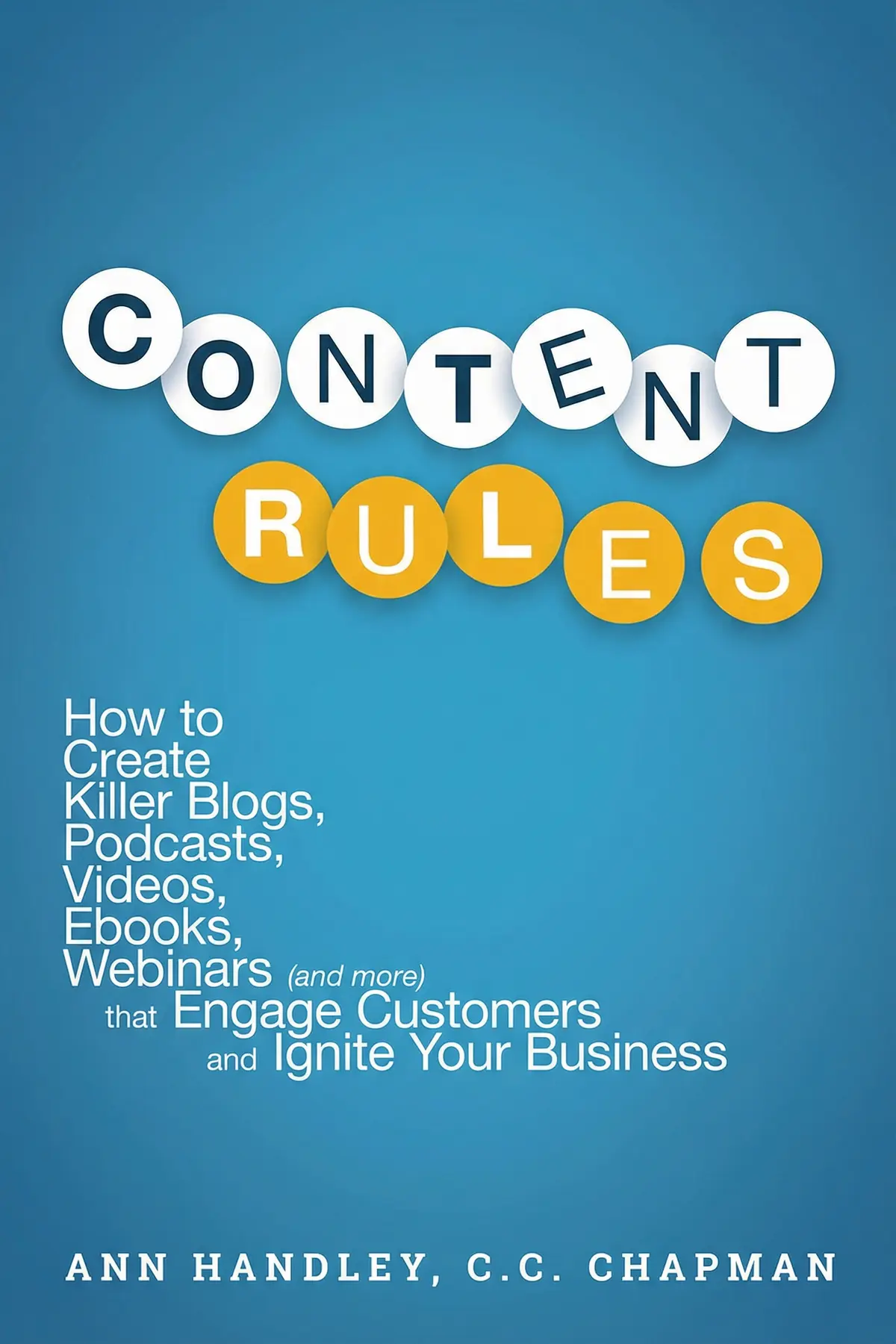
Ann Handley is an author and speaker and the chief content officer of MarketingProfs. She has written a column for Entrepreneur magazine and co-wrote Content Rules, a bestseller first published in 2011. Everybody Writes came out in a second edition in 2023. Her work sits where marketing meets everyday writing, and that is the ground this book covers.
Ratings & Reviews
Ratings at a glance
What people think
Listeners find this resource indispensable for producing content, as it delivers practical, actionable tips that effectively improve their writing. The experience is described as a delightful and extremely humorous one, with one listener identifying it as a must-read. Reactions are varied concerning the book's total length, with some considering it very long, and viewpoints regarding its fluff content remain split.
Top reviews
Suthida
Ann Handley has a way of making the daunting task of content creation feel like a conversation with a smart, witty friend. I used to agonize over every sentence, but her advice on the 'Ugly First Draft' gave me the permission I needed to just start typing. The book is packed with actionable steps that go beyond generic advice, offering specific formulas like how utility and empathy lead to quality work. Truth is, I found the chapters on social media and newsletters especially helpful for my current role. It’s a joy to read, even when she’s reminding you to cut those pesky adverbs. If you want to improve your business communication without falling asleep, this is the resource you’ve been looking for.
Show moreKofi
Finally, a manual that doesn't feel like a dry, dusty textbook from the nineteenth century. Handley manages to teach you about syntax and grammar while keeping you thoroughly entertained. I especially loved the focus on the reader-centric approach—the idea that our ego as writers should always take a backseat to the needs of our audience. This book isn't just about where to put a comma; it’s a philosophy on how to communicate in a digital-first world. Not gonna lie, I’ve kept this on my desk as a reference for months now. The section on removing weak words is worth the price of admission alone.
Show moreNan
Wow, I didn't expect to laugh so much while learning about the nuances of business grammar! This book is an absolute gem for anyone who feels intimidated by the blank page. Handley’s voice is infectious, and her advice is grounded in the reality of how people actually consume information online today. From email subject lines to full-blown blog posts, she covers the spectrum with a mix of wit and wisdom. In my experience, the most valuable part was the 'resources' section at the end. It’s not just a book you read once; it’s a toolkit that makes you a more empathetic and effective communicator. Truly a joy!
Show moreSupaporn
Picked this up on a whim after seeing it recommended in several marketing newsletters, and I’m so glad I did. This isn't just about 'writing'; it's about connecting with people in a world that is way too noisy. Handley teaches you how to be the person that others actually want to read. The advice on removing 'fluff' and being ruthless with your own editing has already made my work emails much more effective. Gotta say, the humor and the relatable anecdotes make the 'lessons' stick much better than any writing class I took in college. It’s an invaluable resource for the modern professional.
Show morePick
As a marketing professional who skipped the formal journalism route, I found this guide to be an absolute lifesaver. Handley breaks down the wall between 'capital-W' Writing and the everyday communication we all do. The structure is fantastic; you can jump in and out of the short, pithy chapters whenever you need a quick refresh on active voice or headline strategies. My only gripe is that some sections felt a bit stretched, making the book longer than it probably needed to be. Still, the core message about exercising relentless empathy for your audience is something every brand needs to hear right now. It’s practical, funny, and deeply human.
Show moreMarco
Look, if you're struggling to find your voice in a sea of corporate jargon, 'Everybody Writes' is a fantastic antidote. Handley’s formula of utility, inspiration, and empathy is a simple but powerful way to audit your own work. I found the advice on writing for just one person to be a game-changer for my newsletter engagement. While some of the social media specific advice feels a bit dated now—platforms change so fast—the underlying principles of good storytelling remain timeless. It's a bit of a hefty read, but the humorous tone makes the length manageable. A solid addition to any content creator’s library.
Show moreDome
The chapter on writing for just one person changed my entire approach to my company's Facebook presence. Handley emphasizes that we are all publishers now, which is a scary thought until you realize she provides the exact roadmap to succeed. I appreciated the specific tips on length for various posts and the importance of a strong 'lead.' To be honest, the book is a little repetitive in the middle sections, but the humor keeps it moving. It’s an essential guide for the modern era where everyone is a marketer, whether they like it or not. I've already recommended it to several colleagues.
Show moreTak
The concept of 'relentless empathy' is great, but much of the remaining content felt like a compilation of things I’ve already read on blogs like Copyblogger. For a beginner, this is a goldmine of information about brand voice and keeping things simple. However, if you already have a solid handle on grammar and basic marketing principles, you might find yourself skimming large portions. Frankly, the pop culture references and 'terribly American' style can become a bit distracting after a while. I appreciated the resources for web images, yet I was hoping for more deep-dive case studies rather than surface-level tips. It’s a decent primer, just not the 'master guide' I expected.
Show moreNarumon
Is this book for everyone, or just for people who have never written an email before? I’m torn. On one hand, Handley’s writing style is very readable and the sections are broken up into digestible bites. On the other hand, a lot of the 'tips' are total common sense. Do we really need a book to tell us to be human and concise? Personally, I would have liked to see more advanced strategies for long-form content or complex storytelling. It’s a bit long-winded for what is essentially a basic style guide. Good for a complete novice, but perhaps a bit light for anyone else.
Show moreMint
To be fair, this felt more like a collection of moderately helpful blog posts than a cohesive, 'must-read' book. I found the constant 'pop' citations and chirpy marketing-speak to be incredibly irritating after the first fifty pages. It covers the absolute basics—use active voice, avoid adverbs, be concise—which are things most people should have learned in high school. If you are a seasoned writer, there is almost nothing here that will challenge you or offer a new perspective. The 'ridiculously good content' she promises feels more like 'ridiculously average' advice packaged in a lot of fluff. I’d suggest looking elsewhere for real inspiration.
Show moreQuestions about this book
What is Everybody Writes by Ann Handley about?
Ann Handley argues that anyone who writes emails, posts or web copy is a writer, and that good writing is a learnable process rather than a talent. She covers setting a goal and gathering facts, accepting an ugly first draft, editing in two passes and leading with the point. She then applies the same reader-first thinking to Facebook marketing and to company About Us pages.
What is the ugly first draft in Everybody Writes?
Handley calls it TUFD, the ugly first draft. She says writer’s block often comes from expecting a masterpiece right away. Instead, write your ideas down roughly, leaving notes such as insert example where something is missing. Like a lump of marble, the rough draft shows its strengths and weaknesses, so you can see what to do next and shape it through editing.
What is a running start in writing?
A running start, in Handley’s terms, is piling up background before getting to the point. Her example is a public health sentence that named a survey, a government department and a year before revealing that 30 million adults struggle with reading. Moving the number to the front keeps readers engaged. She advises placing the most important words at the start of every sentence.
Who should read Everybody Writes?
It suits marketers, small business owners and founders who rely on websites, blogs and social media to reach customers, and any professional who writes daily at work. It is especially useful for people who find starting hard, who suspect their web copy sounds generic, or who want practical rules for opening sentences, timing posts and writing About Us pages.
How can I apply the ideas from Everybody Writes?
Start with what you already write. Before an important email, note its goal, its reader and the facts it needs. Allow a rough first draft, then edit once for meaning and once line by line. Move the key fact to the start of your first sentence. Post on social media when your audience is online, and rewrite your About Us page around what you do for visitors.
Readers also enjoyed





AUDIO SUMMARY AVAILABLE
Listen to Everybody Writes in 15 minutes
Get the key ideas from Everybody Writes by Ann Handley, plus 5,000+ more nonfiction titles.
- 5,000+ titles
- Listen as much as you want
- 7-day free trial
- Cancel anytime









