

12 min 15 sec
Available in: English
Every Time I Find the Meaning of Life, They Change It: Wisdom of the Great Philosophers on How to Live
By Daniel Klein
An old philosophy student rereads the sayings he collected at college and finds a shared lesson: stop living for what comes next, and choose your own purpose deliberately, because no one hands it to you.
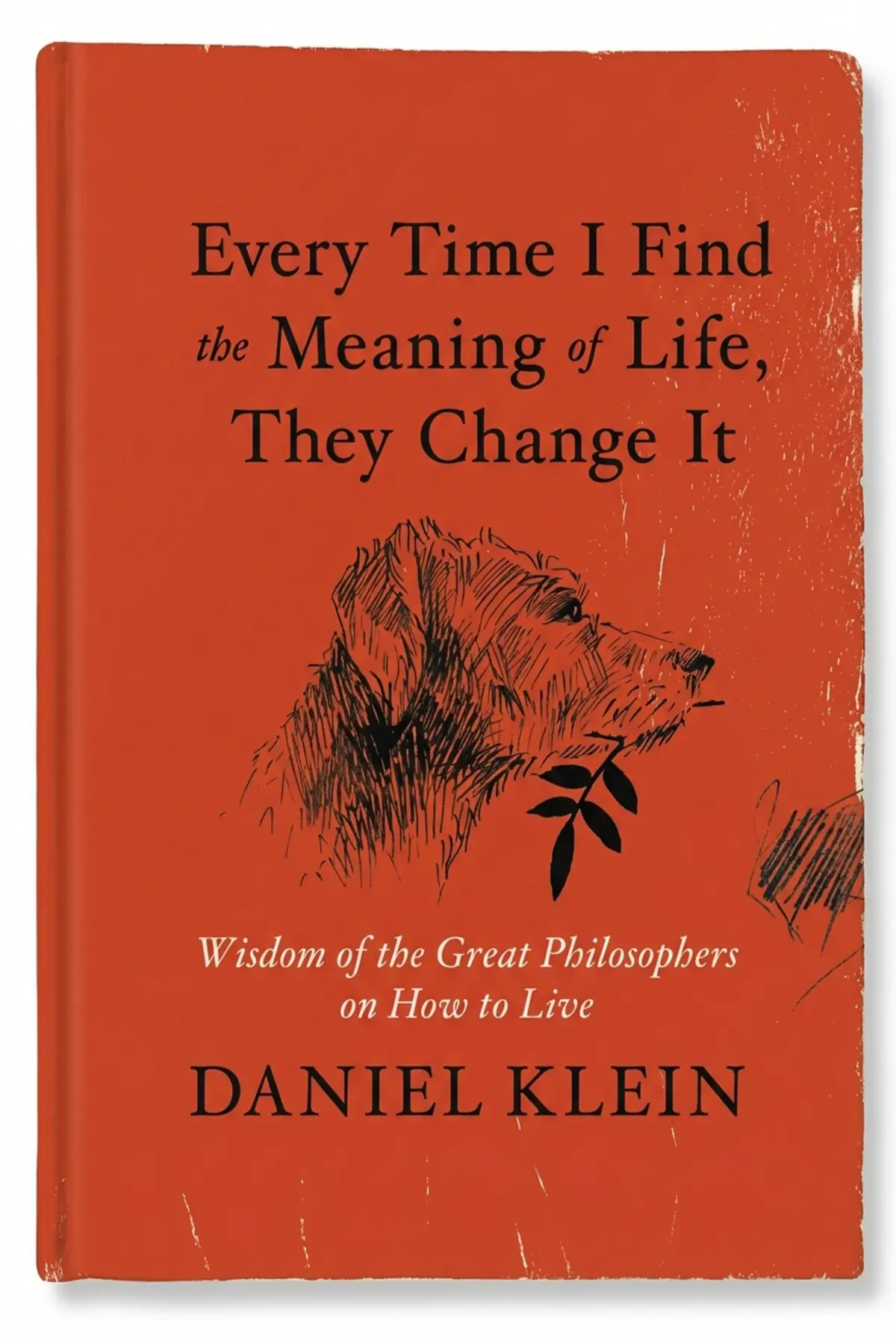
Table of Content
1. Introduction
1 min 06 sec
Many thoughtful people spend years waiting for the meaning of life to reveal itself, and miss the life happening in the meantime. In Every Time I Find the Meaning of Life, They Change It, writer Daniel Klein returns in his eighties to a notebook of philosophers’ sayings he began as a Harvard philosophy student. What he finds is that they keep pointing the same way. Purpose is not found lying around; you build it, and the present moment is the only place to build it.
The notebook runs from Epicurus and Marcus Aurelius to Jean-Paul Sartre, Viktor Frankl and Reinhold Niebuhr. Klein reads each saying twice, first with the eyes of a young student, then with the eyes of an old man who knows exactly what comes next. What emerges is a short, humane case that a good life rests on two habits: paying attention to now, and choosing your own reason for living on purpose. Along the way come a thought experiment for imagining a better life and Klein’s admission that his youthful beliefs owed something to the herd mentality of his era.
2. Stop spoiling today by wanting what's next
2 min 06 sec
An old man notices that, at every stage of his life, his mind was already somewhere else. A Greek philosopher’s warning explains what that habit costs, and why getting what you want rarely ends the wanting.
3. Learn to live fully in the present moment
2 min 04 sec
Thinkers have repeated the same advice about the present for two thousand years, which suggests almost nobody manages to follow it. Klein’s two explanations are less comfortable than simple distraction, and one involves volcanoes.
4. You write your own purpose, so own it
1 min 57 sec
A toaster knows exactly what it is for. Sartre claimed people never get that certainty, and he treated the gap as both a gift and a burden that most of us would rather hand to someone else.
5. Rehearse a better life with one thought experiment
2 min 05 sec
A psychiatrist who survived four years in Nazi camps left behind a strange instruction: assume you already got your life wrong once. Klein puzzled over it for decades before seeing what it was for.
6. A meaning you choose outlasts the fashions
1 min 56 sec
The remark that made Klein give up his notebook also gave the book its title. Forty years later it led him somewhere unexpected, and offers a quick test for beliefs you never actually chose.
7. Conclusion
1 min 01 sec
What Klein’s notebook adds up to is a set of instructions with no final answer attached. The sayings he copied as a student never settled what life means, and the fashions around them shifted, just as Niebuhr warned. What held steady was a pattern. The thinkers he kept returning to, from a Greek philosopher to a Vienna doctor who survived the camps, kept telling him to attend to now and to take charge of what his life is for.
That is a modest program, and a demanding one. It means catching your mind as it leaves the dinner table for whatever comes next. It means admitting that your purpose is something you create, with no one else to blame if you neglect it. And it means using Frankl’s rehearsal once in a while, picturing the better second version of your days and borrowing a little of it for this one.
Klein spent decades looking for the meaning of life in other people’s sentences. He ended where Sartre started: the meaning is yours to make, and the only place to make it is here.
About this book
What is this book about?
Many people spend their lives waiting for the meaning of life to show itself, and they rush past the present while they wait. As a young philosophy student at Harvard, Daniel Klein kept a notebook of short, memorable sayings from great thinkers, along with his own reflections. In his eighties he opened it again to see what still held up. He reads five of those sayings twice, once as the student who copied them and once as an old man who knows what comes next. Epicurus warns against spoiling what we have by wanting more. Marcus Aurelius asks us to act as if each act were our last. Jean-Paul Sartre insists that we create our own essence. Viktor Frankl offers a thought experiment for imagining a better life. Reinhold Niebuhr reminds us that ideas about meaning shift with the culture around them. Readers get an easy, warm tour of philosophy that skips the jargon and ends in two practical habits: pay attention to the life happening now, and decide for yourself what it is for.
Book Information
Who it's for
Always thinking ahead
Busy people whose minds are always on the next task, the next goal or the next evening.
Wanting philosophy without jargon
Readers curious about Epicurus, Sartre or Frankl who want the core ideas without the jargon.
Taking stock of life
Anyone at a crossroads, or late in life, asking what their days have been for.
About the Author
Daniel Klein
Daniel Klein was born in 1939 in Wilmington, Delaware, and studied philosophy at Harvard College. He worked briefly in television comedy before turning to books, writing thrillers, mysteries and humorous takes on philosophy. With Thomas Cathcart he co-wrote Plato and a Platypus Walk Into a Bar, translated into 26 languages, and he also wrote Travels with Epicurus. He lives in Great Barrington, Massachusetts.
Ratings & Reviews
Ratings at a glance
What people think
Listeners find the book highly stimulating, delivering useful philosophical perspectives while allowing for a peaceful immersion into the subject. They portray it as a funny and engaging listen that is both straightforward and expertly composed, with one listener remarking that it remains profound enough to inspire hours of thought. Listeners value the work's sincerity, with one listener noting that it avoids forcing any specific certainties upon the audience.
Top reviews
Vimolwan
Finally got around to reading this gem, and I’m so glad I did. Daniel Klein manages to bridge the gap between heavy academic philosophy and the kind of casual pondering we all do in our late-night thoughts. The way he uses quotes to launch into these witty, brief essays makes the whole experience feel like a conversation with a very smart, very funny grandfather. To be fair, it’s not going to replace a university degree, but that’s not the point. It’s about how these big ideas actually land in a real person’s life. Truth is, I found myself pausing after every chapter just to let the ideas simmer for a bit. It’s light, it’s refreshing, and it doesn’t try to sell you a single “truth,” which I appreciated immensely.
Show moreHarper
The structure here is brilliant. By starting each section with a profound quote, Klein sets a stage that allows the reader to reflect before he even says a word. I’ve bought three copies of this already to give to friends because it’s so accessible. It’s a rare book that manages to be both "beach read" light and "existential crisis" deep at the same time. Not gonna lie, I’ve started carrying it in my bag just to read a page or two when I’m waiting for the bus. It reminds me that seeking meaning is a lifelong process, not a destination you reach and then stay at. Truly a fantastic, whimsical guide to the messy business of being human.
Show morePear
Daniel Klein has a way of making complex ideas feel like a chat over coffee. This is my third book of his, and I think it might be his best work yet. It’s deceptively short, but I found myself pondering some of these chapters for hours after closing the cover. He captures that "YOLO" spirit but anchors it in historical thought so it doesn't feel shallow. Personally, I think the way he grapples with the quotes—sometimes agreeing, sometimes wrestling with them—is what makes the book so relatable. It’s not a lecture; it’s a journey. Every time I revisit a page, I seem to find a new nugget of wisdom that fits whatever stage of life I’m currently in.
Show moreElise
This is easily the meatiest of Klein's work in terms of actual philosophical application. I love how he takes these old, dusty quotes and breathes new life into them by showing how they work (or don't work) in the modern world. The humor is spot on—witty without being pretentious. It’s the kind of book that makes you feel smarter just by reading it, but also humbler because you realize how many different ways there are to live a "good" life. Frankly, it’s a treat for the mind. Whether you’re 15 or 85, there is something in here that will resonate with your soul. Highly recommended for anyone who likes their wisdom served with a side of laughs.
Show moreBenjamin
As someone who usually finds philosophy intimidating, this was a breath of fresh air. I’ve always been curious about the big questions but get lost in the dense jargon of original texts. Klein avoids all of that. He takes these legendary thinkers and brings them down to earth with humor and a touch of self-deprecation. It’s like a greatest hits album of wisdom. Gotta say, the chapter on Epicurus really changed how I view my daily routine. My only minor gripe is that the tone can sometimes feel a bit too breezy, almost like a collection of blog posts rather than a cohesive book. But for a relaxing dip into philosophical waters, you really can’t beat it.
Show moreNang
Ever wonder why we're all here? Klein doesn’t give you a straight answer, but he provides a wonderful map of how others have tried to answer it. To be fair, this is more "good TV" than "great cinema"—it’s entertaining and polished, but maybe lacks that final layer of academic rigor. But look, who cares? It’s fun. It’s the kind of book that gives you ammunition for a dozen interesting dinner party conversations. I especially liked the reflections on how his own perspective has shifted as he’s reached his 80s. It adds a layer of authenticity that younger authors just can't replicate. A solid choice for anyone looking to stir the pot of their own mind without getting a headache.
Show moreWacharapol
Picked this up on a whim while browsing and I’m pleasantly surprised. My brother always tells me I stay too much in my head, and this book felt like it was written specifically for people like me. It provides just enough depth to satisfy that craving for meaning without making you feel like you’re drowning in the deep end. The author’s voice is so distinct and gentle. In my experience, most books in this genre are either too "self-help" or too "textbook," but Klein hits that sweet spot right in the middle. It’s a collection of universal interpretations that feel incredibly personal. Definitely a book I'll keep on my shelf for a long time.
Show moreChamlong
A bit of a mixed bag for me, if I’m being frank. On one hand, I really enjoyed the quote-first format because it makes for an incredibly easy read that you can pick up and put down whenever. Klein’s writing is definitely clever and he clearly knows his stuff. However, I felt like some of the chapters stayed a bit too surface-level for my taste. I wanted him to dive deeper into the concept of personal identity, specifically the "what it's like to be me" aspect that he only brushes against. Also, there was a sudden pivot into personal political opinions regarding medical choices that felt out of left field and broke the flow. Still worth a read for the quotes, but maybe not the life-changing experience I was hoping for.
Show moreTawee
Look, this isn't a deep academic text, so don't go in expecting Hegel or Kant in their full complexity. It’s more of a "Philosophy 101" highlights reel with some personal anecdotes thrown in. While I found the writing to be very well-crafted and the humor quite dry and pleasant, I felt it was a bit repetitive toward the end. The "meaning of life" vs. "meaning in life" distinction could have been explored with more nuance. It’s a decent book for a casual reader or someone just starting to explore these topics, but if you’ve already read a lot of philosophy, you might find it a bit too light. It’s the literary equivalent of a snack—tasty, but not exactly a full meal.
Show moreRungtip
I wanted to love this, but one specific section completely ruined the experience for me. The first half was genuinely fantastic—witty, insightful, and full of great food for thought. But then the author decided to include a totally unnecessary rant about personal medical decisions and vaccinations that had nothing to do with the philosophical point being made. It felt incredibly preachy and out of place in a book that otherwise claims not to push any specific truths on the reader. It’s a shame because the writing style is otherwise quite charming. If you can ignore the sudden shift into personal shaming, you might like it, but for me, it shattered the professional and contemplative tone the book had established.
Show moreQuestions about this book
What is Every Time I Find the Meaning of Life, They Change It about?
Daniel Klein rereads a notebook of philosophers’ sayings he started as a Harvard philosophy student, now in his eighties. He reflects on lines from Epicurus, Marcus Aurelius, Jean-Paul Sartre, Viktor Frankl and Reinhold Niebuhr, comparing how they struck him when young and how they strike him now. He finds a shared lesson: live in the present and deliberately choose your own reason for living.
Where does the title of Daniel Klein's book come from?
The title comes from a remark by Reinhold Niebuhr, a Christian philosopher who explored existentialist themes. When the young Klein read it, his habit of collecting quotes suddenly felt pointless and he stopped. Decades later he reads it as a point about culture: ideas about life’s meaning are shaped by their era, and eras change, as his own 1960s enthusiasms showed him.
What is Viktor Frankl's thought experiment in the book?
Frankl suggested living as though this were your second life and you had acted wrongly in the first. Klein long struggled with it, since judging a life wrong seems to require knowing the right one. Later he saw that the exercise is a way to search for the right life: treat your current life as the flawed draft and imagine what a better version would look like.
How can I apply the ideas in Every Time I Find the Meaning of Life, They Change It?
Start small. At meals or in good moments, notice when your mind jumps to what comes next and bring it back. Ask whether the traits you call fixed are facts or choices you keep making, as Sartre would. Sketch how a second-time version of you would spend an ordinary day. And check whether your ideas about a good life were chosen or absorbed from the crowd.
Is Daniel Klein an existentialist?
By the end, he concludes that he is. Of all the sayings in his notebook, Sartre’s claim that existence precedes essence rings truest to him, both at college and in old age. After decades of reading philosophy, he is convinced that each person can consciously choose a reason for living, and that making that choice on purpose is what makes a life good.
Readers also enjoyed

A Guide to the Good Life: The Ancient Art of Stoic Joy
William B. Irvine

A Little History of Philosophy
Nigel Warburton

A Theory of Justice
John Rawls


Anarchism: A Very Short Introduction
Colin Ward
Anarchy, State, and Utopia
Robert Nozick
AUDIO SUMMARY AVAILABLE
Listen to Every Time I Find the Meaning of Life, They Change It in 15 minutes
Get the key ideas from Every Time I Find the Meaning of Life, They Change It by Daniel Klein, plus 5,000+ more nonfiction titles.
- 5,000+ titles
- Listen as much as you want
- 7-day free trial
- Cancel anytime









