

A Life Decoded: My Genome: My Life
J. Craig Venter
 English
 ไทย
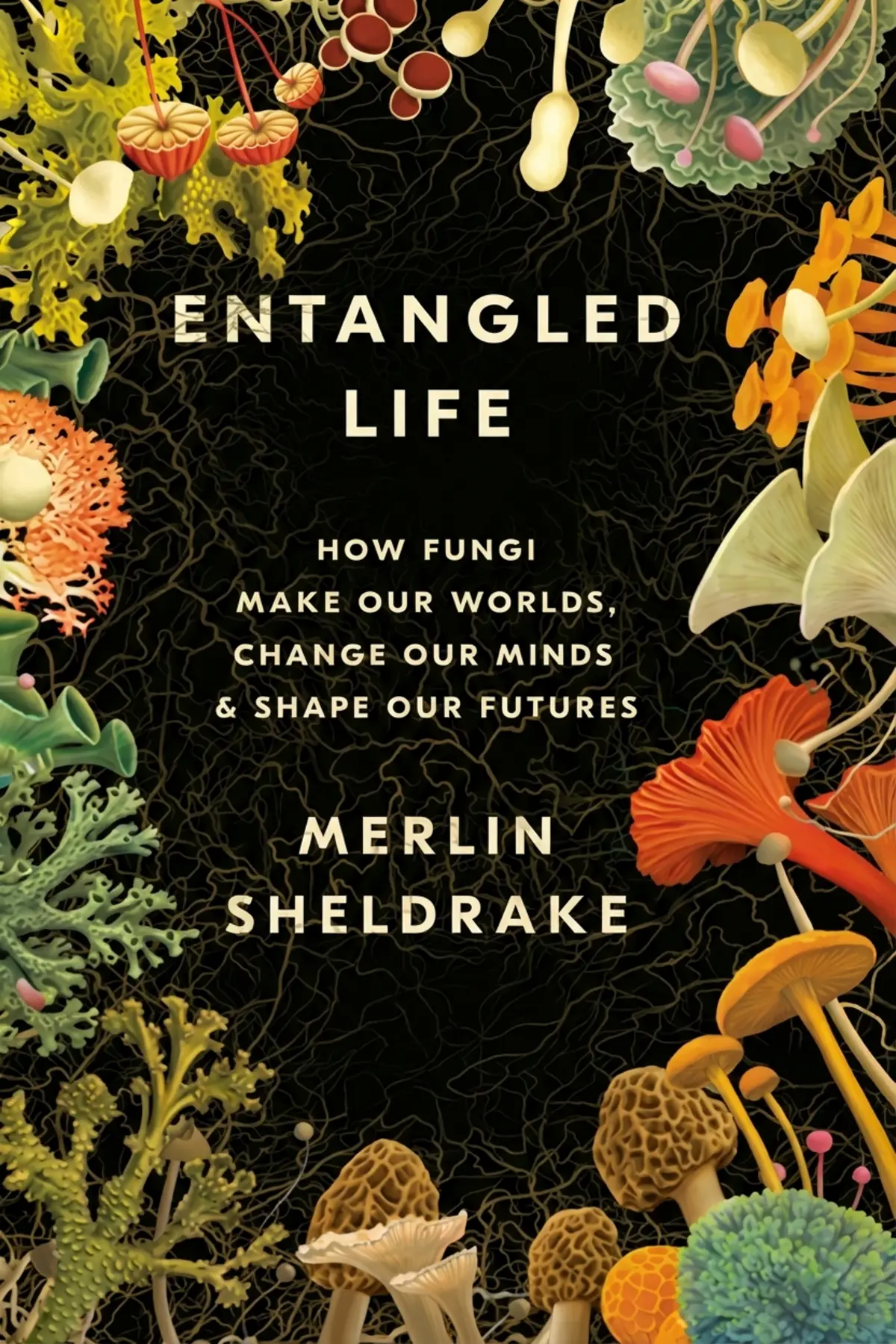
Shows how fungi, from slime molds to truffles, made plant life on land possible, link forests underground and alter minds. It also shows how they challenge our ideas of intelligence and self, and could help clean up pollution.
54 sec
If fungi make you think of mushrooms on a plate, you are seeing only the fruit of a much larger living thing. In Entangled Life, British mycologist Merlin Sheldrake shows that threadlike fungal networks under your feet are eating, trading and signaling, and that they helped the first plants survive on land. Yet science studies them less often than plants or animals.
A slime mold with no brain can trace a network almost identical to Tokyo’s rail system. Fungi link whole forests and can steer the body of an ant. Sheldrake’s case is that this neglected kingdom shapes our world and also unsettles our ideas of intelligence, of where a self ends, and of the metaphors we use for nature.
Follow his argument and a forest floor, your own body and the problem of waste all look different, with fungi at the center of each.
1 min 43 sec
Researchers in Japan set a simple organism loose on a map of Tokyo made of oat flakes and light. What it built in one day raises awkward questions about brains, decisions and where any living thing begins and ends.
1 min 53 sec
Six hundred million years ago the continents were bare and scorched, and the first plants faced terrible odds out of the water. They had help, and that help still decides what grows today, down to how sweet a strawberry tastes.
1 min 45 sec
Pale white plants with no leaves survive in the darkest corners of a northern forest, though they cannot make their own food. Explaining them uncovers a buried web, and raises the question of who really runs it.
1 min 44 sec
Bears toss logs aside and elk dig until their noses bleed, all for something buried underground. Behind that famous smell sits a long chain of chemical courtship that starts well before any animal arrives.
1 min 57 sec
A crusty patch on a rock can survive raw cosmic rays in space. In the nineteenth century, the same humble organism sparked a scientific fight whose outcome changed how biologists explain complex life.
1 min 49 sec
One fungus drives an ant up a plant and makes it bite down until it dies. Another has been honored at royal ceremonies and now draws serious medical interest. The difference between them is the interesting part.
1 min 42 sec
Light-emitting tags reveal plants and fungi haggling over carbon and phosphorus. It looks exactly like a stock market, until you notice the same evidence fits a very different political story just as well.
1 min 52 sec
Oyster mushrooms will happily eat used diapers, and other fungi digest explosives and some plastics. From building foam to medicine for struggling bees, fungal appetites might help with problems we have not solved on our own.
1 min 06 sec
Entangled Life adds up to an invitation to redraw the lines you use to sort the living world. Sheldrake keeps finding fungi on both sides of borders we thought were firm: between one creature and many, between partner and parasite, between having a brain and solving problems without one. A mushroom is only the visible tip of a web that fed the first plants, helped cool the planet and still runs through forests, bodies and, if we let it, our industries.
That change of view has everyday uses. On your next walk through a wood, picture the threads below moving water and carbon between trees, with pale ghost pipes drawing on the flow. When nature, or a workplace, is described as a market or a family, treat the comparison as a tool and ask what it hides. When you think about who you are, include the microbes that keep you alive.
Under every step you take lies a crowd that behaves as one, and it was holding the living world together long before anyone thought to look down.
Most people picture a mushroom when they hear the word fungi. Merlin Sheldrake argues that the mushroom is only the fruit of something far larger: thin threads running through soil, bodies and forests, feeding and trading with almost every other form of life. Science still studies this kingdom less than plants or animals, even though plant life on land depends on it. Sheldrake follows fungi through a series of surprises. A brainless slime mold traces a network almost identical to Tokyo's rail system. Truffles court bears and diners with scent. Lichens survive in space and once overturned biology with the idea of symbiosis. A fungus steers ants to their deaths, and psilocybin shows promise against depression and addiction. Along the way he asks harder questions. Where does an individual end? Are fungi traders, sharers or something our metaphors cannot capture? Readers come away with a new picture of the ground beneath them, a sharper eye for the stories scientists tell, and a sense of how fungi might help with waste, building materials and the decline of bees.
Curious professionals who want a fresh, science-based way to see forests, soil and their own bodies.
Gardeners, cooks and nature lovers wondering what fungi actually do beyond the mushroom.
Readers interested in psychedelic research or in green materials and pollution cleanup.
Merlin Sheldrake, born in 1987, is a British mycologist and writer. For his Cambridge University doctorate in tropical ecology, he studied underground fungal networks in the forests of Panama, holding a predoctoral fellowship with the Smithsonian Tropical Research Institute. He is a research associate at Vrije University, Amsterdam, and advises the Fungi Foundation and the Society for the Protection of Underground Networks. He also researches Amazonian ethnobotany and is a musician, brewer and fermenter. Entangled Life won the 2021 Wainwright Prize and appears in twenty languages.
Listeners find this work both immersive and thoroughly documented, commending its enthralling mix of scientific facts and intriguing viewpoints on the world of fungi. The prose is lauded for making intricate scientific ideas easy to grasp, while the narrative keeps audiences hooked. Listeners value the way the title examines modern ecology and offers a deeper insight into the natural world, with one listener mentioning how it plunges into scholarly depths.
Ever wonder what's actually happening under your feet while you're hiking through the woods? Sheldrake’s exploration of the 'wood wide web' is nothing short of a revelation for the casual nature lover. To be fair, I had no idea that fungi were more closely related to animals than plants until I cracked this open. The author manages to demystify intricate ecological interactions without losing the sense of wonder that makes the subject so captivating. I was particularly fixated on the way mycelial networks seem to 'compute' decisions about where to grow. It is a harmonious fusion of biological data and lyrical storytelling that forces you to reconsider the very definition of intelligence. Truly, this book changed how I look at every patch of dirt I pass.
Show moreWow, this was a mind-bending journey into a kingdom I previously took for granted. Before reading this, I thought mushrooms were just pizza toppings or occasional forest oddities. Sheldrake reveals a hidden world of 'gun cells' and zombie-ant fungi that feels more like science fiction than reality. His writing style is remarkably clear, successfully unravelling complex scientific concepts like mycorrhizal symbiosis for someone without a Ph.D. I loved the physical book itself too, especially knowing the illustrations were drawn using ink from shaggy ink cap mushrooms. It feels like the author is deeply entangled with his subject matter in a way that is infectious for the reader. If you want to understand the future of sustainable materials, like mycelial bricks, you need to read this.
Show moreThe illustrations alone, drawn with ink from shaggy ink cap mushrooms, make this book a treasure for any nature lover. Sheldrake has a gift for making the invisible visible, leading us through the dark, damp world of mycelium with the enthusiasm of a pioneer. I was stunned by the fact that fungi have been shaping the planet for over two billion years. The way he describes the symbiotic relationship between plants and fungi—where fungi essentially acted as roots before plants evolved them—is a masterclass in science writing. It is an engaging, well-researched, and ultimately humbling look at how much we rely on organisms we barely understand. This isn't just a book about mushrooms; it’s a book about the interconnectedness of all life.
Show moreFinally got around to reading this, and Sheldrake’s ability to unravel complex ecological concepts is unparalleled. He takes the reader from the microscopic level of hyphae to the massive scale of the 'wood wide web' without ever losing the narrative thread. I was especially impressed by the discussion on how fungi could revolutionize our manufacturing industries through myco-fabrication. Using mushrooms to grow leather or building materials is the kind of cutting-edge ecology the world needs right now. The book is well-researched, citing everything from ancient lava flow fossils to modern lab experiments on electrical impulses in mycelium. It’s a captivating blend of science and a fascinating perspective on the future of our planet. Definitely one of the best popular science books I've read in years.
Show moreAs a biology enthusiast, I found Sheldrake’s exploration of fungal networks both enlightening and occasionally distracting. The science is undeniably pioneering, especially the sections detailing how fungi facilitate nutrient exchange between trees. However, I have to admit that the author’s tendency to wander into philosophical territory sometimes felt like a detour from the hard data I was craving. His personal anecdotes, like the story about stealing apples from Newton’s tree for cider, felt a bit juvenile for a professional academic. That said, the section on Paul Stamets and the history of mycology was brilliant. The truth is, even with the meandering prose, the sheer volume of fascinating facts makes this a worthwhile addition to any science shelf. It’s a solid look at the fungal frontier.
Show morePicked this up on a whim and ended up completely re-evaluating my place in the ecosystem. Sheldrake’s prose is very readable, though he does have a tendency to anthropomorphize fungal behavior more than some scientists might be comfortable with. Look, I get that he’s trying to make the subject accessible, but I found the linguistic debates a bit long-winded at times. Regardless, the chapters on how fungi can break down toxic waste and even radioactive material are absolutely fascinating. It’s a gripping look at how mycology might help us manage pollution and replace plastic with more sustainable mycelium fabrics. While the tone is almost spiritual at points, the underlying research into the academic world of mycology is clearly robust and deeply felt.
Show moreTo be fair, I went into this expecting a dry textbook but found a lyrical meditation on symbiosis instead. Truth is, I was a bit miffed by how Sheldrake treated Beatrix Potter’s contributions regarding lichen, but that was my only major gripe. The rest of the book is a staggering display of how fungi make our world possible. The description of how nematode-eating fungi use tiny nooses to hunt is something I won't soon forget. Sentence by sentence, the book builds a case for fungi as the ultimate survivors and collaborators of the natural world. It’s an informative and thought-provoking read that bridges the gap between hard science and environmental philosophy beautifully. I'd recommend it to anyone who likes their science with a side of wonder.
Show moreLook, I’m no scientist, but the way this book describes mycelial 'computation' is absolutely wild. Sheldrake makes a compelling case for fungal intelligence, even if he does get a little 'woo-woo' during the chapters on psilocybin. The truth is, the book is at its best when it sticks to the bizarre biological realities of things like the split gill fungus and its twenty-three thousand mating types. It’s an engrossing read that moves quickly, though some of the philosophical sections did feel like they were written while the author was under the influence of his subject matter. Still, for a layman, this is a perfect entry point into a world that is usually locked away in academic journals. It's informative, weird, and mostly wonderful.
Show moreAfter hearing Merlin Sheldrake speak on a podcast, I knew I had to dive into his written work. The book is a fascinating glimpse into the world of all things fungi, from the truffles hidden in the forest floor to the yeast in our bread. Personally, I found the stories about fungal parasites that hijack insect brains to be the most alluring details in the whole volume. He writes with a clarity that keeps you fixated, even when discussing things as abstract as the 'experience' of a mushroom. While I think he could have been more critical of some of the speculative theories he presented, the overall impact is undeniable. It provides a much greater understanding of nature and the hidden networks that sustain our entire existence.
Show moreFrankly, I found the narrative structure of this book incredibly frustrating compared to the actual science presented. While the chapters on fungal parasites and the history of lichen were genuinely informative, they were buried under layers of aimless philosophical musing. I wanted more biology and less of Sheldrake’s personal journey or his thoughts on what fungi 'might' mean for human consciousness. To be honest, the chapter on psychedelics felt like a retread of Michael Pollan’s recent work without adding much new perspective from a biological standpoint. Also, his dismissive mention of Beatrix Potter’s early theories felt unfair given the historical context of women in science. It is a decent introduction to mycology, but you might find yourself skimming the fluff to get to the real meat.
Show moreSheldrake argues that fungi are a neglected kingdom that shapes life on Earth. Their threadlike networks helped the first plants survive on land, connect trees underground, produce scents and mind-altering chemicals, and can break down pollutants. Along the way, fungi such as a brainless slime mold that mapped a version of Tokyo’s rail system challenge our ideas of intelligence, individuality and the metaphors we use for nature.
The term refers to fungal networks that many plants, trees and bacteria share, and hormones, toxins, nitrogen and water can travel along them. Ghost pipe plants, which cannot photosynthesize, survive by drawing carbon from green plants through these shared fungal threads. Sheldrake cautions that the term treats plants as the main hubs, and suggests seeing these webs as fungal networks that plants happen to be tangled in.
In mycorrhizal relationships, plants give fungi sugars and fats made from atmospheric carbon, and fungi bring back water and minerals from soil spaces roots cannot reach. Over nine in ten plant species depend on these partnerships. Experiments with strawberries found that different fungal communities could make fruit sweeter, increase the number of berries or make plants more attractive to bumblebees.
Sheldrake describes several promising uses. Oyster mushroom mycelium reduced used diapers to 15 percent of their mass in two months, and other fungi can break down pesticides, TNT and some plastics. The company Ecovative Design grows foam and leather from mycelium in under a week, and fungal compounds may protect honeybees from viruses. He notes that lab results do not always carry over to the field.
J. Craig Venter

Carl Zimmer

Bill Bryson

Jeff Hawkins




Lisa Kaltenegger


AUDIO SUMMARY AVAILABLE
Get the key ideas from Entangled Life by Merlin Sheldrake, plus 5,000+ more nonfiction titles.









