


A Short History of Nearly Everything
Bill Bryson
 English
 ไทย
Shows how the brain, not only the muscles, decides when you have to stop, and how oxygen, heat, pain tolerance, mental fatigue and calm attention move that limit for athletes and everyday exercisers.
58 sec
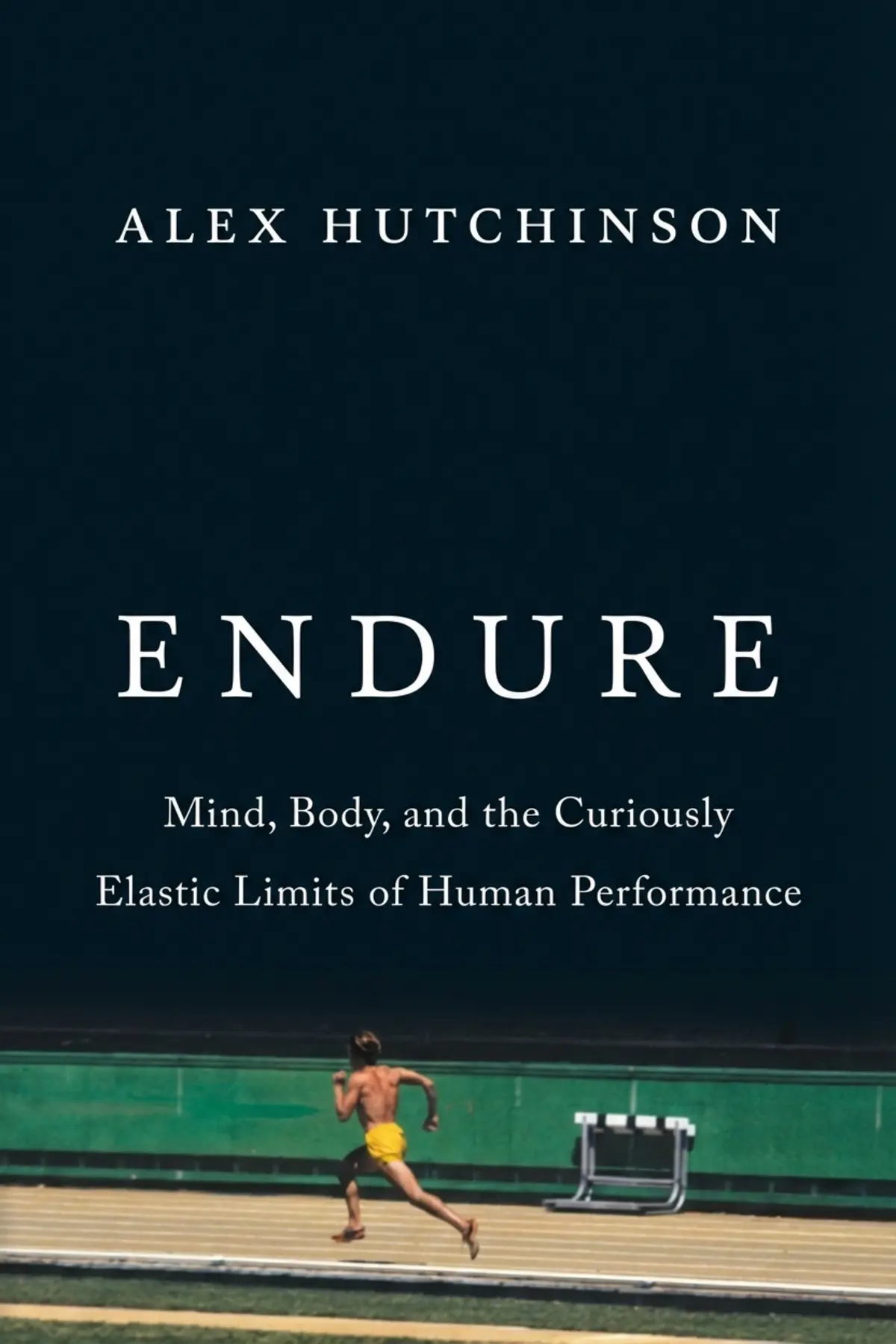
If you have ever stopped a run or a hard ride sure your legs had nothing left, the evidence suggests your brain may have made that call first. Children under eleven sprint off the line and fade, yet from eleven onward they pace a race the way world-record holders do, slowing in the middle and saving a burst for the end. In Endure, journalist and former Canadian national team runner Alex Hutchinson gathers studies like this one to show that endurance is far more than muscle power.
His case is that the brain constantly reads the body’s oxygen, heat, pain and effort, and sets a limit that is real but surprisingly elastic. That limit moves with mental fatigue, with training, with temperature and with how calmly you meet discomfort. Follow the research and you can see why a tired mind shortens a workout, why an ice slushy helped Olympians, and which of your own limits are open to negotiation.
1 min 54 sec
Top distance runners do something odd at the end of a race, just when their tanks should be emptiest. A study of schoolchildren reveals when that habit appears, and what it may have to do with ancient hunts.
1 min 41 sec
Two groups of volunteers had similar bodies and identical bikes, yet one group gave up noticeably sooner. The difference came from how they spent the previous hour and a half, and it reshapes what tiredness really is.
1 min 40 sec
Elite and amateur swimmers felt the first pain at the same moment. What happened after that moment split them sharply, and later tests across a swimming season pointed to where the difference comes from.
1 min 41 sec
Norway produced two athletes with record oxygen capacity, and only one became a champion. Meanwhile, a scientist wants to stage a marathon 400 meters below sea level, for a reason that comes down to air.
1 min 47 sec
In a Copenhagen lab, every exhausted cyclist quit within a band of a few tenths of a degree. Olympic coaches took the hint, though scientists still argue over why their icy trick works.
1 min 35 sec
Brain recordings of cyclists show two regions acting just before riders give up, ahead of the muscles themselves. One lab tried sending electricity into the brain to change the outcome, with results worth knowing.
1 min 47 sec
Soldiers in a cramped scanner had their air supply changed without warning, and many panicked. Eight weeks of a simple practice changed both their reaction and what their brains showed under stress.
1 min 23 sec
Endure changes how you see the moment you stop. The wall is a judgment, made by a brain that has been reading your oxygen, your heat, your pain and your fatigue all along. That judgment can shift with a rested mind, hard training, a cold drink before a hot race and calm attention to discomfort.
The judgment also exists for a reason. In late 2015, the British explorer Henry Worsley set out to cross Antarctica alone. His satellite phone gave him so much security that he pushed far beyond any sensible limit, losing 48 pounds and climbing the 3,100-meter Titan Dome into driving snow. After 70 days, just 30 miles from his goal, he called for rescue. Doctors in Punta Arenas, Chile, found exhaustion, dehydration and a dangerous abdominal infection, and he died on January 24, 2016.
So test your limits with care. Rest your mind before big efforts and let some training sting. If a recovery ritual such as an ice bath helps you, the book’s advice is to keep it, even though studies find it does nothing for inflammation. Sometimes belief counts as much as science. The limit is elastic, and it is still a limit.
A marathoner who collapses just past the finish line somehow held together until that exact point. Alex Hutchinson, a physicist turned journalist who once ran for Canada's national team, follows that puzzle through decades of sports science, and his answer keeps leading back to the brain. For a long time, researchers treated the body as a machine that runs until the muscles give out. The studies in Endure tell a different story. Children learn to pace a race like world-record holders at about eleven. Ninety minutes of a hard computer game shortens a bike ride to exhaustion. Elite swimmers feel pain at the same point as amateurs but tolerate far more of it. Oxygen and core temperature set hard ceilings, and specific regions of the brain signal the end shortly before the muscles fail. Readers get a clear model of why they stop, along with practical levers drawn from the research: protecting the mind before big efforts, training with some intensity, starting cool in the heat and using mindfulness to stay calm under strain.
Runners, cyclists and swimmers who keep hitting a wall and want to know what sets it.
Coaches and trainers looking for the science behind pacing, heat, pain and mental fatigue.
Desk workers who wonder why a draining day ruins their evening workout.
Alex Hutchinson is a journalist, a winner of a National Magazine Award and a longtime Sweat Science columnist for Outside magazine. He holds a physics PhD from the University of Cambridge and a master's in journalism from Columbia, and worked as a postdoctoral physicist before turning to writing. He also raced long distances on Canada's national team. He has written for the New York Times, the New Yorker and Runner's World, and Endure became a New York Times bestseller. He lives in Toronto.
Listeners find this a vital resource for endurance athletes, particularly road runners and cyclists, highlighting its high-quality prose and reliance on scientific research. They appreciate the focus on both the psychological and physical components of performance, while one listener notes how it covers time spans from seconds to months. Filled with accounts of amazing feats of endurance, the work acts as an excellent foundational guide for endurance athletes of all abilities.
Ever wonder why you hit the wall at mile 20 of a marathon? Alex Hutchinson takes a deep dive into the 'Central Governor' theory, exploring how our brains act as a safety valve for physical exertion. It’s a masterful blend of gripping narrative—like the Nike Breaking2 project—and rigorous scientific analysis. I particularly enjoyed the chapters on thirst and heat; they completely changed how I think about hydration during long summer rides. The writing is sharp and accessible, even when he's explaining complex VO2max concepts or metabolic demands. Frankly, this is a must-read for any endurance athlete who wants to understand the 'why' behind the pain. It doesn't give you a training plan, but it provides something better: a new perspective on your own limits. The book covers everything from seconds to months of effort with incredible detail.
Show moreThis book is a total game-changer for anyone obsessed with the limits of human performance. Hutchinson manages to make things like 'transcranial magnetic stimulation' sound like a page-turning thriller. I was especially captivated by the stories of people doing the impossible, like the woman saving her son in the surf. It really makes you question where your own 'red line' actually sits during a race. The truth is, we are often our own worst enemies when it comes to fatigue and perceived effort. By understanding the 'Central Governor' theory, I've started approaching my interval sessions with a completely different mindset. The chapter on pain was particularly eye-opening, suggesting that suffering is as much a mental construct as a physical one. If you're a cyclist or runner, just buy it and read it twice.
Show moreAfter hearing so much buzz in my cycling club, I picked this up and couldn't put it down. The breadth of topics is incredible, covering everything from the psychological effects of heat to the way our muscles actually communicate with our brains. Hutchinson’s writing is lively and he has a knack for picking the perfect anecdotes to illustrate complex physiological points. I loved the section on how simply swishing carbs in your mouth can trick the brain into working harder. It’s these little tidbits that make the book so valuable for competitive athletes. The research feels current and the author’s skepticism keeps the crazier theories in check. It’s a deep dive that covers time spans from mere seconds to months of exploration. Absolutely essential reading for endurance junkies who want to push their boundaries.
Show moreWow. This is probably the most comprehensive book on the science of human endurance I have ever read. Hutchinson manages to synthesize decades of research into a narrative that feels both urgent and inspiring. The stories of explorers at the South Pole and elite Kenyan runners are expertly woven into the scientific discussion. It really helps you visualize what it means to push past the point where your body is screaming at you to stop. I've already started applying the lessons about mental stamina to my own marathon prep. The realization that our 'safety margins' are much wider than we think is incredibly liberating. Whether you're a pro or a weekend warrior, this book provides a vital toolkit for understanding your own potential. A masterclass in science writing that every athlete should own.
Show moreAs a casual road runner, I found this exploration of human limits both enlightening and a bit dense in places. Hutchinson is a fantastic storyteller when he’s recounting the history of the four-minute mile or South Pole expeditions. However, the middle sections can feel like a heavy dump of academic studies that occasionally drag on. To be fair, the science is fascinating, especially the parts about how the mind can override physical fatigue through belief or even just swishing Gatorade. The structure is logical, moving through different environmental and physiological stressors. It's a solid four stars, though I wish there were more concrete takeaways for my daily training routines. Still, it’s a brilliant primer on the intersection of psychology and sports performance that will stick with me for a long time.
Show moreFinally got around to reading this after hearing Malcolm Gladwell rave about it in the foreword. It’s a very well-researched piece of journalism that bridges the gap between the lab and the track effectively. Hutchinson’s background as a runner really shines through, as he understands the nuances of things like the lactic acid myth. While some chapters on fuel and oxygen felt a bit familiar, his exploration of the psychological side was fresh. The way he discusses how the brain anticipates 'catastrophe' to protect the body is genuinely thought-provoking. My only gripe is that it occasionally feels like a collection of magazine articles rather than a cohesive book. Still, the stories about the Blitzkrieg and Pervitin were wild. A very strong four-star read for any stats-heavy athlete looking for a deeper understanding.
Show moreThe chapter on oxygen alone is worth the price of admission here. Hutchinson does a great job debunking old-school ideas about VO2max being the sole arbiter of athletic success. He explains why the mind-body connection is the real frontier of human performance. Personally, I found the historical context of the sub-four-minute mile to be the most engaging part of the narrative. The book is dense, though, and requires some focus to get through the more technical sections on muscle fiber and metabolic demands. It’s not a light beach read, but it is deeply rewarding if you stick with it. Some sections felt a bit repetitive, especially toward the end, but the overall message is powerful. Our limits are far more elastic than we've been led to believe, which is a very inspiring thought.
Show morePicked this up on a whim and was pleasantly surprised by the depth of the research. Hutchinson is a talented writer who knows how to make data feel human. While it’s true that the book doesn’t offer a 'cheat code' for fitness, it provides a fascinating look at the factors that hold us back. The discussion on 'central governor' theory was particularly enlightening for me as a triathlete. I did find that the transition between chapters could be a bit jarring at times, with the author shifting gears very abruptly. However, the sheer amount of interesting facts—like the role of Tylenol or caffeine in performance—kept me turning the pages. It’s a solid, thoughtful exploration of what it means to endure. Definitely worth your time if you enjoy science and sports.
Show moreNot what I expected based on the title, to be honest. I was looking for a practical guide on how to increase my stamina, but this is more of a philosophical and scientific survey. Hutchinson spends a lot of time on the history of sports metrics and various theories that haven't always been replicated in the lab. The writing style is a bit circuitous, often building to a climax only to jump to a different clinical study. I appreciated the mention of the East African runners and the role of elevation, yet the book felt a little too long for the amount of actionable advice provided. It’s a decent read for science nerds, but athletes looking for a 'how-to' might feel slightly disappointed by the lack of a clear meta-narrative beyond 'mind matters.' It is definitely a well-written but ultimately frustrating journey.
Show moreLook, I really wanted to love this, but it just felt like a dry list of academic papers after the first fifty pages. The opening about the Breaking2 project was fantastic and had me hooked, but then it devolved into endless summaries of studies that often contradicted one another. Hutchinson will spend ten pages on a study only to conclude that the results were never replicated. It makes the reading experience feel quite pointless and frustrating at times. I found the tone a bit flat and the narrative lacked a strong through-line to keep me engaged. Maybe I'm just not the target audience for this kind of science-heavy dump. I stopped about halfway through because I realized I wasn't actually learning how to improve my own endurance. It felt like a wasted opportunity.
Show moreHutchinson argues that endurance depends on far more than muscle power. Physical factors such as oxygen intake and core temperature matter, and so do psychological ones such as perceived effort and pain tolerance. Across the studies he gathers, the brain plays a large instinctive role, pacing the body and signaling when to shut down, which is why limits can shift with mental fatigue, training, temperature and mindfulness.
According to research in the book, yes. In Samuele Marcora’s 2009 study, people who spent 90 minutes on a demanding computer game gave up on a stationary bike sooner than people who watched a relaxing documentary, who lasted 15.1 percent longer on average. The groups did not differ physically. Marcora explains this through perceived effort: you stop when rising effort meets the most you are willing to feel.
The research points to training. Karel Gijsbers found that elite swimmers felt pain at the same point as amateurs but could keep going much longer, 132 fist contractions versus 89. Their tolerance peaked when training was hardest. A study at Oxford Brookes University found short, high-intensity sessions brought more progress than longer, gentler ones, suggesting some discomfort in training pays off.
Core temperature predicts endurance. In a 1999 Copenhagen study, cyclists who started cooler lasted twice as long, and everyone stopped at a core temperature between 40.0 and 40.3 degrees Celsius. At the 2008 Olympics, some athletes drank ice slushies, which could lower core temperature by up to 0.7 degrees and let them tolerate slightly more heat. Why it works is still unconfirmed.
Avoid mentally draining work right before a hard workout or race. Include some short, intense efforts in training to build pain tolerance. In the heat, start as cool as you can. Practice mindful attention to breath and discomfort to stay calm when effort climbs. And if a recovery habit such as an ice bath helps you, the book suggests keeping it, even if its benefit may be psychological.
Bill Bryson

Jeff Hawkins




Lisa Kaltenegger



Jonathan Eig
AUDIO SUMMARY AVAILABLE
Get the key ideas from Endure by Alex Hutchinson, plus 5,000+ more nonfiction titles.









