

15 min 26 sec
Available in: English
 ไทย
EnglishไทยEndurance: Shackleton's Incredible Voyage
Alfred Lansing's account of Ernest Shackleton's stranded Antarctic expedition shows how a leader keeps people working, hopeful and alive when the ship, the plan and every fallback are lost, and why bringing everyone home is the real victory.
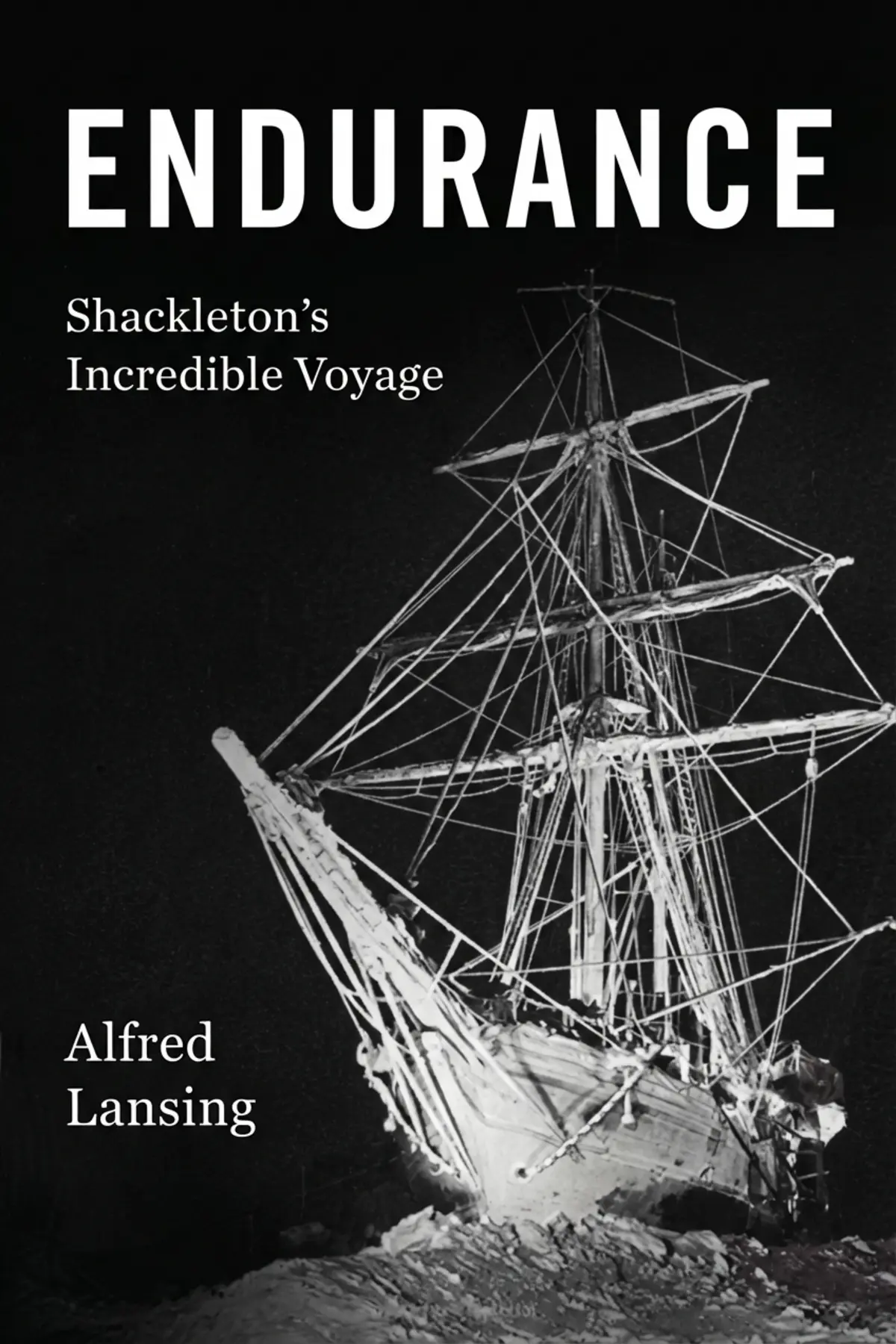
Table of Content
1. Introduction
1 min 02 sec
Most of us learn to lead while the plan is working. Ernest Shackleton’s most famous expedition shows what leading looks like after the plan is gone: his ship was trapped and crushed by Antarctic ice, and he still brought his crew home. In Endurance, Alfred Lansing, a former magazine writer and Navy veteran, follows that ordeal from the frozen Weddell Sea to a whaling station on South Georgia Island.
The expedition meant to cross Antarctica on foot. That goal slipped away within weeks. What Lansing records instead is a long run of choices about work, morale, risk and loyalty, each made as the ice took one more option away. Shackleton’s fame was earned on the way home, by keeping every man alive long after the crossing became impossible. Follow his choices and you get a working picture of how to hold a group together when nothing goes to plan, and of what really counts as success when you are responsible for other people.
2. The warning every bold plan should take seriously
1 min 58 sec
Local whalers looked at Shackleton’s route and shook their heads. He sailed anyway, with a schedule built on one assumption about the sea. Within two weeks, the daily numbers showed how far off that assumption was.
3. Give a stuck team real work that matters
2 min 11 sec
Open water lay just 50 feet from the ship, the engines ran at full power, and nothing moved. What a crew does in a stall like that decides how ready it will be for what comes next.
4. Small rituals keep a team from breaking
2 min 04 sec
Earlier polar winters had driven men to madness or death. This crew spent theirs singing and racing dogs in the dark, until a sound like distant thunder reached them one night.
5. Change the plan the moment the facts change
2 min 06 sec
With their ship wrecked, the men set out to drag their boats toward open water. Days later Shackleton reversed the whole plan, and his reasoning still applies to any project built on shifting ground.
6. Make the painful call while it can still help
2 min 19 sec
Food was running low, the ice was turning to slush, and land appeared on the horizon with no way to reach it. The decisions that followed were the hardest of the whole expedition.
7. Focus on the next step, not the whole mountain
2 min 25 sec
Hundreds of miles of open sea, a lost rudder and mountains on the wrong side of an island stood between Shackleton and help. The way he faced them is a method anyone can borrow.
8. Conclusion
1 min 21 sec
Shackleton set out to cross Antarctica, and the crossing never began. Lansing’s story is remembered for a different achievement, measured in people rather than miles. Every choice in it, from dog races in the dark to the killing of the dogs, served one aim that grew sharper as the ship, the plan and the camp were lost: get everyone back.
On the morning of August 30, the men on Elephant Island saw a Chilean tugboat, the Yelcho, heading in. Within hours Shackleton was ashore, calling out, “All well?” Word came back that all were sound, and for the first time in 24 months and 22 days he visibly relaxed. Then he hurried every man aboard.
The story leaves a few things worth carrying into ordinary work. When a project stalls, keep people busy with work that still matters, and keep some joy in the routine. When the facts change, change the plan without ceremony, even if it means giving up something you love. And when the whole task feels impossible, face only the next stretch of water or the next ridge.
Shackleton lost his ship and his goal, and his place as a legendary leader was settled the moment his last man stepped onto the Yelcho.
About this book
What is this book about?
In 1914, Ernest Shackleton sailed for Antarctica on the Endurance, planning to cross the continent on foot. The ice of the Weddell Sea trapped the ship in January 1915, held it through the polar winter and finally crushed it. What followed was a struggle lasting more than two years to keep the crew alive: first on drifting ice, then in small open boats, and finally on a remote island while Shackleton went for help. Alfred Lansing tells the story step by step, and his account doubles as a study of leadership under pressure. Shackleton chose his crew for character, filled the dark months with work, songs and dog races, changed his plans whenever the ice changed, made painful calls about food, and kept his attention on the problem directly in front of him. Readers get a gripping true adventure and a clear picture of what holding a team together looks like when nothing goes to plan. The book's verdict on success is simple: Shackleton failed in his goal, and he is remembered as a great leader because every man came home.
Book Information
Who it's for
Leaders curious about morale
Team leads and managers who want to see how morale and hard decisions hold up when a project collapses.
Founders facing a crisis
Founders facing a crisis in which every plan keeps failing.
Fans of true adventure
Readers of true adventure who want a survival story with lessons they can use at work.
About the Author
Alfred Lansing
Alfred Lansing was born in Chicago in 1921 and died in 1975. A US Navy veteran who served from 1940 to 1946 and was awarded the Purple Heart, he went on to study at North Park College and at Northwestern University. As a journalist he contributed to magazines such as Collier's, and he later became an editor at Time, Inc. Books. The Scott Polar Research Institute in Cambridge, England, admitted him as a member in 1957, and in 1959 he published Endurance, his account of Shackleton's Antarctic expedition.
Ratings & Reviews
Ratings at a glance

What people think
Listeners find that this narrative feels like a novel and offers a gripping adventure that keeps them completely mesmerized. The prose is superbly written, and the thorough chronicle is remarkably well researched. Listeners commend Shackleton’s command, with one listener remarking how physical endurance is as important as mental endurance. They value the motivating tales of bravery, with one review focusing on the incredible display of human spirit.
Top reviews
Boss
Wow. I finished this book feeling like I’ve been holding my breath for several days straight. Lansing does an incredible job of transforming historical facts into a narrative that pulses with life and unbearable tension. Shackleton’s leadership is nothing short of legendary, yet what struck me most was the collective mental fortitude of the entire crew. You feel the bite of the Antarctic wind and the desperation of the men as they face the loss of the Endurance. It’s hard to believe this actually happened because no screenwriter could imagine such a flawless arc of survival. The prose is lean and punches hard, never getting bogged down in useless fluff. This is the ultimate testament to the human spirit.
Show moreMax
Seriously, how are these men even real? I get grumpy if the Wi-Fi is slow for ten minutes, but these guys were eating sled dogs and sleeping in frozen boots for months. Lansing’s writing style is punchy and direct, which makes the survival elements feel even more immediate and visceral. There is no unnecessary drama because the reality of the situation is dramatic enough. It reads like a high-stakes thriller but carries the weight of absolute truth. I’m convinced that if Shackleton were around today, he could solve basically any global crisis just by being his optimistic, stubborn self. If you enjoy adventure stories, stop reading this review and go buy the book.
Show moreSing
What an absolute powerhouse of a book! Lansing captures the sheer brutality of the Antarctic environment with such precision that I felt physically chilled while reading it in my heated living room. The narrative flows with the speed of a novel, yet every detail is meticulously documented from the survivors' journals. Shackleton’s transition from an explorer to a protector is moving, highlighting that mental resilience is just as vital as physical strength. I was particularly captivated by the descriptions of the 'wind madness' and the sheer audacity of the final boat trek. This is a definitive masterpiece of non-fiction adventure that deserves every bit of its reputation.
Show moreRodrigo
Ever wonder what true leadership looks like in the face of certain death? This book provides a masterclass on the subject through the lens of Sir Ernest Shackleton’s ill-fated voyage. Lansing’s account is so well-executed that you forget you’re reading non-fiction; it feels like a pulse-pounding survival movie. The sheer logistics of keeping twenty-eight men alive and sane on a shifting ice pack for over a year are mind-boggling. I loved the focus on the psychological battle against despair just as much as the physical struggle against the elements. It’s an inspiring, humbling story that makes your own daily problems feel incredibly small in comparison. Five stars aren't enough.
Show moreNing
Not what I expected at all. I thought this would be a dry history lesson, but it turned out to be the most captivating adventure I’ve read in years. The way Lansing describes the Endurance being crushed by the ice is so vivid it’s haunting. You can almost hear the beams snapping. What really got to me were the small details: the salt-water boils, the lack of dry clothes, and the way the men used humor to keep the darkness at bay. It’s a beautifully documented tribute to the crew's spirit. By the time they reached the whaling station, I was practically cheering out loud. This is mandatory reading for anyone who loves a good survival story.
Show moreKwame
As someone who gets stressed out when my phone dies, reading about Shackleton and his crew was a major reality check. These men were living in a frozen hell for over a year with zero way to call for help, yet they never gave up on each other. Lansing’s prose is modern and accessible, making the 1950s publication date feel irrelevant. He captures the 'unflagging optimism' that defined the expedition's survival. The chapter on the final trek across South Georgia is pure adrenaline. It’s a riveting story of courage that proves that mental toughness is the ultimate survival tool. Honestly, I think everyone should read this to gain a little perspective on life.
Show moreWipada
Finally got around to this classic after it sat on my nightstand for nearly a year. The research involved here is staggering; Lansing clearly pored over every diary entry and ship log available to reconstruct the timeline. While the middle sections on the ice floes felt a bit repetitive at times—it's essentially a cycle of hunting seals and being cold—the payoff is immense. Shackleton's ability to maintain morale under impossible conditions is the gold standard for leadership studies. I did find myself wishing for more maps to track their exact movements through the Weddell Sea. Nevertheless, the boat journey to South Georgia is one of the most harrowing things I’ve ever read.
Show moreLiam
After hearing my dad rave about this for years, I finally decided to see what the fuss was about. The truth is, Lansing manages to make 1914 feel like yesterday. He avoids the stiff, academic tone often found in historical accounts and instead focuses on the raw, human elements of the tragedy. You get to know the personalities of the crew, which makes the moments of loss—like the fate of the dogs—truly heartbreaking. There were a few points where the technical sailing jargon went over my head, but it didn't detract from the overall impact. It's a gripping reminder that human will can overcome almost any obstacle Mother Nature throws our way.
Show morePong
Look, the endurance displayed by these men is simply beyond my comprehension. Lansing’s writing is excellent, providing a detailed and extraordinarily documented account of a journey that should have ended in total disaster. While the beginning moves a bit slowly as they navigate the pack ice, the tension ramps up significantly once the ship is abandoned. My only minor gripe is that some of the crew members blend together in the narrative, making it hard to track everyone except the main figures. However, the descriptions of the James Caird voyage are absolutely stellar. It’s a remarkable piece of history that stays with you long after you close the cover.
Show moreArnav
To be fair, the historical significance of the Endurance expedition is undeniably fascinating. However, as a reading experience, I found the pacing to be quite uneven during the long months the men were adrift on the ice. The descriptions of the sub-zero temperatures and the constant diet of seal meat became redundant after the first hundred pages. I understand that the monotony was a real part of their suffering, but it made for a slog of a middle act. Lansing is a gifted researcher, but the prose felt a bit dry for my personal taste. It’s a solid history book, but it didn't quite grip me as much as the glowing reviews suggested it would.
Show moreQuestions about this book
What is Endurance by Alfred Lansing about?
It tells the true story of Ernest Shackleton’s attempt to cross Antarctica on foot. His ship, the Endurance, was trapped by ice in the Weddell Sea in January 1915 and later crushed. The crew lived on drifting ice for months, escaped in small boats to Elephant Island, and waited there while Shackleton sailed and climbed to a whaling station on South Georgia Island to bring help.
What leadership lessons does Endurance teach?
Shackleton picked his crew for character, kept them busy with work that mattered while the ship was stuck, and filled the polar winter with songs, stories and a dog race. He changed plans whenever the ice changed, made painful calls such as killing the dogs for food, and focused on the next problem in front of him. His aim, above all, was to bring everyone home.
How did Shackleton's crew survive after the Endurance sank?
They camped on floating ice, hunted seals and birds, and dragged three whaling boats toward open water. When their floe split on April 10, they launched the boats and rowed through gales to Elephant Island, reaching land after 497 days. Shackleton and a small crew then sailed the James Caird to South Georgia, crossed its mountains and reached the Stromness whaling station.
Did all of Shackleton's men survive?
Yes. After three attempts, Shackleton reached the men on Elephant Island aboard the Chilean tugboat Yelcho on August 30. When he called out to ask if all was well, the answer came back that everyone was sound. Lansing presents that outcome as the source of Shackleton’s legend: he failed to cross Antarctica, but he brought every man back.
Who should read Endurance?
It suits managers, team leads and founders who want a vivid picture of leading through a crisis where every plan fails. It also suits anyone who loves true adventure and survival stories. The book works as both: a tense account of more than two years in the Antarctic and a practical lesson in morale, flexibility and responsibility for other people.
Readers also enjoyed



A Splendid Exchange: How Trade Shaped the World
William J. Bernstein


A Spy Among Friends: Philby and the Great Betrayal
Ben Macintyre

A Year with Peter Drucker: 52 Weeks of Coaching for Leadership Effectiveness
Joseph A. Maciariello



AUDIO SUMMARY AVAILABLE
Listen to Endurance in 15 minutes
Get the key ideas from Endurance by Alfred Lansing, plus 5,000+ more nonfiction titles.
- 5,000+ titles
- Listen as much as you want
- 7-day free trial
- Cancel anytime









