

Alcoholics Anonymous
Alcoholics Anonymous World Services
 English
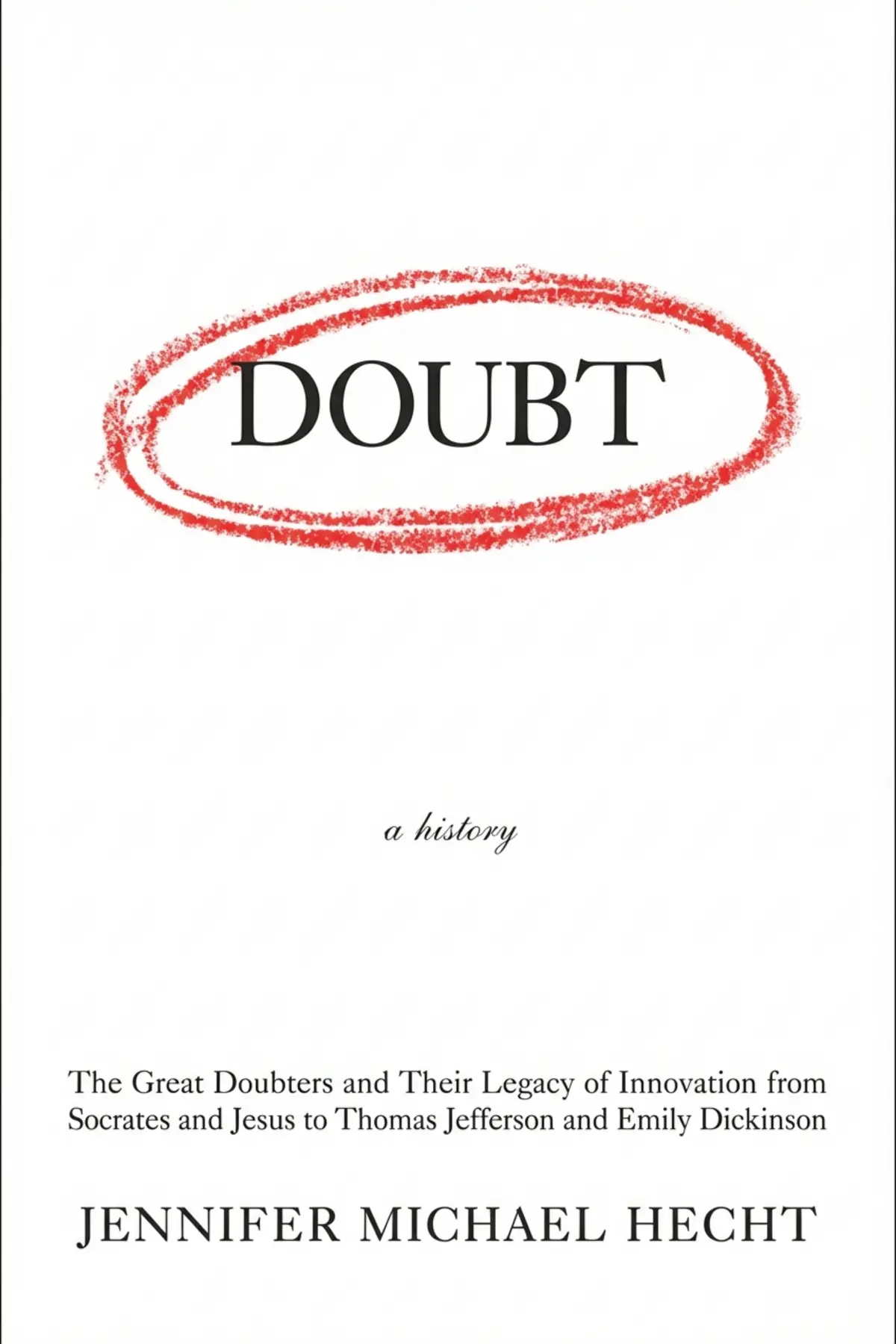
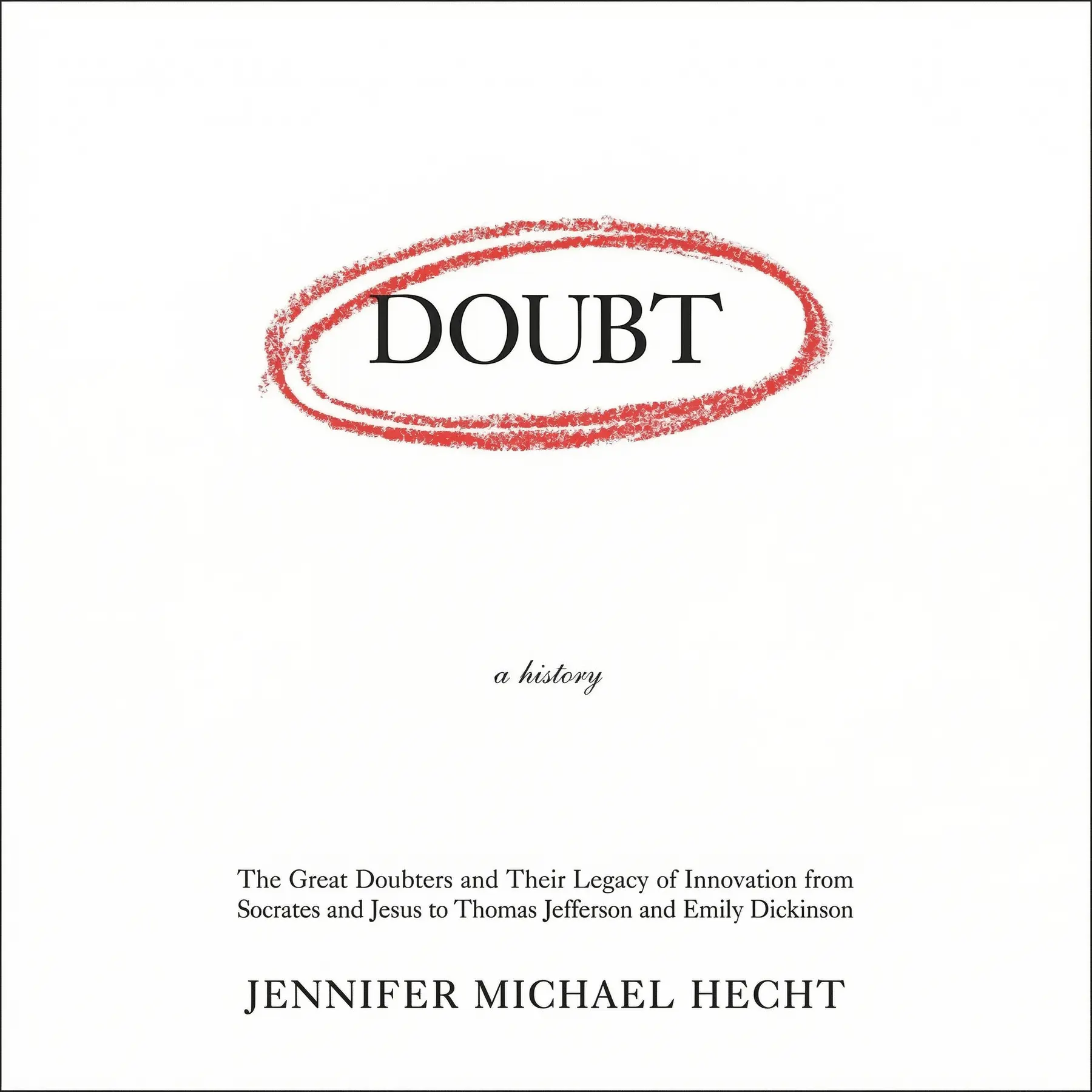
Jennifer Michael Hecht follows doubt from Socrates and Confucius to Darwin and Curie. She shows how questioning built science, reshaped religions and steadied thinkers, and why the powerful worked so hard to erase it.
54 sec
If school taught you that history is made by people who never wavered, it told you only half the story. In Doubt: A History, historian and poet Jennifer Michael Hecht recovers the other half. It belongs to the doubters, from Socrates and Confucius to Darwin and Einstein, whose questions sparked science, challenged rulers and even founded religions. We rarely hear about them for a plain reason. The states and churches they questioned had every motive to erase them.
Hecht argues that doubt is ancient, global and productive, and that it works best when it passes from one questioning mind to the next. Her history gives you a line of thinkers to stand beside when your own questions get uncomfortable. It also shows you when doubt builds knowledge and when it starts to pull you under.
1 min 33 sec
The heroes of history class held firm and changed the world. A whole second cast of characters was left out of those lessons, and the reason they vanished says a lot about who writes the official story.
1 min 44 sec
Skepticism is often pictured as a modern habit of Western labs and lecture halls. The real roll call of doubters includes an ancient Chinese teacher, a Roman emperor and an American founding father few would suspect.
1 min 40 sec
An astronomer’s view of the solar system cost him his life, and an entire school of Indian philosophy survives only in its enemies’ words. The pattern behind both reaches well beyond religion.
1 min 42 sec
Some of the fiercest critics of religion were among its most committed members. A Greek thinker’s theory about where gods come from, and a list nailed to a church door, show two very different ways to push back.
1 min 52 sec
Scripture itself gives a whole book to a man who demanded that God justify himself. Faiths that absorbed their questioners did something the persecutors never managed, and one even began as a single act of doubt.
1 min 33 sec
A Greek thinker predicted an eclipse more than two and a half thousand years ago, and a traveling naturalist overturned ideas about inheritance. Both started from the same uncomfortable habit of mind.
1 min 35 sec
One of history’s boldest skeptics admitted he felt like a man lost in deep water. Ancient philosophers who doubted the gods still went to their festivals, and their reasons point to a way out.
1 min 24 sec
A Jewish philosopher in eighteenth-century Germany owed his safety to a letter signed by a king. How it came to be signed reveals what doubters have always given one another, right up to facing death.
1 min 16 sec
Hecht’s history adds up to a family tree hidden in plain sight. Look past the confident heroes of the textbooks and a second line appears, made of people who asked whether it was really so. Thales predicted an eclipse. The Buddha rejected starvation. Luther posted his theses, Darwin dropped theories that failed the evidence, and Mendelssohn was kept safe by friends who shared his questions. Their doubt built science, renewed old faiths and founded new ones, and it was often punished and erased for exactly that reason.
The practical advice follows from the history. Treat no fact as settled just because an authority announced it, whether it comes from a screen, a boss or a pulpit, and give doubt a seat at the table while you form your own view. Keep the rituals and people that steady you, as the Greek philosophers did, so that questioning does not turn into drifting. When nothing adds up, remember Descartes lost in deep water, and then remember what he found there. When you question what you are told, you join a long chain of doubters that includes Socrates, and like many of them, you are not alone.
History lessons tend to celebrate people of firm conviction. Jennifer Michael Hecht argues that this leaves out half the story. Alongside the believers there has always been a long line of doubters, from Greek philosophers and Confucius to Benjamin Franklin, Charles Darwin and Marie Curie. Their questions changed the world, yet most people have barely heard of them as a group. Hecht explains why. Doubters usually challenged the very states and churches that kept the records, and those institutions persecuted them, burned their books and left them out of official accounts. She then traces what doubt achieved anyway. It gave science its starting point, pushed religions to reform, helped found new faiths such as Buddhism, and even found a home inside scripture in the stories of Thomas and Job. The book is also honest about the cost. Questioning everything can leave a person adrift, as Descartes discovered. Hecht's answer comes from the doubters themselves: shared rituals, the comfort of like-minded friends and a calm acceptance of what cannot be known. Readers get a new map of intellectual history and a way to keep their own questions useful instead of crushing.
Curious readers who want intellectual history told through its skeptics instead of its saints.
Believers and nonbelievers who wrestle with their own doubts and want company in them.
Professionals who are often the awkward questioner in the room and want to know where that habit leads.
Jennifer Michael Hecht is a historian and poet with a doctorate from Columbia University, where she focused on the history of science and European cultural history. She taught history at Nassau Community College from 1994 to 2007 and later at The New School. She has written four books of history and philosophy, including The Happiness Myth and Stay: A History of Suicide and the Philosophies Against It, as well as three poetry collections. Her essays and reviews have appeared in The New York Times and The Washington Post, and in 2010 she helped judge the nonfiction category of the National Book Award.
Listeners find this work to be a remarkable collection of philosophical viewpoints and a deeply researched chronicle of skepticism, with one listener highlighting the meaningful depth it offers. The prose is approachable, and listeners feel the content is rewarding, with one mentioning it is a title they will revisit repeatedly. They value the book's focus on how the vitality of faith depends on doubt, and one listener points out the thorough bibliography included. Reaction to the book's readability is varied; some listeners find the material captivating, whereas others find the experience of reading it to be monotonous.
Jennifer Michael Hecht has crafted an incredible compendium that reframes how we view the history of thought. To be fair, I was most impressed by her characterization of the ancient Cynics and Stoics as the original authors of self-help literature in the West. This perspective makes these lofty philosophies feel remarkably grounded and applicable to modern life. Her writing style is accessible yet deeply researched, providing a meaningful depth that most historical surveys lack. I found myself lingering on the sections regarding the Epicureans and their pursuit of tranquility through questioning. It is a masterful work that proves doubt is not a deficit but a profound human achievement. This is the kind of book you keep on your shelf and return to whenever you need to feel less alone in your uncertainty.
Show moreTruth is, I picked this up feeling quite alone in my skepticism, but I found myself in the best possible company. Reading about everyone from Emily Dickinson to Bertrand Russell made me realize that my own questioning is part of a rich, thousand-year-old tradition. Hecht writes with a poet’s sensibility, making the lives of these doubters feel immediate and urgent rather than like dusty historical footnotes. Not gonna lie, some of the sections on 20th-century state-sponsored doubt were chilling, but they served as a necessary reminder that doubt can be used for various ends. This book is a defense of the human mind’s refusal to be satisfied with easy answers. It’s an empowering read for anyone who has ever been told that their lack of certainty was a character flaw.
Show moreFew authors manage to juggle so many disparate philosophical threads without dropping the ball, but Hecht creates a cohesive narrative out of thousands of years of questioning. This book is an amazing compendium that shows how thinkers like Wang Ch’ung and Hypatia paved the way for the Enlightenment. I was fascinated by the way she threaded the 'doubting' elements of religion, like the writing of Ecclesiastes, into the broader history of skepticism. It makes for a much more interesting revealing of human history than a simple 'believers vs. non-believers' dichotomy. The writing is sophisticated yet clear, and the 24-hour audiobook version was a fantastic way to consume such a weighty subject. If you enjoy understanding the firm foundations of reason, this is essential reading. It’s a masterful work in both scope and execution.
Show moreFinally got around to finishing this massive tome on audio, and I must say, the commitment was well worth every second. Jennifer Michael Hecht is a poet and philosopher, and that dual identity shines through in how she treats her subjects with both analytical rigor and emotional resonance. The way she traces the influence of 'On the Nature of Things' through the ages was particularly enlightening. It’s a book that celebrates the courage it takes to say 'I don't know' in a world that demands certainty. I found her coverage of the 20th century to be a bit brief, but given the 500-page length, it’s understandable that some cuts had to be made. This is a work I will read over and over again for inspiration. Truly a magnificent achievement.
Show moreAfter hearing about this book for years, I was finally struck by the sheer diversity of the figures included in this massive narrative. Hecht doesn’t just stick to the usual suspects like Socrates or Jefferson; she dives into the Charvaka of ancient India and the often-ignored skeptics of the Golden Age of Islam. Frankly, the middle chapters on Maimonides and Spinoza can be a bit of a slog if you aren’t prepared for dense philosophical tracking. However, the payoff is worth the effort as she connects these disparate threads into a single, cohesive family tree of doubt. It’s a well-researched history that highlights how the vitality of faith depends on the very questions that threaten it. I did find her occasional poetic flourishes a bit much, but the scholarship is undeniable.
Show moreThe sheer scale of this project is mind-blowing, especially regarding how it bridges Eastern and Western traditions so seamlessly. I appreciated learning about Al-Razi and Al-Rawandi, thinkers who challenged Islamic orthodoxy centuries ago at great personal risk. Hecht is a lively writer who manages to keep the momentum going even through 500 densely-packed pages. Personally, I think the inclusion of the Book of Job and the teachings of Jesus as part of the framework of doubt was a brilliant move that prevented the book from feeling like a one-sided polemic. It is a huge commitment to read, but the extensive bibliography alone makes it a valuable reference tool. My only complaint is that the modern section felt slightly rushed compared to the meticulous detail given to the ancients.
Show moreIs it possible for a history book to be too readable? Hecht’s prose flows so effortlessly that I found myself flying through centuries of human questioning almost too fast. She gives equal weight to the East and the West, which is a refreshing change from the Eurocentric focus of most philosophy surveys. I particularly enjoyed the deep dives into Lucretius and Cicero, whose influences keep popping up throughout the later chapters like recurring characters in a long novel. While I found the section on the 'miraculous accident' of life a bit repetitive, the overall execution of the history is superb. It really highlights how doubt has been the engine of progress, sparking reflection when dogma tried to shut it down. This is a solid four-star read that I’ll likely revisit.
Show moreEver wonder why we treat 'faith' as the ultimate virtue while 'doubt' is a dirty word? This book flips that script by showcasing doubt as a vital engine for progress and intellectual honesty. Hecht provides a brilliant survey of thinkers from the Buddha to Susan B. Anthony, demonstrating that questioning the status quo is a deeply moral act. I particularly liked the contrast between the 'man of faith' and the 'man of doubt' in the context of contemporary issues. My only minor gripe is that the book is quite physically heavy and the font is small, which made the reading experience a bit tiring at times. Regardless, the content is top-tier and provides a necessary counter-narrative to the history of religion. It’s a well-researched, accessible, and ultimately very hopeful book.
Show moreWait, did she really just call the ancient Skeptics the first self-help gurus? While that framing is clever, I found some of the recurring rhetoric about our 'accidental' existence a bit grating after the third or fourth chapter. It feels like she subscribes heavily to a very specific brand of 1970s atheism that views life as a happy accident rather than exploring more modern scientific nuances. To be fair, the biographies of the individual thinkers are absolutely outstanding and kept me engaged. I just wish the authorial voice didn't interject quite so much with that specific 'miraculous accident' terminology. It’s a great survey of doubt, but you definitely have to take some of her personal philosophical biases with a grain of salt. It's a bit tedious in parts but historically informative.
Show moreLook, this is a hefty volume that requires some serious intellectual stamina, and frankly, I found the middle sections on medieval doubt a bit tedious. While the research is clearly top-notch, the sheer density of the names and dates can become overwhelming if you aren't a history buff. I did appreciate the focus on how doubt can lead to a more ethical way of living, especially in the sections regarding Thomas Jefferson and Thomas Paine. However, the prose occasionally veers into being 'almost too readable,' where the complexity of certain philosophies feels slightly smoothed over for the sake of the narrative. It’s a well-researched history of doubt, and the bibliography is a goldmine for future reading. It just didn't quite grab me as much as I hoped it would.
Show moreJennifer Michael Hecht argues that doubt is an ancient, worldwide force that history books have largely left out. States and religions persecuted doubters and destroyed their writings. Yet doubt gave science its starting point, pushed churches to reform, helped found new faiths such as Buddhism and preserved Greek philosophy. She also shows that doubt works best when doubters support one another.
Doubters usually challenged the institutions that kept the records, mainly states and religions, so those institutions had every reason to ignore or erase them. Some went further. The Inquisition burned Giordano Bruno in 1600, and the writings of India’s Carvaka movement survive only as quotations in their enemies’ attacks. When doubters are remembered, Hecht adds, they appear as isolated individuals, so the links between them get lost.
Not in the way the title might suggest. Hecht shows doubters attacking religious claims, but she also shows doubt working inside faith. Martin Luther wanted to fix the church, not end it. The Bible gives space to doubting Thomas and to Job, who demands that God explain injustice. The Buddha’s doubts founded a new religion, and the Muslim thinker al-Kindi preserved Greek texts to use in religious arguments.
Hecht admits that doubting everything can bring despair, as Descartes found when he felt lost in deep water. Her doubters suggest three remedies. Keep shared rituals that comfort people and give them an identity, as Greek philosophers did. Lean on fellow doubters, as Moses Mendelssohn did when friends secured a king’s letter protecting him. And accept what cannot be known, as Socrates did when he faced death calmly.
Do not accept a fact just because an authority states it, whether it comes from television, an employer or a religious leader. Leave room for doubt while you form your own opinions. When nothing seems to add up, remember that you belong to a long line of doubters stretching from Socrates and Confucius to Darwin and Curie, and that many of them found steadiness in each other.
Alcoholics Anonymous World Services


William B. Irvine



Daniel Goleman
Nigel Warburton


John Rawls
Eckhart Tolle
AUDIO SUMMARY AVAILABLE
Get the key ideas from Doubt: A History by Jennifer Michael Hecht, plus 5,000+ more nonfiction titles.









