
14 min 33 sec
Available in: English
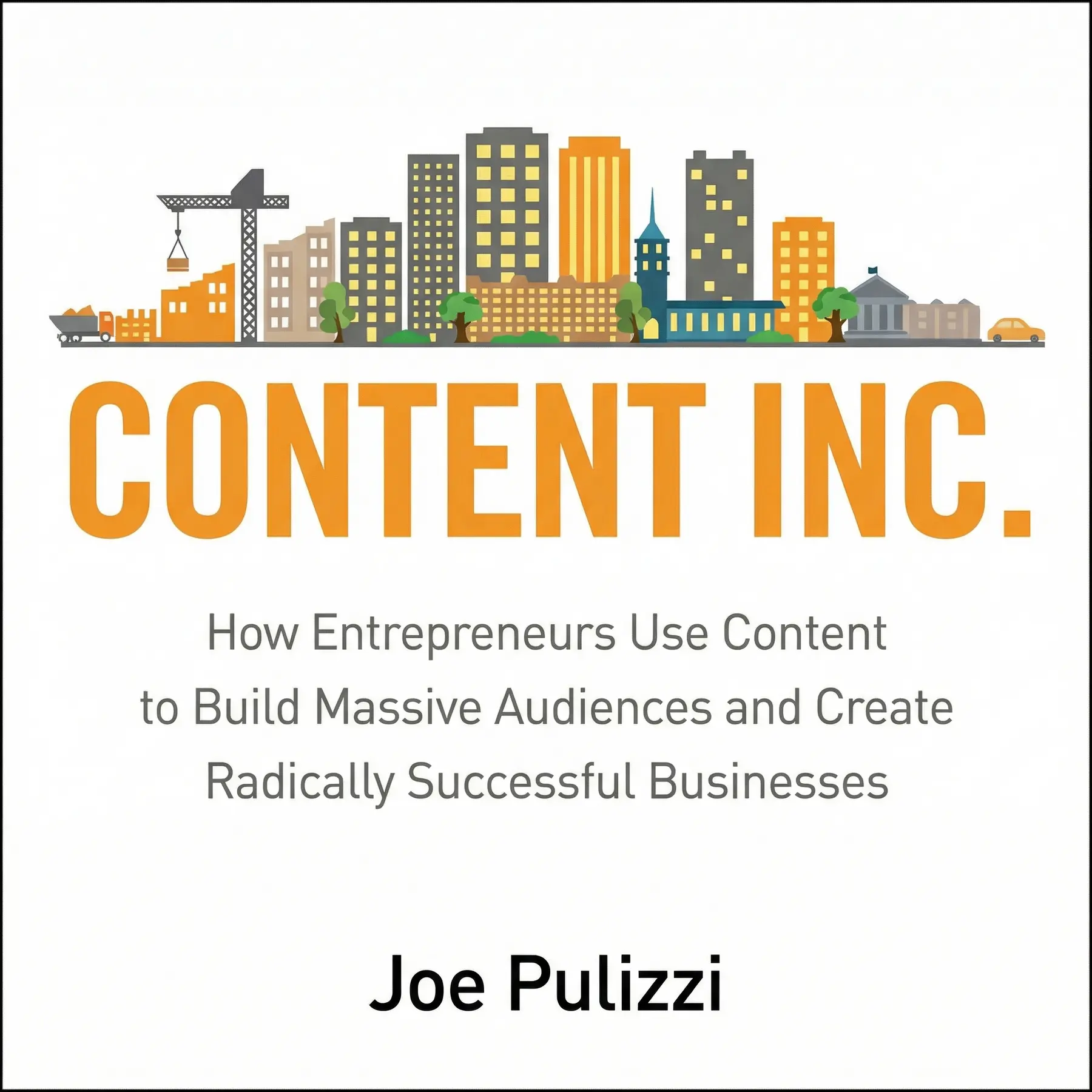
Content Inc.: How Entrepreneurs Use Content to Build Massive Audiences and Create Radically Successful Businesses
By Joe Pulizzi
Shows founders how to build a loyal audience before they have a product. Find a niche, give it a distinct angle, publish on a schedule and turn readers into email subscribers and several income streams.
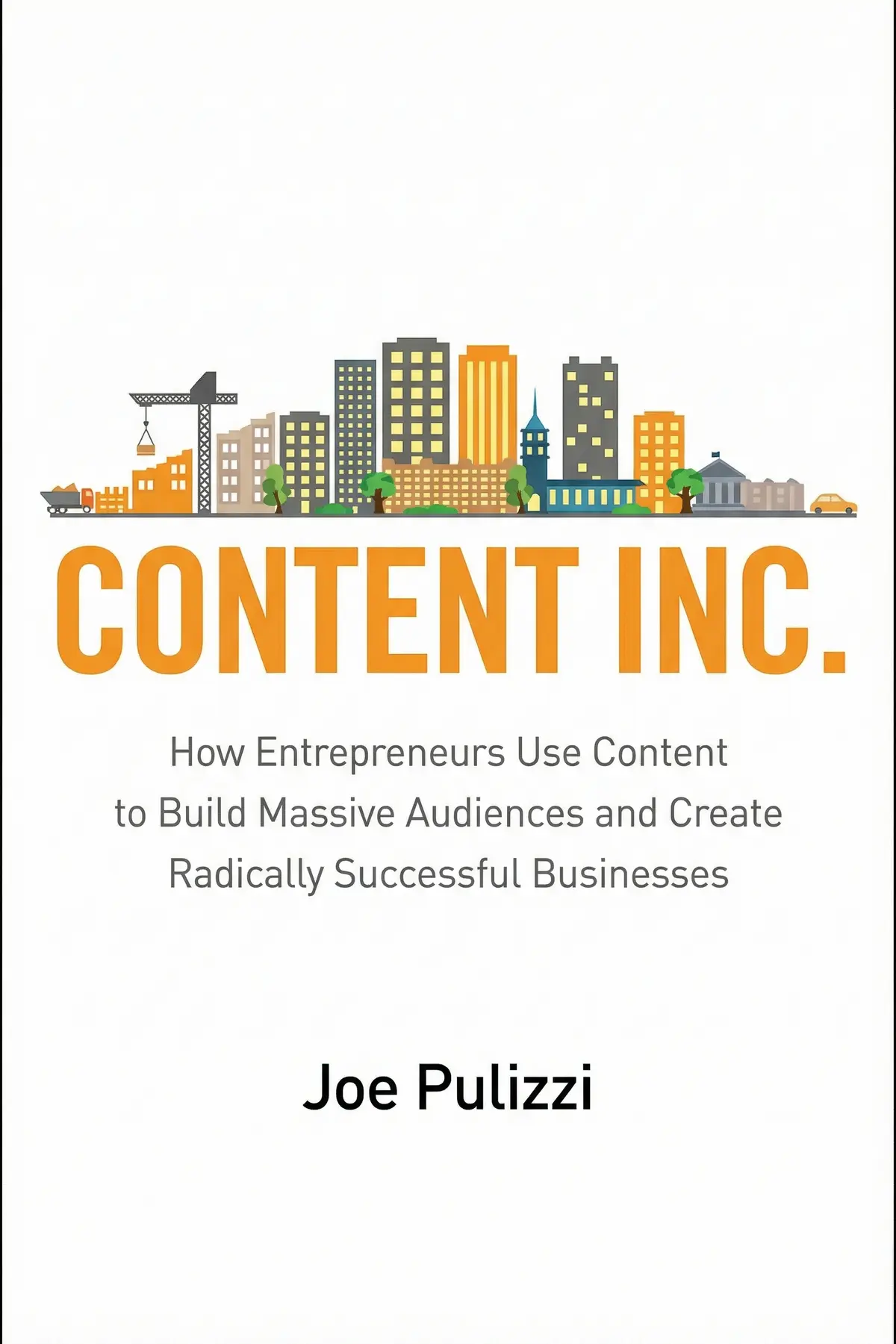
Table of Content
1. Introduction
1 min 05 sec
Many would-be founders stall because they think they need a brilliant, original product before they can begin. In Content Inc., Joe Pulizzi, who founded Content Marketing Institute, argues that the opposite order works better: build an audience first with useful content, and decide what to sell them later. At the start, being unique is optional. What counts is learning what one group of people deeply wants, then serving them so reliably that they keep returning.
The whole book rests on one claim. A loyal audience is the asset every business needs, and today even the smallest company has the content tools to build one. Pulizzi walks the path step by step, from choosing a topic to making money. His guides are a backyard chicken keeper, an out-of-work actor who became a YouTube star and a photography teacher. By the end you will know where your own niche probably sits, which channel to start on, how to keep readers coming back and the first ways that attention can pay.
2. Earn the attention ads can no longer buy
1 min 46 sec
People scroll past advertising faster than ever, yet small companies with no media budget are winning loyal customers anyway. Two surveys suggest what buyers want now, and it also gives founders an early warning system ads never could.
3. Start where your skill meets your passion
1 min 49 sec
A man who kept a few hens behind his house ended up touring the country with workshops. His path began with two simple lists and one deliberate decision about whom he would not try to serve.
4. Give your content an angle nobody else offers
1 min 45 sec
Even a well-chosen niche is usually crowded with blogs, videos and advice. A photography teacher in a packed field became the place people went first, and he did it with a few plain sentences most creators never write.
5. Choose one platform and publish on a schedule
1 min 44 sec
An actor who could not find roles decided to prove himself somewhere casting directors were not looking. Where he chose to publish mattered as much as what he made, and so did a habit most creators skip.
6. Turn passing visitors into email subscribers
1 min 48 sec
A big social media following looks impressive, but Pulizzi ranks another group of people far above it. Reaching them, and getting found by new readers in the first place, depends on three tools within any small business’s reach.
7. Expand only after your first channel holds
1 min 44 sec
Being everywhere at once is tempting, but the book says to hold off until your first channel has a loyal audience. Yet one photography store added hundreds of thousands of subscribers in a single deal, using a shortcut suited to expanding quickly.
8. Build several income streams from the start
1 min 39 sec
Patient audience building sounds like years without a paycheck. One creator in this book made money from ads right away, and Pulizzi argues the real goal is not one source of income but a whole web of them.
9. Conclusion
1 min 13 sec
Content Inc. flips the usual founder’s checklist. Instead of perfecting a product and then hunting for buyers, Pulizzi has you gather the buyers first, through content so focused and useful that one specific group keeps coming back. The product, the income and the expansion all grow out of that relationship. A loyal audience, in his telling, is what every business needs, and it is now within reach of anyone with a laptop and a subject they love.
It does take time. The chicken whisperer needed five years to go from meetings in Atlanta to a book, a magazine and a radio show. So start small and specific. Pulizzi recommends Google Trends as a first tool: it shows what people search for, how your product or topic ranks and which related queries are popular, which helps you test whether your sweet spot has an audience. Then choose one group, one platform and a calendar you can actually keep, and invite every reader onto your email list.
Andy Schneider never set out to invent anything. He started by answering questions about chickens, and a business grew around the people who kept asking.
About this book
What is this book about?
Many people with business ambitions get stuck waiting for a brilliant, original product. Joe Pulizzi reverses the order. In Content Inc., he argues that entrepreneurs can start by attracting an audience with useful content and work out what to sell them later, because people now respond to helpful material far more than to advertising. Pulizzi lays out the path in order. First you find your sweet spot, where something you know well meets something you love, and you choose one audience to serve. Then you give your content a tilt that sets it apart, pick the platform where that audience already spends time, and keep it going with a content calendar. Email, search engine optimization and influencers grow the following, and new channels or bought content assets widen it. The stories are concrete: a backyard chicken keeper who became the chicken whisperer, an out-of-work actor who built Game Theory on YouTube, a photography teacher with an affiliate business, and a camera store that bought a 300,000-subscriber magazine. Readers come away with a practical sequence for turning a passion into an audience, and that audience into revenue.
Book Information
Who it's for
Future founders seeking ideas
Aspiring founders who feel stuck because they have no unique product idea yet.
Wanting a paying audience
Freelancers, experts and hobbyists who want to turn what they know into a paying audience.
Tired of ignored ads
Small business owners tired of paying for ads that nobody notices.
About the Author
Joe Pulizzi
Joe Pulizzi has founded four companies, including Content Marketing Institute, which he sold in 2016, and The Tilt, built for content entrepreneurs. He also created the Content Entrepreneur Expo. The 2021 edition of Content Inc. was a number one bestseller in marketing, and his other books include Epic Content Marketing and Burn the Playbook. He co-hosts the podcast This Old Marketing with Robert Rose, and in 2014 the Content Council gave him a lifetime achievement award.
Ratings & Reviews
Ratings at a glance
What people think
Listeners consider this title essential for those in content marketing or entrepreneurship, highlighting its comprehensive roadmap for content generation and strategic business development. The writing is clear and accessible, packed with plenty of actual case studies, and listeners feel it is a valuable investment of both their time and funds.
Top reviews
Piyanart
As someone who has struggled to find a niche in the crowded digital landscape, the concept of the "sweet spot" was a revelation. Joe Pulizzi explains that you need to find the intersection of your unique skill set and a genuine passion point to truly resonate. This isn't just another marketing manual; it's a strategic blueprint for building a business from the ground up by focusing on the audience first. I found the sections on the "content tilt" particularly helpful because they challenge you to find a unique angle that separates you from the noise. While some might find the advice simple, the execution is where the real work happens. The book is packed with real-life stories that make the concepts feel attainable rather than just theoretical. It’s a must-read for any modern entrepreneur.
Show morePong
The chapter on building a collaborative publishing model was a total game-changer for my small team's approach to growth. Personally, I think the real strength of this book lies in how it frames entrepreneurship as the pursuit of opportunity without worrying about current resources. Pulizzi provides a very clear trajectory for moving from a simple content creator to a full-fledged business owner with multiple revenue streams. I found myself dog-earing so many pages, especially the ones detailing how to repurpose a single piece of content in eleven different ways. It’s easy to get overwhelmed by the sheer number of suggestions, but the author does a great job of keeping the reader focused on the audience's needs. This is definitely going to stay on my desk as a reference guide for my next project.
Show moreKung
Wow, what a comprehensive roadmap for anyone looking to build a business through authority rather than just expensive advertising. The book is incredibly well-written and serves as a bible for the basics of content marketing while offering enough strategic depth to keep things interesting. I loved the section on the economics of conferences and how publishing a book can lead to more speaking opportunities. It connects the dots between being a creator and being a business owner in a way that feels very practical. Not gonna lie, I was a bit of a procrastinator before reading this, but the straightforward takeaways have given me the nudge I needed to start listing my knowledge areas. If you are serious about entrepreneurship in the digital age, this is worth every penny and every minute of your time.
Show moreManika
Finally got around to finishing the second edition, and I think the updates regarding post-COVID income streams are incredibly timely. The core of the Content Inc. model is still about identifying a loyal audience before you even think about the product, which is a provocative inversion of traditional business logic. I loved the practical tips on using tools like HARO and the list of influencer listening platforms like Traackr. These specific resources make the book more than just a motivational speech; they provide a toolkit for actual implementation. My only gripe is that some of the social media sections feel a bit dated, as the landscape shifts faster than any printed book can keep up with. Still, the underlying strategy of building an asset through helpful content is timeless and very well-presented.
Show moreLucas
Ever wonder why your blog posts are screaming into a void while others build empires? This book explains that it isn't about the frequency of your delivery, but whether you are telling a different story that solves a specific task for your reader. The strategic approach Pulizzi outlines is easy to understand and features numerous case studies, like the Huffington Post, to illustrate his points. I particularly liked the focus on "tilting" content to ensure it doesn't just replicate what the competition is doing. While I agree with other reviewers that some chapters like Content Ideation feel a bit basic, the overall framework is incredibly sturdy. It’s a strategic guide that encourages you to stop selling and start helping, which is the only way to win in today’s market.
Show moreClaire
Picked this up on a whim and found the emphasis on an "audience-first" strategy to be a refreshing change from the usual product-centric business books. The truth is, most companies focus too much on what they want to sell rather than what their customers actually need to solve. Pulizzi’s Content Inc. model breaks this down into manageable steps, starting with that crucial intersection of skill and passion. I felt a bit anxious by the end because of the sheer volume of tasks suggested, from setting up a content calendar to pursuing speaking gigs. However, the advice to start small and focus on one primary platform is a great way to avoid burnout. It’s a comprehensive guide that serves as a fantastic roadmap for anyone looking to escape the traditional 9-to-5 through digital authority.
Show moreAmara
After hearing so much about Joe Pulizzi, I expected a very dense academic text, but this was surprisingly accessible and easy to digest. The book excels at taking complex marketing concepts and distilling them into actionable steps like the "9 steps to content tilt." I appreciated the inclusion of customer quotes and real-life stories because they ground the theory in reality. Some of the social media advice feels a bit like it's trailing behind current trends, and I wish there was more depth on interface studies. Despite those minor criticisms, the core message about focusing on your audience’s lives and jobs is spot on. It’s a solid four-star read that I would recommend to any novice marketer looking for a clear path forward without getting lost in university textbooks.
Show moreAnthony
Look, the methodology here is sound, but the delivery is unexpectedly subdued compared to Joe Pulizzi's high-energy public speaking persona. I’ve seen Joe on stage and his enthusiasm is infectious, but that same spark didn't quite jump off the pages for me in this volume. The information is solid, particularly the breakdown of the nine steps to a content tilt, but the middle sections tend to drag with a lot of filler content. I appreciated the quotes from figures like Grant Cardone, which added some grit to the entrepreneurial advice. However, if you are already well-versed in content calendars and platform selection, you might find yourself skimming large portions of the text. It’s a good foundational book for a beginner, but it lacks the advanced nuances that a veteran marketer might be searching for.
Show moreDao
To be fair, much of what Pulizzi discusses regarding the "content tilt" is really just standard branding theory wrapped in new jargon for the digital age. As an old-school journalist, I see a lot of what we used to call "good copy" being rebranded as revolutionary content marketing strategy here. The book tries very hard to show entrepreneurs how to build massive audiences, but it sometimes sets up unrealistic expectations by using massive outliers as examples. Not every small firm needs to be the next KraftRecipes to be successful. The advice is generally actionable and the writing is clear, but I struggled to stay fully engaged throughout the more technical chapters. It is a decent resource if you are new to the field, but don't expect it to reinvent the wheel if you’ve been in the game for a while.
Show moreKwame
This book unfortunately feels like a collection of basic blog posts stitched together into a somewhat repetitive narrative. Frankly, if you have ever taken an introductory marketing course or read a few industry articles, you will find the first half to be incredibly self-evident. Pulizzi spends a lot of time on the "sweet spot" and finding an audience, which is essentially Marketing 101. Once you get to the later chapters like Content Staffing or the Collaborative Publishing Model, the value drops even further as it becomes quite dry and mechanical. The writing style is fine, but it lacks the depth I expected from such a well-known name in the industry. It is a quick read, which is a plus, but there just aren't enough fresh insights here to justify the hype for experienced professionals.
Show moreQuestions about this book
What is the main idea of Content Inc. by Joe Pulizzi?
Pulizzi argues that entrepreneurs do not need a unique product to start. They can first build a loyal audience with focused, useful content, then work out what to sell. He presents that audience as the asset every business needs, and walks through finding a niche, giving content a distinct tilt, choosing a platform, growing subscribers, diversifying and earning money.
What is the content sweet spot in Content Inc.?
The sweet spot is the overlap between something you know or do especially well and something you are passionate about. Pulizzi suggests listing your knowledge and your skills, then asking what motivates you. Andy Schneider combined keeping backyard chickens with a love of teaching, picked one audience of homeowners, and grew meetings in Atlanta into a book, a magazine and a radio show.
Why does Pulizzi prefer email subscribers to social media followers?
On social media you compete with every other post for attention. With email, Pulizzi says, you control what subscribers receive and can reach them whenever you choose, through a daily or weekly newsletter. He places email subscribers at the very top of an audience, and suggests growing the list through search engine optimization and influencers whose readers overlap with yours.
How do you make money from content according to Content Inc.?
Pulizzi says revenue can start early. Matthew Patrick ran ads on his Game Theory YouTube channel, and Darren Rowse earned affiliate income by sending readers to partner sites. The goal is many income streams, such as subscriptions, selling material to advertisers or news outlets, crowdfunding, webinars and podcast appearances, while listening to customers for new openings.
Who should read Content Inc.?
It suits would-be founders without a product idea, experts and hobbyists who want to turn knowledge into a business, and small firms frustrated with advertising. The method is concrete: find your sweet spot, serve one audience, keep a content calendar with goals, build an email list and add income streams. Pulizzi also suggests Google Trends for testing a niche.
Readers also enjoyed




7 Powers: The Foundations of Business Strategy
Hamilton Helmer





Alibaba: The House That Jack Ma Built
Duncan Clark

AUDIO SUMMARY AVAILABLE
Listen to Content Inc. in 15 minutes
Get the key ideas from Content Inc. by Joe Pulizzi, plus 5,000+ more nonfiction titles.
- 5,000+ titles
- Listen as much as you want
- 7-day free trial
- Cancel anytime









