

A Thousand Brains: A New Theory of Intelligence
Jeff Hawkins
 English
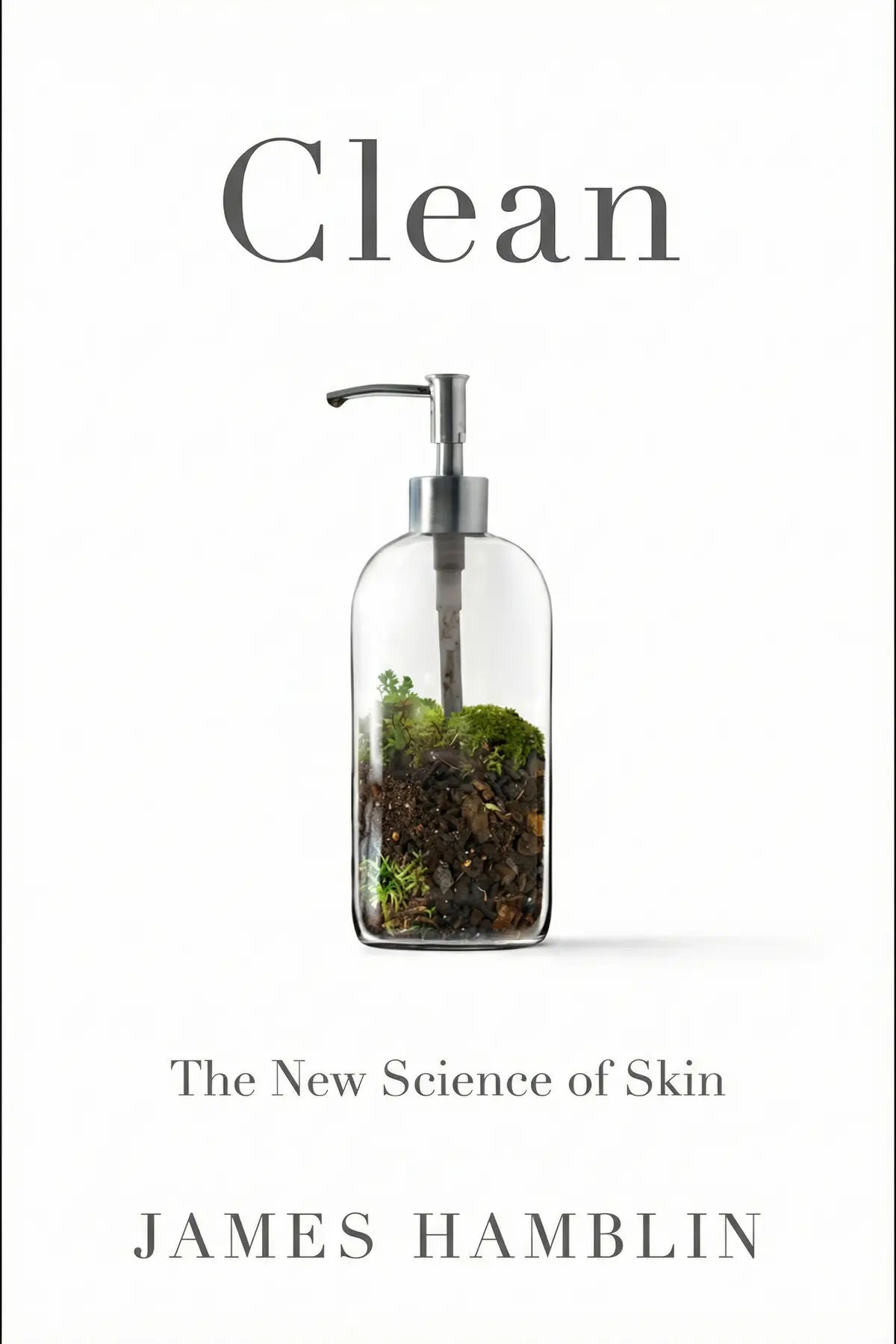
Explains why many of us wash too much, how soap advertising shaped our idea of clean, and how living microbes on the skin may protect health, train immunity and even signal disease.
59 sec
If your routine includes long hot showers, a shelf of gels and antibacterial soap by the sink, you may be washing away part of your own protection. In Clean, physician and journalist James Hamblin reports that the bacteria living on our skin may act as an invisible outer layer that helps it stay balanced. After talking with microbiologists, dermatologists and historians, he concludes that many of us are too clean.
Handwashing still matters for stopping infection. But the drive to scrub everything else nearly sterile came from history and advertising more than biology, and good health lies between the extremes: basic hygiene plus plenty of contact with the microbial world. Along the way come a dermatologist who tells eczema patients to throw out their soap, Amish children who rarely get asthma and a dog that sensed her owner’s cancer. Your bathroom shelf will look different afterward.
1 min 29 sec
A doctor gave up showering for five years and kept a careful eye on what happened to his skin. His skin changed for the better, and most of the skin researchers he spoke with turned out to keep their own showering minimal too.
1 min 39 sec
Roman bathwater almost certainly carried a film of sweat and scum, and European Christians later viewed excessive bathing as a sinful luxury. The reasons people washed kept changing, and the latest reason was as much about class as about germs.
1 min 32 sec
Soap sellers pioneered marketing tricks that are still familiar, from sponsored content, now seen everywhere, to vague praise from unnamed doctors. Once you see the pattern, your bathroom cabinet starts to look like an advertising archive.
1 min 46 sec
Antibacterial soap sounds like the safer choice for any family. When regulators finally asked manufacturers to prove it worked better, the answer they received changed what could legally go into a bar of soap.
1 min 38 sec
Medicines must survive years of trials before they reach a pharmacy, while a face cream can reach your cart on a few glowing reviews. Hamblin explains why so many careful people still trust the cream.
1 min 39 sec
Two communities with similar genes and a way of life largely unchanged since the eighteenth century show very different rates of childhood allergy. One everyday difference in how babies spend the working day seems to explain it.
1 min 26 sec
A scientist studying cancer-sniffing dogs noticed her own retriever acting strangely on the walk home. The behavior made sense once she suddenly recalled a lump she had felt a few days before, and it raised a question about what our skin might be signaling.
1 min 41 sec
Florence Nightingale saved soldiers by letting fresh air into filthy wards, and later hospitals closed the windows again. Her story frames the two kinds of balance Hamblin believes health now depends on.
1 min 08 sec
Clean leaves a strange and useful picture. The body you scrub every morning is a living surface, kept in balance by trillions of tenants that a century of advertising taught us to fear. Hamblin’s case is that the urge to sterilize grew out of religion, class anxiety and clever selling, while our skin, our immune systems and even a dog’s nose point somewhere else. Health comes from balance: soap where it stops infection, open windows everywhere else.
Keep washing your hands with soap and clean water, especially when illness is going around. Beyond that, try trimming your routine toward the armpits, groin and feet, and let plain soap replace antibacterial products. Spend time outdoors, around animals and other people, since shared lives build richer microbiomes. And ask friends about their own routines. Hamblin finds people are glad to answer, and hearing what others actually do makes it easier to decide what you need.
Nightingale’s patients got better when someone opened the windows. Your skin may be asking for the same.
Most people treat a daily hot shower, a shelf of gels and antibacterial soap as basic good health. James Hamblin, a physician and journalist, questions that. After talking with microbiologists, dermatologists and historians, and after giving up showers himself, he argues that many of us are too clean, and that the trillions of microbes living on our skin may work as a protective outer layer. Hamblin traces how our idea of cleanliness was built: Roman baths and religious rituals, the cholera discoveries that made germ theory win, and soap companies that invented sponsored content, soap operas and the term body odor. He follows antibacterial ingredients from Lifebuoy to the ban on triclosan, and shows how loosely skin care claims are regulated. He then turns to the science of exposure: Amish children with far fewer allergies, the way early contact with microbes trains the immune system, and dogs that can smell illness. Readers get a clear view of where their routines came from and a practical case for washing with more purpose and less fear.
People with dry skin or eczema who suspect their shower routine is part of the problem.
Parents wondering how much dirt, pets and play their children's immune systems actually need.
Shoppers tired of skin care claims who want to know which promises have any science behind them.
James Hamblin is a physician specializing in public health and preventive medicine and a lecturer in public health policy at Yale University. He writes for The Atlantic and hosts the video series If Our Bodies Could Talk, which made him a Webby award finalist for Best Web Personality. He has spoken at Harvard Medical School and Columbia Mailman School of Public Health, and was once a Poynter Fellow in journalism at Yale.

Listeners find this work to be deeply researched and filled with stimulating insights, making for an incredible and engaging listen with a great sense of wit. They value the book’s take on dermatology, with one listener emphasizing its focus on protecting the skin's microbiome, while others mention noticing improvements in their acne. Listeners appreciate the high quality of the writing and find the content revelatory, with one noting that it offers clarity in our product-crazed skincare moment.
Wow. This book was a total perspective shifter for me. James Hamblin manages to turn the mundane act of showering into a fascinating exploration of biology, history, and corporate marketing. I was especially gripped by the science of the skin microbiome and those weird Demodex mites that apparently live on all our faces. To be fair, I went into this thinking it was just a guide on how to stop using soap, but it’s so much more than that. It’s an incredibly well-researched look at how we’ve been sold a version of 'clean' that might actually be making us less healthy. His writing style is witty and conversational, making complex medical concepts feel like a chat over coffee. If you’ve ever wondered why your skin is constantly dry despite using a dozen serums, you need to read this. It’s a witty, eye-opening journey that made me realize how little I actually knew about my own body's largest organ.
Show moreThe chapter on the tiny mites living on our faces was both horrifying and strangely comforting. James Hamblin has a gift for taking gross-sounding science and making it feel essential to our understanding of ourselves. This isn't just a book about skin; it’s a book about how we coexist with the microscopic world. I found his medical background gave the 'no-soap' experiment a lot of credibility that a lifestyle influencer just wouldn't have. It's funny, insightful, and doesn't take itself too seriously. I specifically appreciated how he tackled the 'probiotic' trend with a healthy dose of skepticism. While he's a physician, the tone remains accessible and never feels like a lecture. This is exactly the kind of science writing we need more of. It provides much-needed clarity in a world where we are constantly bombarded with conflicting health advice. Truly a must-read for the modern age.
Show moreFrankly, this is the most important book I’ve read regarding my health in years. We are so used to nuking our skin with harsh chemicals that we’ve forgotten how to let our bodies function naturally. Hamblin’s exploration of the skin microbiome is cutting-edge and explained with such clarity. I loved learning about how our obsession with being 'clean' might actually be contributing to the rise in autoimmune issues and allergies. The book is well-paced and kept me laughing even when the subject matter got a bit clinical. It’s rare to find a doctor who can write this well for a general audience without dumbing things down too much. Whether you're a skincare addict or someone who barely splashes water on their face, you'll find something valuable here. It's a brilliant, humor-filled look at the science of the skin that everyone should pick up.
Show moreAfter hearing the author talk on a podcast about his decision to stop showering, I knew I had to grab a copy. It’s not just a memoir about being smelly, though! Hamblin dives deep into how the skincare industry essentially invented problems so they could sell us the solutions. I loved the breakdown of how soap actually works on a molecular level and the way our skin relies on 'good' bacteria to stay healthy. Look, I’m not ready to give up my daily shower just yet, but I’ve definitely cut back on the harsh soaps after reading this. The humor is dry and the research is clearly thorough. My only complaint is that the organization is a bit chaotic. One minute we’re talking about the history of the FDA and the next we’re in an Amish community. Still, it’s a thought-provoking read that will make you rethink your entire bathroom routine.
Show moreAs someone who has spent a fortune at Sephora on expensive collagen creams, this was a massive wake-up call. Hamblin explains that most of these products can't even penetrate the skin because the molecules are too big! It’s all just clever marketing and advertising tricks designed to make us feel 'unclean.' The book is packed with these kinds of 'aha' moments that make you question everything in your medicine cabinet. I found the sections on the skin microbiome particularly enlightening and have actually seen my acne improve by doing less to my face. To be fair, the book does meander quite a bit into social commentary that doesn't always feel necessary. However, the core message about supporting our body’s natural ecosystem is incredibly powerful. It’s an entertaining and enlightening read for anyone caught in the cycle of product-crazed skincare trends.
Show morePicked this up because I wanted validation that my minimal skincare routine was actually okay, and I got exactly that. Hamblin is a fun contrarian who isn't afraid to call out the beauty industry for being a total sham. The way he traces the origins of brands like Palmolive back to the 1800s was a highlight for me. It’s wild how much of our 'hygiene' is just a result of early 20th-century marketing campaigns! The book is written in a very nonchalant, easy-to-digest way. I did think some chapters felt like filler, especially when he goes off on long tangents about urban planning. But when he sticks to the skin and the microbiome, it’s golden. My skin has actually felt much better since I started using soap only on the 'oily' parts as he suggests. It’s a solid, informative read with a great sense of humor.
Show moreWhat does it actually mean to be 'clean' in a world dominated by antibacterial everything? This book provides a much-needed reality check on our modern hygiene habits. Hamblin is a lively writer who makes the history of the FDA and the science of skin flora surprisingly compelling. I appreciated his honesty about his own transition away from soap and the reactions he got from people. However, I agree with other reviewers that the book could have used a sharper editorial eye to keep it on track. Some of the anecdotes are left half-finished, which can be frustrating. Still, the overall message about the necessity of a healthy microbiome is something I’ll be thinking about for a long time. It’s an eye-opening book that offers a lot of clarity in our currently product-crazed moment. Definitely worth a read if you want to understand the 'why' behind your daily routine.
Show moreEver wonder why we are so obsessed with scrubbing ourselves raw every single morning? This book attempts to answer that, but the results are a bit of a mixed bag. On one hand, the history of soap marketing and the rise of giants like Johnson & Johnson is genuinely interesting. On the other hand, the narrative feels a bit overstuffed and distracted at times. Hamblin is a fun, contrarian writer, but he spends a lot of time wandering through different vignettes that don’t always connect back to a central point. Frankly, I was hoping for more hard science on the microbiome and less travelogue-style commentary on the beauty industry. It’s an accessible read, but if you already have a basic understanding of public health, you might find yourself skimming large sections. It’s a good idea that goes a little flat in the middle, leaving me wanting more depth and fewer half-finished anecdotes.
Show moreTo be fair, Hamblin is an incredibly engaging writer, but this book feels like three different manuscripts forced into one. You have a history of hygiene, a critique of the cosmetic industry, and a personal experiment with not bathing. Individually, these topics are fascinating. Together, they create a busily overstuffed narrative that left me feeling more distracted than informed. I also felt he missed a huge opportunity to discuss the privilege inherent in his 'no-soap' lifestyle. He briefly mentions his own experience, but ignores the cultural and racial pressures that make 'not showering' an impossibility for many people. The section on Central Park's development was especially frustrating for its lack of historical context regarding the displaced residents. While there is a lot of good information here, the lack of focus and the occasional blind spots kept me from fully enjoying it.
Show moreI really wanted to love this, but I found myself fighting back a heavy yawn for most of the middle chapters. After reading Hamblin’s previous book, 'If Our Bodies Could Talk,' I expected a lot of dense information, but this felt surprisingly lightweight. The author spends way too much time traveling and contemplating the industry without providing real, actionable insights. Truth is, about fifty percent of this felt like filler content that a good editor should have cut. There is a glaring omission regarding the cultural pressures of cleanliness for people of color, and the section on Central Park felt like revisionist history by ignoring Seneca Village. It’s aggressively average and lacks the scientific punch I was looking for. If you want a deep dive into skin science, this isn't it. It’s mostly just a series of short, shallow observations that never quite reach a satisfying conclusion.
Show moreHamblin argues that many people are too clean. Handwashing still prevents infection, but frequent full-body scrubbing with detergent-based products may disturb the skin’s microbiome, the trillions of microbes that may act as an invisible protective layer. He shows that modern ideas of cleanliness came from religion, status and soap marketing, and calls for a balance of basic hygiene and exposure to microbes.
Yes. Five years before writing Clean, after leaving medicine for journalism, he gave up showering and personal care products while still washing his hands and occasionally getting his body wet. After a few months his skin became less oily and his eczema flared less often. He also found that most skin researchers he interviewed washed sparingly.
According to Clean, there is little evidence it is. In 2013 the US Food and Drug Administration asked soap makers to show their antibacterial products worked better than plain soap and water, and they offered almost none. Studies linked triclosan to tumors and hormone changes, and regulators went on to ban it from soaps, along with hexachlorophene and 17 further antimicrobial ingredients.
A 2016 study led by Mark Holbreich compared the Amish with the genetically similar Hutterites. Amish babies spend workdays strapped to their parents’ backs on the farm, among soil, animals and microbes, while Hutterite children stay away from the communal farm. Amish children had asthma and allergies four to six times less often, which Hamblin links to early microbial exposure training the immune system.
Keep washing your hands with soap and water. Consider using soap mainly on the armpits, groin and feet, as dermatologist Sandy Skotnicki advises eczema patients, and skip antibacterial products. Seek microbial variety through time outdoors, pets and shared living. Hamblin also suggests asking others about their hygiene routines, which helps you judge your own habits.
Jeff Hawkins




Lisa Kaltenegger




AUDIO SUMMARY AVAILABLE
Get the key ideas from Clean by James Hamblin, plus 5,000+ more nonfiction titles.









