

A Planet of Viruses
Carl Zimmer
 English
Schutt explains why eating your own kind is common and often useful across the animal world, how the human taboo against it was built, and why drought and famine could weaken that taboo.
1 min 04 sec
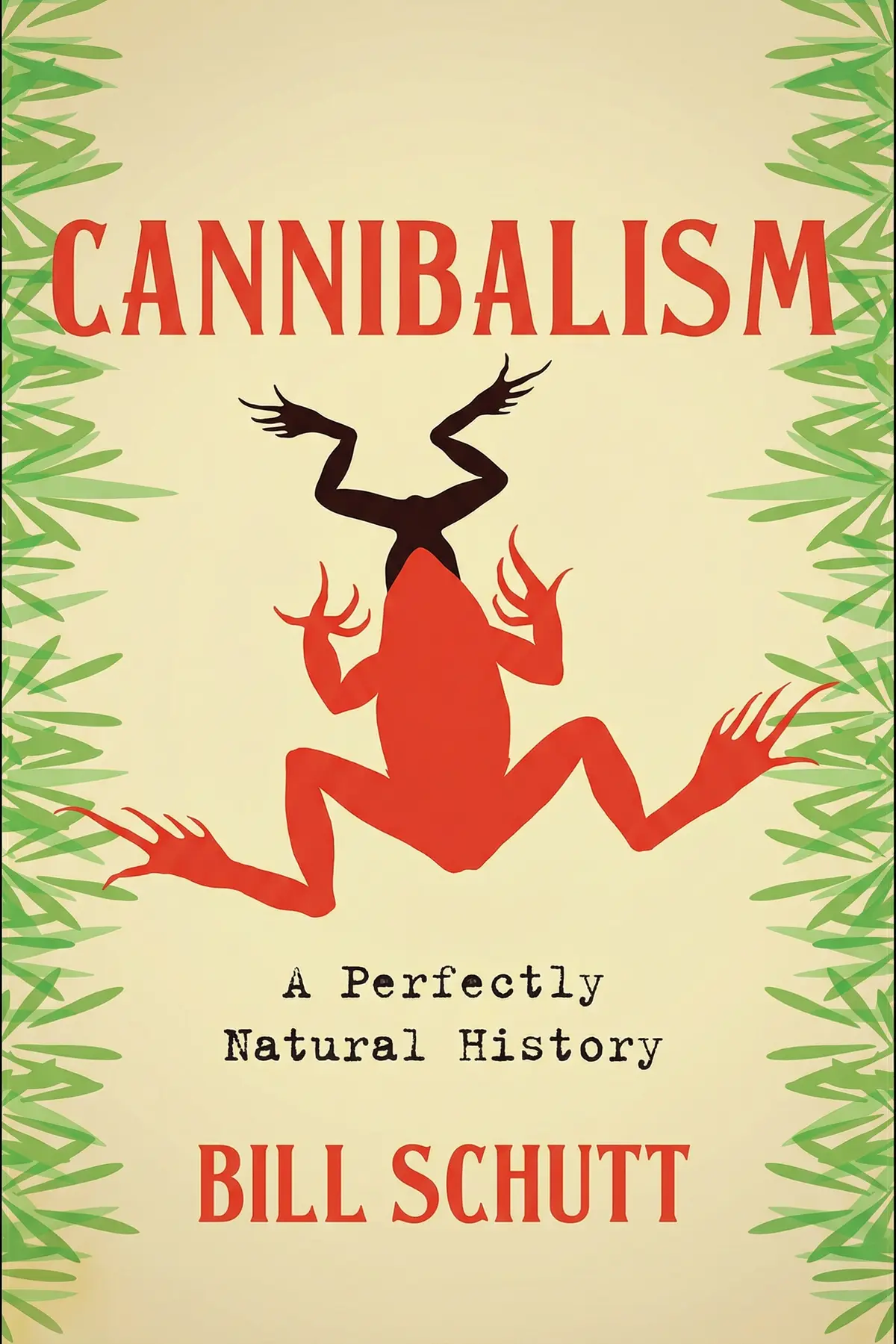
Most of us think of cannibalism as something from horror films, an act only madness or starvation could produce. In Cannibalism: A Perfectly Natural History, zoologist Bill Schutt argues that animals in every major group eat their own kind, and that in nature it is often an ordinary, even useful, response to pressure. Even some butterflies do it.
Schutt, who studied vampire bats for his doctorate, follows the behavior from fish eggs and shark wombs to a house in Rothenburg, Germany, and on to the fairy tales parents read at bedtime. His argument runs in three steps. Cannibalism is natural. The horror humans feel toward it was taught, through religion, colonial history and storytelling. And the conditions that trigger it in animals are now spreading through the human world.
Follow that argument and a taboo that seemed to need no explanation turns out to have a history. News of droughts and famines starts to read differently too.
2 min 00 sec
For decades biologists filed cannibalism under freak behavior, something only starving or caged animals would do. Then one ecologist looked more closely, and even creatures we picture as gentle plant eaters turned out to be part of the story.
2 min 01 sec
Eating your own offspring sounds like the worst survival plan imaginable. Yet fish, beetles and one shark species do it constantly. An ecologist’s observations in 1980 made sense of a behavior that looks self-destructive.
2 min 07 sec
A child’s pet hamster and a farm chicken can both turn on their own kind under the right conditions. What sets them off, and why do mammals resist it so strongly? The answer also carries a deadly warning.
2 min 12 sec
Human cannibalism sounds like something from distant islands or ancient history. Schutt’s cases come from recent decades, and one of the most common forms is sold openly today as a health product.
2 min 03 sec
Disgust at cannibalism feels instinctive, as if nobody ever had to learn it. Schutt follows it back to a religious belief, to a convenient label used by conquerors, and to stories still read to children.
2 min 05 sec
Ritual cannibalism has probably disappeared, Schutt believes. But the same pressures that drive it in animals are now building across several continents, and history records what happened when similar pressures hit before.
1 min 14 sec
Schutt’s book works by turning a horror into a pattern. In fish nurseries, shark wombs and crowded henhouses, eating your own kind is neither madness nor a freak event. It is what living things do when food runs short and space runs out, and sometimes it pays. It also has a price, as the Fore learned through kuru.
Humans built a wall against it. The bricks came from a belief that the dead need whole bodies to rise again, from colonial accounts that painted conquered peoples as man-eaters, and from bedtime tales of hungry wolves and witches. The wall is real, but it is made of culture, and history suggests famine can break through it.
Two habits of mind follow. When behavior looks monstrous, in an animal or a person, look first at the conditions around it: crowding, hunger, fear. And when someone brands a group as savage because of what it eats, ask what the label is for, as Schutt asks of the stories told about Columbus.
A taboo can feel permanent. Schutt’s evidence suggests it holds best while the food holds out.
Cannibalism seems like the most unnatural act there is, something only madness or starvation could produce. Zoologist Bill Schutt argues that biology tells a different story. Since ecologist Laurel Fox's work in the 1970s, scientists have found cannibalism in every major animal group, from fish and flour beetles to sand tiger sharks that eat their siblings in the womb. In nature it is a predictable reaction to crowding, hunger and scarce food, and it can bring real evolutionary advantages along with a serious risk of disease. Schutt then turns to people. He looks at modern cases, from a killing in Germany to the far more common practice of eating one's own placenta, which he tasted himself. He traces the Western taboo to religious ideas about resurrection, to colonizers who labeled conquered peoples as cannibals, and to fairy tales like Snow White and Hansel and Gretel. The book ends with a warning. Because stress is what triggers cannibalism in animals, the droughts, famines and conflicts spreading across the world could make it reappear among humans. Readers come to see a taboo they took for granted as something with a history, and as something that could weaken again.
Curious readers who enjoy biology that overturns their gut reactions.
Students of history and anthropology interested in how taboos and colonial labels were built.
Anyone following drought and famine news who wants a long, unsettling view of what stress does to a species.
Bill Schutt is a vertebrate zoologist and professor emeritus of biology at Long Island University, where he taught for 22 years. He is also a longtime Research Associate in the Department of Mammalogy at the American Museum of Natural History. He earned his Ph.D. in zoology at Cornell University in 1995, studying vampire bats. His TED-Ed video on cannibalism in the animal kingdom has passed 3.3 million views, and he also co-writes the R.J. MacCready thriller series.
Listeners find this book to be a captivating exploration that offers an extraordinary depth of knowledge on cannibalism, with one listener observing that the author tackles the subject with both humor and respect. Furthermore, the prose style is highly regarded, with one listener noting its conversational tone, and listeners value the fact that the content isn't sensationalized. The book is also seen as clear and skillfully written, with one listener portraying it as the finest example of popular science literature.
Bill Schutt has a rare talent for making a stomach-turning topic feel completely accessible and even educational. I was initially hesitant to pick this up, but the author’s insatiable curiosity is absolutely infectious. He does a brilliant job debunking the myths surrounding the Donner Party, using modern research to show that the reality was much more nuanced than the legends suggest. The discussion on the Eucharist and how we view ritual cannibalism in Christianity was particularly thought-provoking and brave. It is not a gruesome romp, but rather a sophisticated look at how the line between "civilized" and "savage" was often drawn for political reasons. Frankly, I think everyone should read this to understand that cannibalism is actually quite natural in the grand scheme of life.
Show moreThis book completely reframed how I view 'natural' behavior in the wild and within our own history. Schutt argues that eating one’s own species isn't just a desperate act of starvation, but can be a tool for social order and population control. The stories about Christopher Columbus and how he used cannibalism labels to justify colonization were eye-opening and deeply relevant. I appreciated that the author stayed far away from the typical serial killer tropes that usually plague this topic. The writing is witty, the research is top-notch, and the insights into the animal kingdom are genuinely surprising. I inhaled this book in two sittings and immediately recommended it to all my friends who love a good, dark piece of history.
Show moreWow, who knew I could be so gleefully entertained by a book about species snacking on their own kind? Schutt is a fantastic guide through this taboo subject, and his background as an invertebrate zoologist shines through in the best way possible. I loved learning about the various reasons for cannibalism, from pre-natal survival in sharks to the sacrificial rituals of ancient cultures. The way he weaves together interviews with experts and his own field research makes for a very compelling narrative. It is rare to find a science book that is this funny without losing its intellectual weight. If you aren't afraid of a little dark humor and a lot of biological facts, you should definitely grab a copy.
Show moreIf you enjoy Mary Roach's quirky approach to science, you will feel right at home with Bill Schutt’s writing style. He takes a subject that most people find repulsive and turns it into a fascinating, conversational journey through biology. I particularly loved the section on the animal kingdom, where he explains how spiders and tadpoles use cannibalism as a viable survival strategy. It is refreshing to read a book that avoids the sensationalism of serial killers like Jeffrey Dahmer in favor of actual anthropological data. While some of the medical history about drinking blood or eating powdered mummies was a bit stomach-churning, the dark humor kept me engaged. This is popular science at its best, even if the transition from animals to humans felt a little abrupt in the middle chapters.
Show moreEver wonder why a mother spider might offer herself up as a meal to her offspring? This book dives deep into those uncomfortable questions without ever feeling exploitative or gross. Schutt writes with a light touch that reminds me of Bill Bryson, making complex evolutionary advantages easy to understand for the layperson. I was surprised to learn about the history of "medicinal cannibalism" in Europe, which is a part of history that usually gets glossed over in school. The only part that really made me recoil was the detailed account of placenta eating, but even that was handled with scientific objectivity. It is a well-researched, enlightening piece of non-fiction that manages to be respectful of human life while exploring its more taboo aspects.
Show moreSchutt expertly balances a respectful distance from human tragedy with a deep dive into the biological necessity of cannibalism. Picking this up, I wasn't sure if I would be able to handle the subject matter, but the focus is much more on zoology than on horror. The chapters on raptors and their sibling rivalries were particularly fascinating to me as a bird lover. I also found the exploration of how diseases spread through ritual consumption to be a highlight of the text. My only real complaint is that I wanted a bit more on the cultural side of modern tribes, though I understand why the author chose to be delicate. It is a smart, funny, and deeply informative book that handles a difficult subject with grace.
Show moreTo be fair, I was worried this would be too gruesome to finish, but the author makes the medicine go down easy with plenty of wit and intelligence. This isn't a book about monsters; it’s a book about survival, ritual, and the sometimes strange ways that life persists. I was particularly struck by the discussion on how the stigma of cannibalism has been used as a weapon against indigenous peoples throughout history. Schutt handles these sensitive topics with a level of care that you don't often see in books about 'taboo' subjects. There were a few moments where the technical jargon got a little thick, particularly in the brain disease section, but overall, it was an incredibly satisfying and educational read.
Show moreWhile the subject matter is undeniably gripping, the pacing felt a bit uneven toward the end of the book. I was completely fascinated by the invertebrate zoology bits, especially the slugs that have to chew their own genitals off to escape mating tangles. Schutt clearly knows his stuff and writes with a lot of respect for the victims of history. However, I felt like the chapter on Kuru and other spongiform encephalopathies went on for far too long. To be fair, it is an important part of the science, but it lacked the witty spark found in the earlier sections about the Donner Party. It is a solid read if you are interested in the evolution of behavior, but be prepared for a few dry stretches.
Show morePicked this up on a whim after seeing a review on BookTube and the truth is, it was a bit of a mixed bag for me. On one hand, the author's dark sense of humor is great, and he makes the science of snails and sharks really engaging. On the other hand, some of the chapters felt like they belonged in a textbook rather than a popular science book. I did appreciate the lack of sensationalism, as I’m tired of seeing the same five serial killers discussed over and over again. The stuff about the IT Crowd was a funny little nod, but I think the book could have been trimmed down by about fifty pages. It’s an interesting read for the curious, but it might not be for everyone.
Show moreMaybe I am just too used to the sensationalist Netflix documentaries, but I found this a bit too academic for my taste. I went into this expecting a deep dive into the darker side of human nature, but instead, I got a lot of chapters about birds and insects. Schutt is clearly a talented zoologist, and his writing is high-quality, but I just couldn't get into the long-winded explanations of tadpole nutrition. The book tries to be funny, and sometimes it succeeds, but the humor often felt a bit forced when discussing such a heavy topic. If you want a dry, scientific breakdown of why animals eat their young, this is for you. If you wanted something more along the lines of a true crime thriller, look elsewhere.
Show moreSchutt argues that cannibalism is natural. It appears in every major animal group, usually triggered by crowding, hunger and a lack of other food, and it can bring evolutionary benefits. The human taboo against it, he says, was shaped by religion, colonial history and fairy tales, and he warns that growing environmental stress such as drought and famine could make human cannibalism reappear.
Drawing on the work of ecologists Laurel Fox and Gary Polis, Schutt explains that cannibalism rises under stress: overcrowding, hunger and few nutritious alternatives. Young animals are the most common victims because they are easy, defenseless food. Fish eat eggs and fry, flour beetles that cannibalize lay more eggs, and sand tiger shark embryos eat their siblings until only two remain.
Yes. Schutt notes that parasites and germs often specialize in a single species and have evolved ways around its immune defenses, so eating your own kind raises the risk of disease. His example is the Fore people of New Guinea, who nearly died out after eating the brains and tissue of dead relatives infected with kuru, a contagious brain disease with no cure.
By Schutt’s definition, consuming part of another member of your own species, it does. He describes mothers eating placenta raw, in smoothies, as jerky or as supplements. Some midwives and alternative health advocates claim it replaces nutrients lost in pregnancy, but Schutt reports little official research supporting this. He tasted it himself and compared it to organ meat.
Schutt points to several sources. Historian Reay Tannahill linked it to the Judeo-Christian belief that the dead need a whole body for resurrection. Colonizers labeled conquered peoples as savage cannibals to justify taking their land. Fairy tales by Charles Perrault and the Grimm Brothers, such as Snow White and Hansel and Gretel, used cannibal villains to frighten children into behaving.
Carl Zimmer

Bill Bryson

Jeff Hawkins




Lisa Kaltenegger


AUDIO SUMMARY AVAILABLE
Get the key ideas from Cannibalism by Bill Schutt, plus 5,000+ more nonfiction titles.









