


A Thousand Brains: A New Theory of Intelligence
Jeff Hawkins
 English
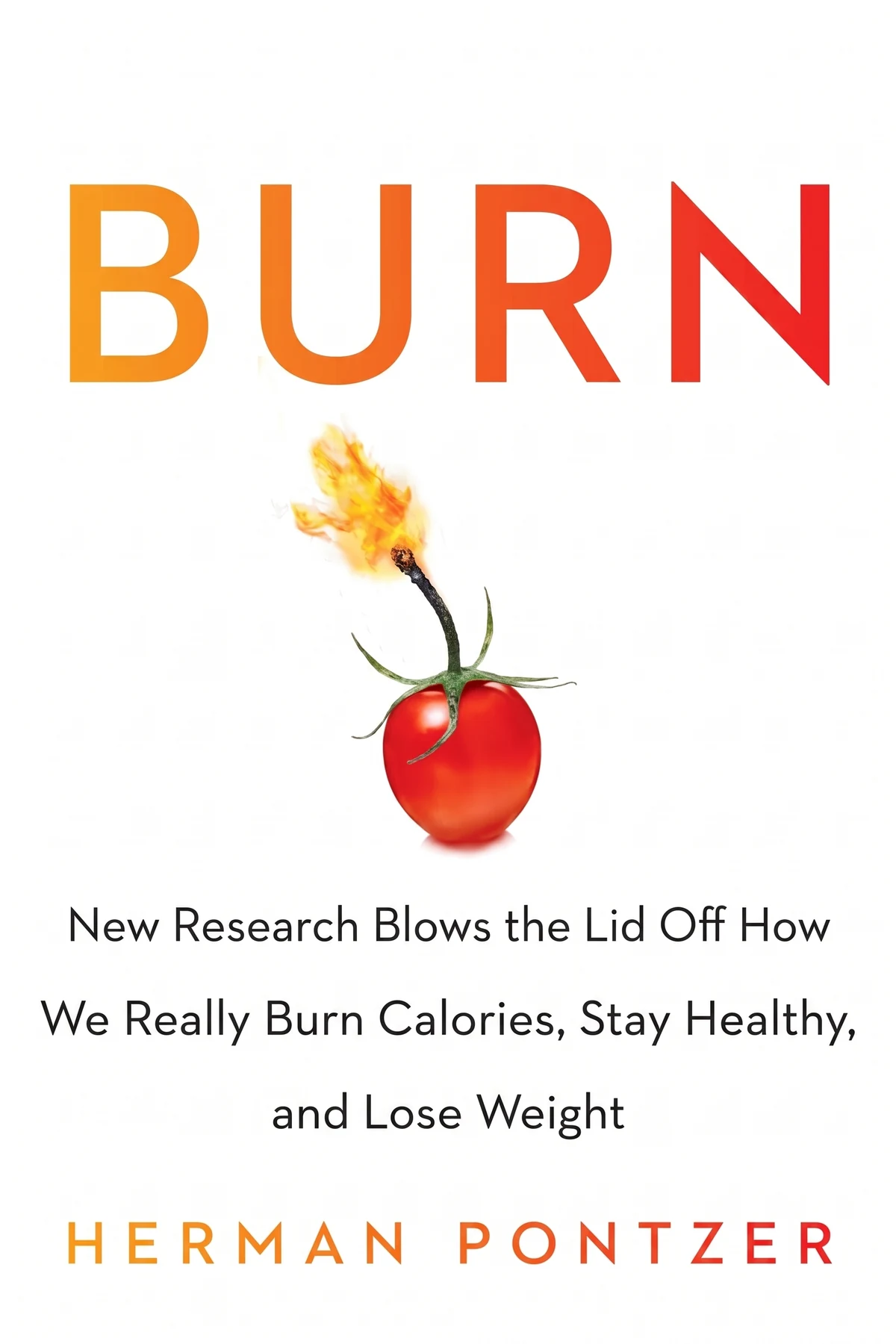
Explains why hunter-gatherers and office workers burn about the same calories each day, what that fixed energy budget means for exercise, and why controlling what you eat matters most for weight.
1 min 05 sec
If you have ever sweated through months of workouts while the scale refused to move, Herman Pontzer has an explanation. In Burn, the Duke evolutionary anthropologist reports that hunter-gatherers in Tanzania, who walk, dig and climb all day, burn about as many calories as office workers in Europe and the United States.
His conclusion is that the human body holds its daily energy spending inside a tight budget, one set by millions of years of evolution. That single finding changes how to think about weight. Exercise does a great deal for the heart, the immune system and the brain, yet it barely changes how many calories you burn in a day. What you eat does.
Along the way, Pontzer explains what metabolism actually is, how scientists measure it from a urine sample, why sharing food made us human and why our bodies store fat so easily. The reward is practical: you can stop blaming a desk job for your weight and put your effort where the evidence points.
1 min 44 sec
An old belief that maggots grew out of rotting meat was proven wrong more than a century ago. Pontzer argues the truth about how living bodies are assembled is even stranger than that discarded idea.
2 min 15 sec
Scientists once needed a sealed room to know how many calories someone burned. Then a physiologist realized the answer was already leaving the body every day, hidden in the atoms of ordinary water.
1 min 48 sec
Men who walk twelve miles a day and climb trees for honey should burn far more than commuters. When the urine samples came back from the lab, the numbers told a very different story.
1 min 56 sec
People with the most demanding physical lives should top the calorie charts. Study after study says otherwise, and the reason reveals what the body quietly gives up when you push it harder.
2 min 08 sec
A chimpanzee given unlimited food in a zoo grows bigger yet stays lean. A human in the same situation does not. The difference goes back to an ancient habit that made us who we are.
1 min 52 sec
Low carb, low fat or points-based: the diet wars rage on. A year-long trial and one professor’s ten weeks of candy and chips suggest the winning plan has little to do with its philosophy.
1 min 10 sec
Burn turns a familiar story on its head. The body is not a simple machine where more movement means more calories gone. It runs on a budget, set long ago by a sharing, big-brained species that had to survive lean times, and it holds that total steady whether you hunt on the savanna or sit at a desk in Naples. Our talent for storing fat once protected the budget. Surrounded by easy food, it works against us.
The practical side follows directly. Keep exercising for your heart, your immune system, your mind and the way you age, but stop treating a workout as permission for an extra meal, because it buys fewer calories than you think. Put your weight efforts into what you eat, and choose a plan by whether you can stick with it, since Dansinger’s volunteers lost weight on every diet they actually followed. And when the next miracle plan appears, remember the nutrition professor who lost 27 pounds on candy and chips, and ask only how many calories it cuts.
Your cells will spend roughly the same energy tomorrow as they did today. The part you control is how much fuel you hand them.
Most weight advice rests on a simple story. Our ancestors moved all day and stayed lean, while modern life keeps us sitting and burning too little. Herman Pontzer, an evolutionary anthropologist at Duke University, set out to test that story with careful measurements, and found it does not hold. Using a method that tracks calories burned from urine samples, his team studied the Hadza, hunter-gatherers in northern Tanzania who walk, dig and climb all day. They burn about the same calories as adults in Europe and the United States. Larger studies point the same way: the human body keeps its daily energy spending within tight limits, trimming other tasks when activity rises. Pontzer explains what metabolism really is, how sharing food gave humans a faster and hungrier body than apes, and why that body stores fat so readily when food is plentiful. Readers get a clear picture of why exercise helps health but barely moves the scale, why every diet works when it cuts calories, and where to focus their effort.
People who exercise hard but cannot understand why their weight barely changes.
Busy professionals who blame a desk job for extra pounds and want to know what really matters.
Readers curious how human evolution shaped metabolism, appetite and the way we store fat.
Herman Pontzer is an American scientist who studies human evolution. He is an associate professor of evolutionary anthropology and global health at Duke University and an associate research professor of global health at the Duke Global Health Institute. His research looks at how the human body evolved and how environment and lifestyle shape metabolic health, and he is known for his work on human bioenergetics, the study of how the body uses energy.

Listeners find the writing accessible and clear, offering excellent scientific analysis and a stimulating look at how humans consume energy. They value the health-related guidance, with one listener highlighting the way it reconciles exercise with conscious eating, and consider it both engaging and humorous. Although the work offers a final word on weight management and well-being, some listeners feel the specific tips for dieting and shedding pounds lack practical utility.
As a self-proclaimed fitness junkie who spent years obsessed with calorie-tracking apps, reading this was a total ego-check. Pontzer basically shreds the 'exercise to lose weight' mantra that we’ve been spoon-fed since childhood. It turns out our bodies are way more efficient—or perhaps stubborn—than we realized, keeping our daily burn in a very tight range regardless of how many miles we run. The stories about the Hadza tribe in Tanzania were the highlight for me because they completely upend our assumptions about 'primitive' versus 'modern' metabolisms. I will admit, some of the scientific deep dives into doubly labeled water felt a bit like a college lecture I didn't sign up for. Also, he really loves mentioning his Harvard days, which got a bit old after the third time. Still, the insight that weight is managed in the kitchen while health is built in the gym is a perspective shift I desperately needed. It's a must-read if you're tired of the endless cycle of fad diets and gym burnout.
Show moreFinally, someone provides a data-driven explanation for why dieting is so hard without relying on the typical 'willpower' tropes. Pontzer’s research on how our bodies compensate for exercise by dialing down other systems like the immune and reproductive functions is eye-opening. It explains so much about why we feel fatigued or get sick when we overtrain while cutting calories. I really appreciated how he dismantled the Paleo myth, showing that humans are actually evolved to be flexible eaters who thrive on carbohydrates. The prose is conversational and moves quickly, though some of the biochemical diagrams required a second look to fully grasp. My only real gripe is that the advice for actual weight loss is pretty sparse: just eat less. It’s a bit of a letdown after such a complex buildup, but I suppose the truth is often simple. This book changed how I view my daily walks and my dinner plate forever.
Show moreWhat a refreshing take on the thermodynamics of the human body. Pontzer manages to bridge the gap between complex evolutionary anthropology and practical health implications with remarkable ease. The book’s greatest strength lies in its debunking of the 'more is more' approach to physical activity and weight management. By explaining the constrained energy model, he provides a scientific framework for understanding why weight loss plateaus are so common and inevitable. To be fair, the author’s tendency to digress into his personal field adventures in Africa can slow the pacing, but they do provide necessary context for how the data was gathered. I found his critique of the diet industry to be particularly sharp and well-founded in biological reality. Even though he can be a bit dismissive of opposing views, the sheer volume of data he presents makes his arguments very difficult to ignore. Highly recommended for anyone who values evidence over influencers.
Show moreThe core revelation that our bodies are hard-wired to maintain a specific energy budget is the most important health concept I’ve learned in a decade. Pontzer writes with a clarity that makes high-level biology feel accessible, even if he does take a few too many victory laps around his own accomplishments. I especially appreciated the nuanced discussion on how modern ultra-processed foods hijack our natural satiety signals. It’s not just that we are lazy; it’s that our environment is diametrically opposed to our evolutionary biology. While the digressions into climate change at the end felt a bit tacked on, they didn't ruin the overall experience for me. The book provides a much-needed reality check for anyone who thinks they can out-train a poor diet. It’s an essential read for anyone interested in the intersection of anthropology and modern health.
Show moreEver wonder why those grueling hours on the elliptical never seem to move the scale? Pontzer answers this with a fascinating look at the 'constrained energy expenditure' model, proving that more activity doesn't equal more calories burned. The book is heavily grounded in his field research with apes and hunter-gatherer societies, offering a cross-species perspective that is often missing from nutrition books. To be fair, the middle section gets bogged down in the minutiae of cellular biology and his specific lab methodologies. While I appreciate the transparency of the research, it might be a bit dense for the average reader just looking for a diet plan. It’s important to note that this isn't really a 'how-to' guide, as the author focuses more on the 'why' than providing specific meal plans. The writing is generally accessible, though the humor can feel a bit forced at times. If you want a deep, scientific understanding of how your body uses fuel, this is arguably the most definitive resource available today.
Show morePicked this up after hearing Pontzer on a podcast and it didn't disappoint. The idea that we can't just 'run off' a bad diet is depressing but also weirdly liberating. It means I can stop killing myself in HIIT classes and just focus on moving for the health of it. The author does get a bit technical with the 'doubly labeled water' stuff, but he explains it well enough for a non-scientist to follow. I did find the parts about our primate cousins and their energy use surprisingly engaging. Not every joke landed, and yeah, we get it, you went to Harvard, but the information is too important to ignore. If you’ve ever felt like your metabolism was 'broken,' read this and learn why your body is actually doing exactly what it was evolved to do. It’s a solid addition to the library of anyone interested in human biology.
Show moreLook, the science here is top-notch, even if the author’s personality is a bit much to handle over 300 pages. I loved the chapters exploring how our bodies allocate energy to things we never think about, like cell repair and the nervous system. It makes you realize that we are more than just engines burning fuel; we are complex biological machines with very strict budgets. The truth is, I could have done without the long-winded stories about his grad school days and his specific opinions on urban planning. It felt like the book needed a more aggressive editor to keep him focused on the metabolism research. However, the core message about the 'activity paradox' is something every doctor and trainer should be aware of. It’s not a perfect book, but the central discoveries are too significant to pass up. Just be prepared to skim some of the more self-indulgent memoir bits.
Show moreAfter spending years following every low-carb influencer on Instagram, this book felt like a bucket of cold water to the face. Pontzer doesn't care about your feelings on keto or fasting; he cares about what the isotopes in urine samples tell us about human evolution. Seeing the proof that humans have always relied on tubers and honey really put the 'Paleo' lifestyle into a new, more realistic perspective. I found the section on how elite athletes reach a metabolic ceiling to be absolutely mind-blowing. It really challenges the idea that human potential is limitless. My only real frustration was the lack of a clear 'what now?' section, but maybe that’s the point. Science gives us the facts, and we have to figure out the lifestyle ourselves. It’s an empowering read that strips away the mystery of why our bodies hold onto weight so tightly.
Show moreThe central thesis of this book regarding metabolic limits is groundbreaking, but the delivery left me feeling frustrated. On one hand, the evidence showing that the Hadza burn roughly the same amount of energy as sedentary Westerners is a total game-changer for evolutionary biology. On the other hand, Pontzer’s writing style is frequently distracted by personal anecdotes that feel more like a travelogue than a science book. Frankly, the constant reminders about his academic pedigree at Harvard and Penn State felt unnecessary and smug. I also found the final chapters, where he pivots into sociology and climate change, to be a bridge too far. He’s an expert in metabolism, not global policy, and those sections felt poorly researched compared to the rigorous biological data presented earlier. It’s worth reading for the core scientific insights, but you’ll have to trudge through a lot of fluff and self-congratulation to get to the good stuff.
Show moreWhile the data regarding the Hadza tribe is initially interesting, the book quickly devolves into a repetitive and strangely condescending narrative. Pontzer seems more interested in mocking other researchers and touting his own brilliance than providing a balanced view of human health. He dismisses years of research on macronutrient composition with a hand-wave, insisting that 'a calorie is a calorie' despite evidence of individual metabolic variation. The tone is incredibly smarmy, and the frequent 'dad jokes' peppered throughout the text made it difficult to take the science seriously. Not gonna lie, I almost DNF’d when he started lecturing the reader on climate change and societal ills in the final third. It felt like he used a science book as a Trojan horse for his personal political opinions. If you want to learn about metabolism, find a textbook or a peer-reviewed paper; this memoir-masquerading-as-science is just too bloated with ego to be truly useful.
Show morePontzer argues that humans have a constrained daily energy budget. Using measurements of real people, he shows that very active hunter-gatherers like the Hadza burn about the same calories as office workers in Europe and the United States. Because exercise barely changes daily calorie burn, he concludes that obesity comes mainly from eating too much, and that controlling diet matters most for weight.
Only a little, in Pontzer’s view. When activity rises, the body saves energy elsewhere, for example by reducing inflammation and some hormone production, so total daily burn levels off. A study of 300 people found the most active burned no more than the moderately active. Exercise is still strongly worth doing for the heart, immune system, brain and healthy aging.
The book describes a method developed by physiologist Nathan Lifson in the 1950s. A person takes in heavier forms of hydrogen and oxygen, then gives urine samples over several days. Oxygen leaves the body slightly faster than hydrogen because some exits as exhaled carbon dioxide. The difference reveals how much carbon dioxide was produced, and from that, how many calories were burned.
Any diet you can keep to, as long as you burn more calories than you eat. Pontzer cites a 2005 study by Michael Dansinger in which 160 adults followed Atkins, Ornish, Weight Watchers or Zone for a year. People who stuck to their plan lost weight, whichever it was. Mark Haub even lost 27 pounds eating only junk food, capped at 1,800 calories a day.
Pontzer explains that humans evolved a faster metabolism than apes, burning around 400 more calories a day, partly to fuel a large brain. That raised the risk of starving when food ran out, so our bodies became good at storing fat. A zoo chimpanzee with plenty of food stays lean, while humans in the same abundance gain fat.
Jeff Hawkins




Lisa Kaltenegger




AUDIO SUMMARY AVAILABLE
Get the key ideas from Burn by Herman Pontzer, plus 5,000+ more nonfiction titles.









