

A Short History of Nearly Everything
Bill Bryson
 English
A clear, equation-free account of what antimatter is, how physicists predicted, found and trapped it, and why a tiny imbalance between matter and its mirror twin may be the reason anything exists.
1 min 14 sec
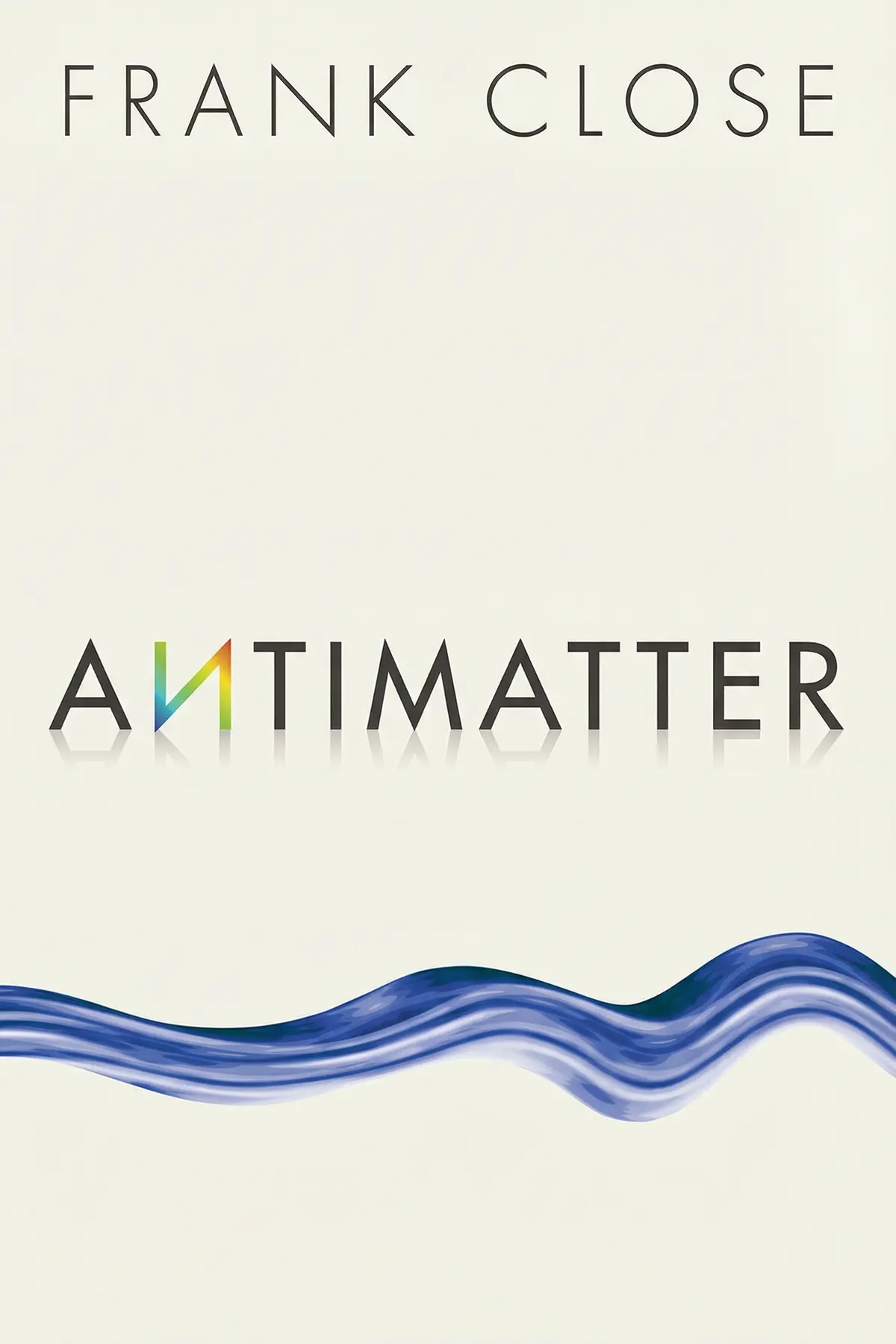
Antimatter sounds like an invention of science fiction. Yet physicist Frank Close notes that a single kilogram of it, meeting ordinary matter, could set off a reaction a hundred times stronger than nuclear fusion. In Antimatter, Close, a Fellow of Exeter College, Oxford, who led theoretical physics at the Rutherford Appleton Laboratory from 1991, explains this strange substance without burying the reader in equations.
His argument runs like this. Antimatter is ordinary matter reflected in a mirror. It was predicted on paper, confirmed in the lab and is now barely held in magnetic traps. And the tiny ways the mirror fails may explain why anything exists at all.
The story starts with a quiet English physicist’s paper in 1928. It moves from cloud chamber experiments in California to the machines buried under the Swiss countryside, and it ends with sober news for anyone expecting antimatter bombs or rockets soon. By the end, the next antimatter headline is one you can judge for yourself, and explain to a friend over dinner.
2 min 02 sec
A single atom of hydrogen holds the whole idea, once you flip it. A simple picture from the garden explains why every particle seems to arrive with a twin, and why their meeting is so violent.
2 min 05 sec
A man who could sit through a dinner party without a word wrote down something no one had observed. Within a few years, strange curved tracks in two laboratories forced physicists to take him seriously.
2 min 09 sec
The three particles everyone learns at school turn out to be only the front row. Powerful machines broke them open, and what spilled out carried the mirror idea down to the smallest scale known.
2 min 04 sec
The hardest thing about antimatter is not making it but holding onto it, since almost anything it touches destroys it. Under a peaceful Alpine landscape, a team spent years turning seconds into minutes.
2 min 08 sec
In theory, the birth of the universe should have ended in a perfect cancellation, leaving nothing behind. Two tiny particles offer hints of a flaw in the mirror, and that flaw might be why you exist.
2 min 06 sec
A military official’s warning about city-destroying blasts made news around the world. The physics behind it is real, yet two very ordinary problems keep antimatter bombs and starship engines on paper.
1 min 12 sec
Frank Close’s account comes down to a mirror with a crack in it. On one side sits everything we know, from a hydrogen atom to the person thinking about it. On the other sits its reflection, opposite charge for opposite charge. It was predicted by a man who barely spoke at dinner and caught in cloud chambers by researchers looking for something else. Where the two sides touch, they vanish in a flash of light. That makes antimatter easy to describe and nearly impossible to keep, which is why a few minutes of stored antihydrogen at CERN counts as a triumph.
The crack matters most. A kaon that stays matter slightly longer than antimatter, and neutrinos that may have come out a little uneven, could be why the cosmic chessboard was not left empty.
So when antimatter shows up in the news, picture the hole and its mound of dirt. Then ask where the antimatter would come from and what would hold it. And when someone wonders why there is something rather than nothing, you have an answer worth offering: perhaps the mirror was never perfect.
Antimatter turns up in science fiction, in news stories about weapons and in theories about mysterious explosions. Most people have heard the word, and few could explain what it means. Physicist Frank Close sets out to fix that, and he does it without dense mathematics. His starting point is a simple picture: antimatter has the same structure as ordinary matter, with every electric charge reversed. From there Close follows the story from Paul Dirac's 1928 prediction of the positron to the cloud chambers where researchers first saw one. He then goes to the particle accelerators that revealed quarks and to the machines under the Swiss countryside at CERN, where scientists have learned to hold antihydrogen for minutes. The book also takes on the big puzzle. If the big bang made matter and antimatter in equal amounts, why didn't they cancel out completely? Close walks through the clues from kaons and neutrinos, and then explains plainly why antimatter bombs and engines are still far out of reach. Readers finish able to explain antimatter in a few sentences and to judge the headlines about it.
Curious readers who keep hearing about antimatter and want a clear picture without equations.
Students heading into physics who want the story behind positrons, quarks and CERN.
Science fiction fans who wonder how close antimatter engines and weapons really are.
Frank Close, born Francis Edwin Close in 1945, is a physicist and a Fellow of Exeter College, Oxford. After Oxford he spent two years as a postdoctoral fellow at Stanford University in California. In 1975 he joined the Rutherford Appleton Laboratory as a research physicist, and from 1991 he headed its Theoretical Physics Division. Alongside his research he writes books for general readers, including Antimatter, Lucifer's Legacy and Eclipse.

Listeners consider this title to be a vital read for the general public, serving as a concise and inviting introduction to the world of antimatter. Furthermore, the prose earns high marks, with one listener observing that it is skillfully written for the casual science buff. The book's informative depth is also widely praised; one listener notes that it stays tightly focused on its primary themes, while another values how it dispels common myths about the subject. The overall narrative is highly engrossing, with one listener characterizing it as a fascinating story that is expertly delivered.
Wow, Frank Close really knows how to turn complex subatomic physics into a compelling narrative for the curious reader. I was fascinated to learn that sunlight is actually the byproduct of positrons being annihilated in the Sun’s core, creating gamma rays that take a hundred thousand years to reach the surface. The book does a marvelous job of stripping away the 'magic' of antimatter while keeping the sense of wonder intact throughout. His section on PET scans provided a much-needed practical perspective on how this 'exotic' material actually saves lives today. While some parts on kaons and decay were a bit heady, the overall flow kept me engaged until the very end. This is the perfect read for anyone who wants to understand the 'anti' version of our universe without getting a degree. Highly recommended for fans of popular science who want specific details rather than generalities.
Show moreEver wonder if an antimatter bomb is actually possible or just a staple of Hollywood thrillers and action movies? Close tackles this question head-on, providing a sobering look at the economic and technical impossibility of mass-producing the stuff today. I appreciated how he debunked the Tunguska antimatter theory with actual data rather than just hand-waving the mystery away. The writing is sharp, clear, and avoids the usual fluff found in popular science books that try too hard. I especially liked the historical tidbits about Stueckelberg’s diagrams and how they predated Feynman’s more famous work by several years. It's a nifty little book that manages to cover a lot of ground in under two hundred pages. For a couple of hours of reading, the intellectual payoff is massive for any science enthusiast. Definitely worth keeping on the shelf for reference.
Show moreIn my experience, few popular science writers can balance technical accuracy with readability as well as Frank Close does here. He manages to turn the discovery of the positron into a detective story that spans decades of human intellect. The explanation of why the universe is made of matter—the surviving one out of ten billion protons—is hauntingly beautiful to contemplate. I found the discussion on the PET scanner to be the most grounded part of the book, showing real-world utility. It’s a short volume, but it doesn't skimp on the big ideas like the Big Bang or cosmic entropy. Personally, I didn't mind the older publication date because the historical context is what matters most for this topic. This is superb science communication for anyone interested in the building blocks of existence.
Show moreFinally got around to finishing this, and I’m genuinely impressed by how much Close crammed into such a slim volume. The quote about us being 'nuclear waste' or 'stardust' really resonates after he explains the stellar furnace process in detail. It’s a fascinating journey from the first millionth of a second of the Big Bang to the modern halls of CERN. Even the parts that were tough going felt rewarding once the concept finally clicked in my mind after a second read. He demystifies the idea of antimatter weapons effectively, showing why we aren't likely to see them used in our lifetimes. If you want to know the why and how behind the mirror image of our world, start right here. It’s a smart, focused, and ultimately enlightening piece of work for any curious mind.
Show morePicked this up because I wanted something deeper than a Wikipedia entry but shorter than a dense textbook. Close delivers a punchy overview, though he occasionally veers into 'dad joke' territory that feels a bit out of place for the subject. The explanation of the Dirac Code was brilliant, yet I found the chapter on matrices surprisingly clunky for such a short book. It’s a strange mix of accessible analogies and sudden, dense technicality that might require some rereading. You might find yourself scanning certain sentences three times just to grasp the parity laws and time reversal. Still, for an armchair scientist, it’s an essential bridge between science fiction and subatomic reality. I particularly enjoyed the grounded discussion on why antimatter propulsion remains a pipe dream for the foreseeable future. It's informative and concise, even if it feels slightly dated by now.
Show moreThis book provides a solid, concise history of one of the most mysterious substances in the known cosmos. Close walks us through the 'Great Annihilation' after the Big Bang, explaining why we exist in a matter-dominated world at all. The concept of an antiparticle traveling backward in time was a total lightbulb moment for my understanding of physics. However, the pacing is a little uneven, with some chapters feeling light and others becoming an uphill battle of technical jargon. I found the section on fermions and bosons particularly helpful for clearing up my confusion regarding subatomic building blocks. It isn't perfect, and some of the humor is pretty cringeworthy, but the core information is absolute gold. It’s a great starting point for those who want to demystify the science behind the buzzwords.
Show moreAfter hearing so many sci-fi buzzwords like 'quantum' and 'antimatter,' I decided it was time to learn the actual reality. Close’s book is a short, sharp shock of facts that separates the Star Trek fantasy from laboratory truth effectively. The way he explains Dirac’s 'hole theory' in the vacuum sea was surprisingly intuitive for such a weird concept. I did struggle with the chapter on matrices, which felt like hitting a brick wall in the middle of a marathon. Fortunately, the later chapters on the mirror universe and CP violation pulled me back in before I gave up. It’s a bit out of date, yet the fundamental physics remains a solid foundation for any armchair scientist. If you can push through the occasional dense paragraph, you'll learn a lot of fascinating details.
Show moreTo be fair, this is over a decade old, so some of the 'modern' research feels like ancient history compared to current discoveries. I found the structure a bit scattered, jumping from Dirac’s early theories to the Tunguska event without a smooth transition between topics. Close is clearly an expert, but he sometimes assumes the reader has a stronger physics background than a 'layman' usually possesses. I spent a lot of time on Google looking up terms that weren't fully defined within the text itself. It’s not a bad book, but it’s definitely 'tough going' if you aren't already familiar with the Standard Model. If you’re looking for a quick, breezy read, this might be more frustrating than enlightening for a weekend project. It’s okay as a reference, but there are probably better-organized options available for beginners today.
Show moreFrankly, the subject matter is more interesting than the delivery in several of the more technical chapters. While I appreciate Close's attempt to keep it brief, the brevity often leads to a lack of clarity in the harder sections. I constantly felt like I was missing a step in the logic, especially when he discussed the three flavors of neutrinos. The book is definitely informative, but it feels a bit all over the place as it tries to cover everything. It’s a decent three-star read for those who already have a baseline understanding of subatomic particles and forces. If you're a total novice, you might find the difficulty spikes a bit too much to handle without external help. I’m glad I read it, but I won’t be revisiting it anytime soon.
Show moreLook, I really wanted to like this, but I ended up feeling more stupid than when I started the first chapter. The author jumps from simple analogies to complex matrix math so fast it gave me serious mental whiplash. One minute he’s talking about snooker balls, and the next, I’m drowning in talk of parity and time reversal laws. The narrative lacks a coherent thread, feeling more like a collection of random essays than a properly structured book. I missed the wonder entirely because I was too busy trying to figure out what a Z boson actually does. It’s probably a great resource for someone with a physics degree, but for a casual reader, it’s a bit of a mess. Honestly, the clunky writing made it a chore to finish the final few chapters.
Show moreClose describes antimatter as ordinary matter with every electric charge reversed. A hydrogen atom has a positive proton at its center and a negative electron around it. An antihydrogen atom has a negative antiproton at its center and a positive electron, called a positron, around it. When matter and antimatter meet, they destroy each other and release all their stored energy as a burst of gamma rays.
Paul Dirac predicted it in 1928, in a mathematical paper describing empty space as a sea of negative energy that could produce positively charged electrons. Carl Anderson in California then saw particle tracks in a magnetized cloud chamber bending the wrong way. In 1932 Patrick Blackett and Giuseppe Occhialini, after talking with Dirac, showed that cosmic rays striking copper produced electrons and positrons in pairs.
Close says science is still working on it. In theory the big bang made equal amounts, which should have cancelled out. One clue is the kaon, which switches between matter and antimatter and spends slightly longer as matter. Another is a theory that particles called majorons decayed unevenly into neutrinos, favoring ordinary ones. Both hint that the mirror between matter and antimatter is slightly imperfect.
Not any time soon, Close argues. Matter meeting antimatter releases all of its stored energy, against about one percent for a nuclear reaction, so the potential is huge. But making one gram with current technology would take billions of years and trillions of dollars. Storing more than a tiny amount in a Penning trap would also use almost as much power as the antimatter could produce.
It suits general readers who want to understand antimatter without heavy mathematics, students curious about particle physics, and anyone skeptical of dramatic headlines about antimatter bombs or engines. Close covers the theory, the discoveries in cloud chambers and accelerators, CERN’s work trapping antihydrogen and the open question of why matter won out after the big bang.
Bill Bryson

Jeff Hawkins



Lisa Kaltenegger



AUDIO SUMMARY AVAILABLE
Get the key ideas from Antimatter by Frank Close, plus 5,000+ more nonfiction titles.









