

13 min 04 sec
Available in: English
Amp It Up: Leading for Hypergrowth by Raising Expectations, Increasing Urgency, and Elevating Intensity
Frank Slootman argues that a company grows faster by raising standards, urgency and focus around what it already does. He backs this with cases from Data Domain, ServiceNow and Snowflake, covering execution, hiring, diagnosis, pace and ambition.
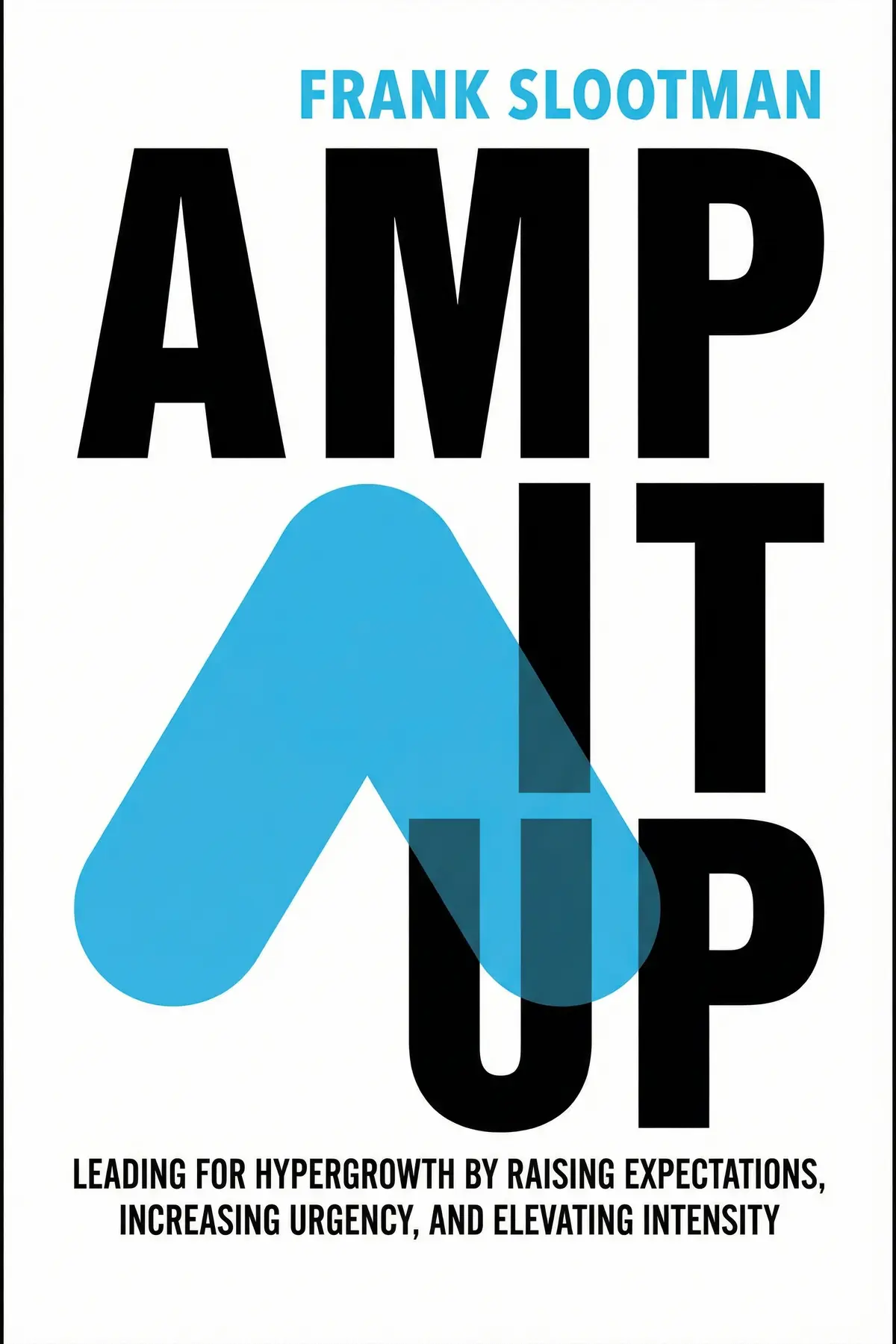
Table of Content
1. Introduction
1 min 02 sec
Most teams that fall short of their goals do not need a new plan or a new identity. They need more intensity behind the plan they already have. That is the case Frank Slootman makes in Amp It Up, drawn from his years leading Data Domain, ServiceNow and Snowflake. His prescription is to raise standards, tighten alignment, narrow focus to what matters most, speed up the pace and widen the market you aim at.
Strategy matters, he argues, but execution decides most outcomes. An ordinary plan carried out superbly will beat a brilliant one carried out poorly. The ideas ahead follow that thread from daily work to the boardroom: who to hire, how to diagnose problems, when to add salespeople, where to attack competitors and how to grow as a leader. Each comes with a case from one of Slootman’s own companies, so you can test the method against your own team before the week is out.
2. Win on execution before you polish strategy
1 min 44 sec
Companies spend heavily on training salespeople and almost nothing on another skill that decides whether any plan works. Slootman argues this neglected skill can be taught, and that mastering it also turns you into a better strategist.
3. Fill your team with drivers and lived values
1 min 46 sec
A poster of company values costs nothing and changes nothing. Slootman describes the kind of person worth hiring, the speed he expects when someone does not fit, and what made Data Domain’s values more than words.
4. Find the real cause before you fix anything
1 min 50 sec
The fastest fix often feels smart because it worked last time. Slootman explains why that instinct misleads leaders, and how a well-meant customer team at ServiceNow ended up making customer service worse.
5. Match your growth speed to what the data shows
1 min 53 sec
Three companies, three very different sales numbers, three different decisions about hiring. Slootman shows how to read the signal in your own figures, and why a McKinsey finding makes standing still so costly.
6. Attack where big competitors are weakest, then think bigger
1 min 56 sec
Data Domain beat an entrenched technology that IT professionals loathed, then hesitated, stayed too long in familiar territory and was eventually annexed. ServiceNow and Snowflake show the bolder move that came next.
7. Earn authority as a leader through results
1 min 39 sec
Stepping in after a founder, facing a board, recovering from a setback: each tests a leader in a different way. Slootman, who took over companies others built, explains how credibility is actually won.
8. Conclusion
1 min 14 sec
Slootman’s message is that growth rarely waits on a better idea. It waits on higher standards for the people, plans and pace you already have. His theme is supercharging what already exists rather than reinventing it, even as ServiceNow and Snowflake broadened their visions. Data Domain attacked a market everyone already knew, with a cheaper answer to a technology its customers disliked. ServiceNow hired salespeople when the numbers demanded it, then widened its ambitions well beyond the help desk. And Data Domain’s sale is his reminder of what it costs to settle into familiar ground too soon.
For a manager or founder, the book points to a few things worth doing now. Treat execution as a skill and teach it the way you teach selling. Before approving any fix, ask whether it addresses the root cause or only resembles an old solution. Make customer satisfaction every team’s direct job instead of handing it to a separate department. And when a strategy starts to feel settled, look for the bigger market it could grow into.
Intensity, in Slootman’s view, is a choice a leader makes every day, and the people around that leader can always tell whether it was made.
About this book
What is this book about?
Plenty of companies have a sound plan, capable people and a decent product, and still drift along at an average pace. Frank Slootman, who scaled three companies founded by other people, thinks they rarely need a new strategy or a reinvention. What they need is more intensity: higher standards, tighter alignment, sharper focus, a faster pace and a wider view of the market. Slootman builds his case on his own record. At Data Domain he took on the tape backup market with a cheaper technology. At ServiceNow, explosive growth with no added sales staff signaled it was time to build up the sales team, and the company expanded beyond IT into HR and other areas. At Snowflake he used peer feedback to catch weak executive hires. Throughout, he treats execution as a skill that can be taught, and he puts it ahead of strategy. Readers get a practical leadership method. It covers hiring people who take ownership and building culture through behavior instead of slogans. It shows how to diagnose problems from first principles, judge when to add salespeople, attack the weak points of large competitors and earn authority as a new CEO.
Book Information
Who it's for
Leading a slow-growing company
Founders and CEOs whose companies have a sound plan but are growing more slowly than they should.
Wanting an ownership culture
Team leads who want to hire people who take ownership and build a culture that shows in behavior.
Managers getting board-ready
Ambitious managers preparing to step into a CEO role or report to a board.
About the Author
Frank Slootman
Frank Slootman, born in 1958, is known for scaling companies that other people founded, and he has taken three of them public. As CEO and President of Data Domain he led it through its IPO and its sale to EMC for $2.4 billion. From 2011 to 2017 he ran ServiceNow, which grew from about $100 million in revenue to $1.4 billion during that time. He has also served as CEO of Snowflake. He holds undergraduate and graduate degrees in economics from Erasmus University Rotterdam.
Ratings & Reviews
Ratings at a glance
What people think
Listeners find this leadership guide highly insightful, particularly for its emphasis on productivity and organizational focus. The book is an enjoyable, fast-paced read, with one listener pointing out the inclusion of real-world stories about various challenges. They value the material on alignment, while one review specifically commends the sections regarding sales team alignment.
Top reviews
Sun
Slootman is a beast when it comes to operational excellence, and this book captures that intensity perfectly. He doesn't bother with the usual sugar-coating you find in modern leadership manuals, opting instead for a cold-blooded focus on execution. I especially loved the sections on sales team alignment; it's rare to find such tactical advice that actually translates to the front lines. The way he describes shifting a company from merely functioning to actually amping up the pace is exhilarating. You can tell this was written by an operator for other operators who are tired of the 'startup hippie' vibe. It is a dense, high-velocity read that challenges you to stop accepting mediocrity from your staff. Truth is, most companies are overstaffed and under-focused, and Slootman provides the blueprint to fix that immediately.
Show moreYulia
Finally got around to reading this, and frankly, it’s the kick in the pants most modern managers need to wake up. Slootman’s philosophy centers on the idea that the right people plus the right culture equals an unstoppable machine. He avoids those annoying, detailed 'process' stories about fictional characters like 'John' and instead gives you raw, real-life stories about challenges he actually faced. The pace of the book matches the pace he expects from his companies—fast, direct, and completely unapologetic. I found the chapters on managing boards and raising expectations to be particularly tactical and immediately applicable to my own role. It’s a BOSS of a book that doesn't waste time on fluff. If your company is currently stuck in a state of marasm, you need to read this today.
Show moreMint
Ever wonder why some companies skyrocket to billions in value while others just muddle along in the middle of the pack? Slootman answers that question by showing that growth isn't an accident; it's a result of intense, focused leadership. I loved the way he describes his role as an operator who reaps the maximum potential out of a company without any unnecessary sentiment. The book is incredibly 'to-the-point' and provides a much-needed perspective on how to manage boards and align sales teams effectively. It’s not a history of Snowflake, which I actually appreciated—it’s a manual on how to think like a high-growth CEO. This should be required reading for anyone in a leadership position at a scaling startup. Frankly, it’s one of the most practical books I’ve read in years.
Show moreHazel
Picked this up on a recommendation and finished it in two sittings because the pace of the writing is just as fast as the advice. Slootman captures the 'Extreme Ownership' mentality and applies it specifically to the high-stakes world of enterprise software. There is zero fluff here—no repetitive examples of 'John' overcoming a vague problem with a 10-step process. Instead, you get the opinionated view of a man who has actually built multiple billion-dollar companies from the ground up. The focus on productivity and organizational alignment is sharp, and the tone is refreshingly direct. Not gonna lie, some of the advice on raising expectations might scare off the less ambitious members of your team, but that’s kind of the point. This book is a machine for anyone who wants to do great things.
Show moreEllie
The section regarding sales team alignment alone made this worth the price of admission for me. Slootman writes with a refreshing lack of sentimentality, focusing instead on how to build a machine that produces results through sheer discipline. I appreciated the deep dive into battling entitlement within an organization, as that is a silent killer most CEOs are too afraid to address directly. Some might find his approach a bit harsh or uncomfortable, but his results at Snowflake speak for themselves. My only real gripe was a slight logical inconsistency between his advice on underpromising and his later praise for setting wildly ambitious growth targets. Look, if you want a feel-good book about culture, go elsewhere. This is about driving above-average efforts to achieve above-average career progression and market dominance.
Show moreBond
As someone who struggles with organizational focus, I found Slootman’s no-nonsense approach to be incredibly refreshing and vital. He makes a compelling case for why companies need to improve 'above average' quickly rather than aiming for incremental, safe gains. The distinction he makes between architecture and sales was a major lightbulb moment for my leadership team this quarter. We often get caught up in the 'sales-first' mentality without realizing that the underlying structure is what actually sustains high-speed growth. To be fair, the book is quite opinionated and won't sit well with people who prefer a more relaxed, 'work-life balance' focused culture. But for those of us trying to build something significant, his advice on alignment and eliminating distractions is pure gold. It’s a short, punchy manual for anyone done with corporate stagnation.
Show moreRod
Truth is, I appreciated the focus on career growth and the social ladder in the final chapters just as much as the business strategy. Slootman isn't just talking to CEOs; he's talking to anyone who wants to achieve more than the average person. He makes it clear that if you want above-average benefits, you have to be willing to provide above-average efforts and contributions. This honesty is rare in an age where everything is usually covered in corporate jargon and forced positivity. I did find some of the strategic chapters toward the end a bit repetitive, as he echoes points made earlier in the book. Still, the insights on architecture and battling entitlement are worth the read alone. It’s a great guide for anyone looking to increase their personal and professional velocity.
Show moreSirirat
If you have already plowed through 'Crossing the Chasm' or 'High Output Management,' you might find yourself skipping several pages here. While the author is clearly a remarkable man with an incredible track record at Snowflake and ServiceNow, much of the advice feels like a retread of existing growth frameworks. There were a few pleasantly surprising moments, specifically his emphasis on architecture over sales, which gave me something to chew on. However, the last 25% of the book felt incredibly repetitive as he revisited his previous companies to hammer home the same strategic points. It is a fast read and certainly above average for the genre, but it didn't offer the ground-breaking insights I was hoping for. To be fair, his personal 'war stories' are far more interesting than the generic advice found in the later chapters.
Show moreNuk
Look, this is a decent business book, but it doesn't quite reach the heights of the classic operational manuals it tries to emulate. The author is obviously a high-performer, and his experience at Snowflake provides a great backdrop for his theories on growth. I enjoyed the 'war stories' from the front lines, as they felt much more authentic than the generic leadership tips. However, I felt the book lacked a cohesive thread in the final third, becoming a bit of a mish-mash of career advice and strategic summaries. It is definitely worth a read if you are an executive, but don't expect it to change your entire worldview. The focus on productivity is good, but many of these ideas have been covered more thoroughly elsewhere. It’s a solid 3.5 stars rounded down.
Show moreLogan
Not what I expected from a CEO of this caliber, as it felt more like a glorified series of LinkedIn posts expanded into a short book. I found the tone to be unnecessarily aggressive at times, almost as if being a 'cold-blooded executive' is the only way to succeed in tech. While I respect his track record, the book lacks the depth of 'The Hard Thing About Hard Things' and feels a bit repetitive by the halfway mark. He talks a lot about 'amping up' the intensity, but the actual 'how-to' for middle management is surprisingly thin on the ground. Personally, I think there are better resources out there for learning about company culture that don't involve simply telling people to work harder. It's a quick read, but I didn't walk away with much new knowledge.
Show moreQuestions about this book
What is the main idea of Amp It Up by Frank Slootman?
Slootman argues that companies do not need reinvention to grow faster. They need more intensity behind what they already do: higher standards, tighter alignment, sharper focus, a quicker pace and a wider view of the market. He puts execution ahead of strategy, claiming that an ordinary plan carried out superbly beats a brilliant plan carried out poorly, and he illustrates the method with Data Domain, ServiceNow and Snowflake.
Why does Slootman put execution ahead of strategy?
In his view, companies glamorize strategy and neglect execution, even though execution can be taught like selling and improves with practice and mentoring. Strong execution can carry a plain strategy far, while weak execution stalls even a careful plan. He also argues that people who execute well learn their market so closely that they become the best strategists for their own business, which makes expensive consultants unnecessary.
What does Amp It Up say about hiring salespeople during growth?
Slootman says to read the signals in your numbers. Data Domain held back on sales hiring while its product matured. At Snowflake, uneven results among equally resourced salespeople pointed to inconsistent hiring. ServiceNow was growing explosively without extra sales staff, which signaled it was time to expand the team. He cites a McKinsey study linking growth above 60 percent a year to much higher returns.
How can I apply Amp It Up at work?
Start by treating execution as a skill your team trains for. Hire people who take ownership and act quickly when someone does not fit. Before fixing a problem, break it down from first principles rather than reusing an old solution. Make customer satisfaction every function’s job instead of creating a separate layer. Then look for where your biggest competitor is weak and what larger market you could enter.
Who should read Amp It Up?
It suits founders, CEOs and senior managers at growing companies, especially tech companies, who feel their organization is capable but moving too slowly. Team leads will find guidance on hiring and building culture through behavior. Managers aiming for the top job get advice on following a founder, working with a board and earning authority through results.
Readers also enjoyed




A Year with Peter Drucker: 52 Weeks of Coaching for Leadership Effectiveness
Joseph A. Maciariello



Acting with Power: Why We Are More Powerful Than We Believe
Deborah Gruenfeld

All In: How Great Leaders Build Unstoppable Teams
Mike Michalowicz

AUDIO SUMMARY AVAILABLE
Listen to Amp It Up in 15 minutes
Get the key ideas from Amp It Up by Frank Slootman, plus 5,000+ more nonfiction titles.
- 5,000+ titles
- Listen as much as you want
- 7-day free trial
- Cancel anytime









