

14 min 44 sec
Available in: English
 ไทย
EnglishไทยThe Ride of a Lifetime: Lessons Learned from 15 Years as CEO of the Walt Disney Company
By Robert Iger
Shows how Robert Iger rose from a $150-a-week production job to rescue Disney, and how pairing humility with decisive bets on people, priorities and technology can sharpen your own leadership.
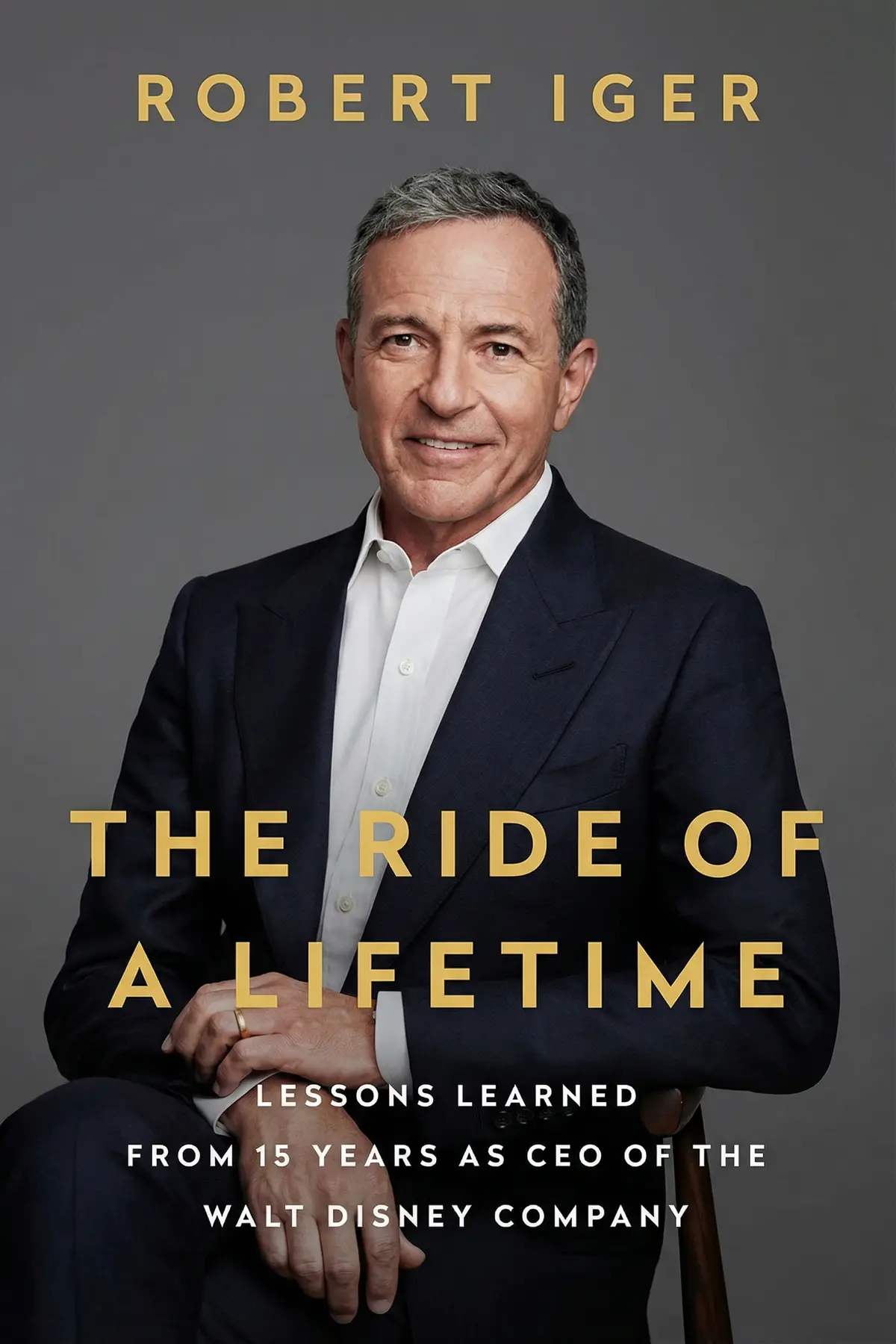
Table of Content
1. Introduction
1 min 00 sec
Many capable people stall because they wait to feel ready before they lead. In The Ride of a Lifetime, Robert Iger, who ran the Walt Disney Company for 15 years, argues that humility about what you don’t know is only half of leadership, and the other half is the nerve to decide anyway. When he took over in 2005, Disney’s animation films were losing money, shareholders had turned on his predecessor and the partnership with Pixar had broken down. He turned the company around with habits learned decades earlier: steady curiosity, a clear set of priorities and bets on creative people and new technology that others called reckless.
His story follows a $150-a-week production assistant who learned to make those calls, and shows what they looked like when billions were at stake. It also gives you a simple way to state priorities so a team can act without you, and a test for when to build and when to buy.
2. Curiosity that pays off as a daily habit
1 min 32 sec
A gifted father troubled by self-doubt left his son one rule about how to spend time. It became the engine of a career, powered as much by fear as by ambition.
3. Make the most of an unglamorous first job
1 min 43 sec
A bragging hospital roommate, a bottle of mouthwash and a $100 tip all played a part. The real break came from a supervisor Iger met on set who liked his can-do attitude.
4. Spot the decisions that redirect your career
1 min 48 sec
Iger was ready to walk out when an outsider took over his department. Then the snow melted at the Olympics, and what should have been a disastrous week became the making of him.
5. Lead a room where you know the least
1 min 47 sec
The newcomer from New York knew nothing about Hollywood, and the creative staff knew it. His response to one very strange pilot shows how to lead when you are the least informed person present.
6. A clear road map that wins people over
2 min 07 sec
Disney’s board wanted a fresh face, and Iger was the old boss’s deputy. A political consultant’s advice turned the contest into something any team leader can borrow on a Monday morning.
7. Buy great creators instead of rebuilding from scratch
1 min 56 sec
The board thought the price was absurd and the seller impossible. A row of parade floats in Hong Kong told Iger otherwise, and Steve Jobs answered his pitch after a very long silence.
8. Giving up easy income to own the future
1 min 38 sec
Disney chose to walk away from hundreds of millions of dollars in fees every year. The reasoning goes back decades, to a sports producer who loved slow-motion replays.
9. Conclusion
1 min 13 sec
Iger’s story can sound like a run of good fortune: a boastful stranger in a hospital room, an Olympics rescued by melting snow, a yes from Jobs after a long silence. Yet each break landed on someone already prepared to use it. The boy told to spend his time productively became the executive who asked his questions in Hollywood and then backed a show his own experts doubted. The deputy no board would pick became the CEO with a map.
What joins these moments is a pairing most people keep apart. Iger admitted what he did not know, then decided anyway, often against the experts around him, from Twin Peaks to Marvel to pulling Disney’s films off Netflix.
That pairing is something you can practice now. In a new role, ask your awkward questions in the first weeks, then make the call others are avoiding. Put your priorities on one page so your team can decide without waiting for you. And before choosing to build or buy, look honestly at what your own side has made lately.
In Hong Kong, the floats told Iger the truth before any report did. Leadership, for him, started with being willing to look.
About this book
What is this book about?
When Robert Iger became CEO of the Walt Disney Company in 2005, the company was in trouble. Its animation films were losing money, shareholders had revolted against Michael Eisner, and Steve Jobs had sworn never to work with Disney again. Iger's memoir traces how he reached the top and what he did next. He started at ABC in 1974 for $150 a week. He rescued the network's coverage of a thawing Winter Olympics, backed David Lynch's Twin Peaks against his own creative team and endured unhappy years inside Disney's top-down culture. Along the way he formed a simple view of leadership: be humble about what you don't know, learn fast, then make the hard call. As CEO he set three priorities and acted on them with large bets. He bought Pixar, Marvel and Fox, and he pulled Disney's content from other services to launch its own streaming platforms. Readers get a leadership story told through concrete decisions, along with habits they can use in their own roles, whatever their size.
Book Information
Who it's for
Young professionals starting out
Young professionals in junior roles wondering how ordinary jobs turn into big careers.
New managers of experts
New managers who must lead teams that know more than they do.
Founders and executives
Founders and executives weighing whether to build, buy or bet against their own revenue.
About the Author
Robert Iger
Robert Iger, born in New York in 1951, joined the American Broadcasting Company in 1974. He became president and chief operating officer of Capital Cities/ABC in 1995, a year before Disney bought it. He became Disney's president in 2000 and its CEO in 2005, serving until 2020, and returned to the role from November 2022 until March 2026. In his first 15 years in charge, Disney acquired Pixar, Marvel Entertainment, Lucasfilm and Fox's entertainment assets and opened resorts in Hong Kong and Shanghai.
Ratings & Reviews
Ratings at a glance

What people think
Listeners find this book highly accessible and packed with actionable wisdom, with one listener noting that the lessons are organized in a list format to help with synthesis. They also value the leadership advice, as one review highlights how the author provides a deep look into his thought process. Furthermore, the work is praised for its engaging life experiences, quality writing, and its refreshing demonstration of integrity.
Top reviews
Rungrat
As someone who has navigated the corporate world for decades, I found Iger’s leadership philosophy to be both grounded and genuinely inspiring. The book isn’t just a victory lap; it’s a detailed exploration of how the ten core principles—especially curiosity and courage—functioned in the trenches of the media industry. I loved the stories from the ABC era. They remind us that even the most powerful CEOs start by doing the grunt work. His reflections on the Shanghai Disney opening, juxtaposed against the tragedies in Orlando, were particularly moving and showed a level of emotional depth I didn't expect from a business book. In my experience, most executive memoirs are too dry to finish, but this one flows like a well-paced novel. It’s a masterclass in brand storytelling. You’ll walk away with a clear roadmap for your own professional development.
Show moreRay
Robert Iger managed to do something rare here: he wrote a business memoir that actually feels human. Instead of just bragging about stock prices, he dives into the gut-wrenching decisions that defined his tenure, like the decision to buy Pixar to save Disney Animation. The storytelling is vivid. You can practically hear the clock ticking as he negotiates with Steve Jobs. I was particularly impressed by how he handled the legacy of Michael Eisner—being respectful yet firm about the need for a new direction. The book is packed with compelling life lessons that feel applicable even if you aren’t running a Fortune 500 company. It’s a refreshing change of pace from the typical dry, jargon-filled leadership books that litter the market. He emphasizes that great things are often the result of small details. If you want to understand how a modern empire is built with integrity, read this.
Show moreSven
Ever wonder what it takes to actually sit across from a giant like Steve Jobs and convince him to sell his life's work? Iger’s account of the Pixar acquisition is easily the highlight of this memoir, providing a rare glimpse into high-stakes negotiations fueled by mutual respect rather than just cold numbers. The prose is remarkably accessible. You feel the tension in the room during the board meetings. It's fascinating. Truth is, beyond the big deals, he emphasizes the 'relentless pursuit of perfection,' a mantra he picked up from Roone Arledge during his time at ABC Sports. Some might say it’s a bit too diplomatic when discussing his salary or the friction with Michael Eisner, but the practical wisdom on managing creative egos is top-notch. It’s a compelling look at how to lead with a sense of humanity while still aggressively expanding a global empire.
Show moreJoseph
The chapter on the Shanghai Disney opening stayed with me long after I closed the book. Iger does a beautiful job of capturing the sheer complexity of launching a multi-billion dollar project while simultaneously dealing with the emotional weight of the Pulse Nightclub shooting and the tragedy at Disney World. It was a raw moment. It showed the man behind the title. This book is far more than a simple business manual; it’s a testament to the power of thoughtfulness and fairness in leadership. Whether he’s discussing his time covering the Olympics or the delicate process of integrating Marvel’s culture into Disney’s, his voice is consistently authentic. The practical knowledge shared here is immense. I’ve already started applying his 'focus' and 'decisiveness' principles to my own team. It is rare to find a memoir that is this well-written and genuinely useful. This is a must-buy for any aspiring leader.
Show moreKob
Few CEOs would be willing to admit their failures as openly as Iger does when discussing the 'Cop Rock' disaster or his early struggles at ABC. This memoir feels like a refreshing example of integrity in a world of corporate doublespeak. I was especially gripped by the ethics behind the Twitter deal that never was. He walked away because it didn't feel right for the brand. That is true leadership. Look, we all know Disney is a juggernaut, but seeing the internal machinery through the lens of Iger’s 45-year career provides a perspective you won't get from a financial report. The way he managed difficult personalities like George Lucas or the Marvel team shows a nuanced understanding of creative culture. It’s a quick read, filled with useful nuggets of wisdom that are easy to synthesize. Highly recommended for anyone who values authenticity over ego.
Show moreMarasri
Honestly, the way this book synthesizes forty-five years of professional growth into a readable roadmap for leadership is truly impressive. Iger doesn't just list his successes; he breaks down the specific principles—like optimism and curiosity—that guided him from his early days as a supervisor at ABC all the way to the CEO suite. The final section, which summarizes these lessons in a clear list format, is worth the price of the book alone for anyone in management. It’s refreshing to see an executive speak so candidly about the necessity of taking big risks, such as the massive gamble on Disney+, while still prioritizing personal integrity. While some might find his tone a bit polished, I found the clarity of his vision for the future of branded content to be exhilarating. This is a must-read for anyone looking to understand how to bridge a legacy brand into the digital age.
Show moreLuckana
Frankly, I didn't think a book about corporate mergers would keep me up late at night, but here we are. Iger’s journey from a humble studio supervisor to the head of the world’s most famous creative company is nothing short of cinematic. The sections detailing the purchase of Lucasfilm and 21st Century Fox are masterclasses in negotiation. He understands that business is ultimately about relationships, not just contracts. I found the 'relentless pursuit of perfection' theme to be a bit clichéd at times, yet Iger’s specific examples make it feel earned. Personally, I think he glosses over some of the more controversial aspects of his compensation packages, but that's to be expected from a sitting CEO. Overall, it’s a brilliant look at how to manage a massive organization without losing sight of the quality of the product. It’s definitely worth a read for the leadership insights alone.
Show moreViolet
Picked this up on a whim after seeing it on several 'must-read' lists for managers. It’s a solid book. Iger’s writing style is punchy and direct, which makes the 250+ pages fly by. I particularly appreciated the list format used at the end to summarize the key takeaways; it’s perfect for busy people who want to apply the lessons immediately. While the sections on Pixar and Marvel were incredibly engrossing, I found the early chapters about his time at ABC Sports a bit long-winded at times. Still, the insight into how he handled the transition from being under Michael Eisner to taking the helm himself was fascinating. He managed to balance respect for his predecessor with a necessary, bold vision for Disney's future. It’s a great resource for problem-solving in any industry, though it does feel a bit like a PR victory lap toward the end.
Show moreMingkwan
Not what I expected from a high-level executive, as it focuses heavily on the 'why' behind major acquisitions rather than just the technical 'how.' The book moves at a brisk pace. I finished it in three sittings. Iger does a fantastic job explaining the importance of embracing technology before it's too late, which explains the high-stakes shift toward Disney+. My only real gripe is that it occasionally feels a bit too polished—I would have loved more 'in the trenches' details about his relationship with the animators themselves. However, the anecdotes regarding his friendship with Steve Jobs are genuinely touching. They add a layer of humanity to a man often seen as just a corporate strategist. If you’re looking for a roadmap on how to build a legacy, this is it. It’s well-written, thoughtful, and mostly honest.
Show moreChan
To be fair, I went into this expecting a deep dive into the creative magic of Disney, but it felt more like a dry corporate logbook. The narrative often stays at a bird’s-eye view, glossing over the actual 'blood, sweat, and tears' of the animators and artists who make the company what it is. Iger’s preoccupation with negotiating multi-billion dollar deals for Pixar and Marvel is technically impressive, yet the human element felt somewhat hollow or even ghostwritten. It is clearly a sanitized version of events, likely written to protect the stock price rather than to offer a vulnerable look at leadership. While the Steve Jobs anecdotes provide some flavor, they often felt like a distraction from the lack of depth regarding Disney’s internal culture. If you want a checklist of how to buy companies, this is your book. If you want to understand the soul of storytelling, look elsewhere.
Show moreQuestions about this book
What is The Ride of a Lifetime by Robert Iger about?
It is Iger’s account of rising from a $150-a-week production job at ABC to CEO of Disney in 2005, when the company was struggling. He describes the decisions that shaped him, from backing Twin Peaks to rescuing Olympic coverage, and the bets that revived Disney: buying Pixar and Marvel, merging with 21st Century Fox and launching its own streaming services.
What leadership lessons does Robert Iger share?
Iger argues that leaders should be humble about what they don’t know, because faking knowledge destroys confidence, but humility must not stop them from deciding. Ask questions, learn quickly, then make hard calls. He also stresses paying attention to people, sitting through meetings and solving problems, a lesson he drew from watching Michael Ovitz do the opposite, and giving teams a clear map of priorities.
Why did Disney buy Pixar?
At the 2005 opening of Hong Kong Disneyland, Iger noticed the parade floats had no characters from any Disney film of the previous decade. During that decade Disney spent $1 billion on films and lost $400 million, while Pixar continued to succeed. Disney paid $6.4 billion in 2006 and guaranteed creative independence to John Lasseter and Ed Catmull in return for Pixar’s films, technology and know-how.
Who should read The Ride of a Lifetime?
It suits early-career professionals who want to see how a modest first job grows into a large career, new managers leading people with more expertise than they have, and founders or executives facing big decisions about acquisitions, strategy or new technology. The lessons come through specific decisions rather than abstract theory, which makes them easy to remember and retell.
How can I apply Iger's ideas at work?
Write your team’s priorities on one page: where you are, where you want to be and how you will get there, so people can decide without you. In a new role, ask your questions early and then commit to a hard decision. Before building something new, look honestly at what your team has produced lately, the way Iger read the floats in Hong Kong.
Readers also enjoyed

A Spy Among Friends: Philby and the Great Betrayal
Ben Macintyre




A Year in the Life of William Shakespeare: 1599
James Shapiro



A Year with Peter Drucker: 52 Weeks of Coaching for Leadership Effectiveness
Joseph A. Maciariello

AUDIO SUMMARY AVAILABLE
Listen to The Ride of a Lifetime in 15 minutes
Get the key ideas from The Ride of a Lifetime by Robert Iger, plus 5,000+ more nonfiction titles.
- 5,000+ titles
- Listen as much as you want
- 7-day free trial
- Cancel anytime









