

13 min 46 sec
Available in: English
Reboot: Leadership and the Art of Growing Up
A guide to the inner side of leadership. It shows how childhood fears and habits drive anxious, controlling or dishonest behavior at work, and how honest self-inquiry helps you lead with more calm, truth and compassion.
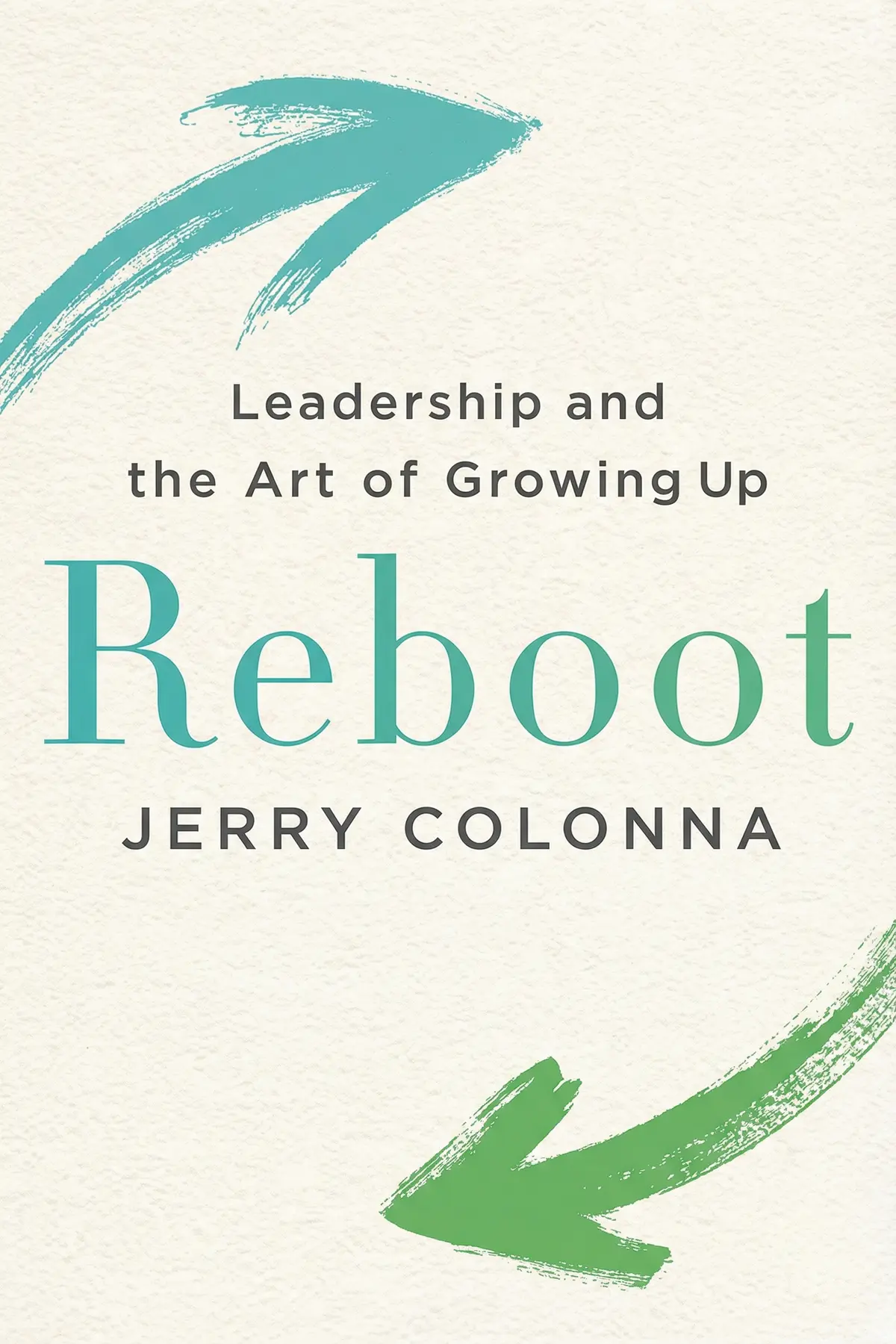
Table of Content
1. Introduction
57 sec
If you lead people, a night comes when you wonder whether you are doing it right, and how long you can keep pretending to be in control. In Reboot, executive coach and former venture capitalist Jerry Colonna argues that no management trick fixes that feeling. Its roots usually run back to childhood, to poverty, a year of bullying at school or a harsh parent. His remedy is radical self-inquiry, an honest look at what shaped you and how you behave under pressure.
The claim running through the book is that you grow as a leader only by growing up as a person, and that workplaces become less toxic when the people at the top do this work. You will meet a Buddhist saint who offers his head to a demon, a soldier still guarding a rock after the war has ended and a herd of horses that chooses its leader by feel. Each one becomes a question to ask yourself at work next week.
2. Find the old fear behind your work anxiety
1 min 38 sec
A powerful executive wants one quick fix for the dread she feels at work. The coach she asks tells her it does not exist, and points her somewhere far less comfortable than a management book.
3. Spot the childhood code running your reactions
1 min 36 sec
Two business partners could barely sit in the same room, though their company needed them both. The real cause had nothing to do with strategy, and almost nothing to do with each other.
4. Live with your inner critic instead of fighting it
1 min 33 sec
A poet told her students to shoot the voice that mocks their work. Colonna decided to keep his, along with a stubborn soldier who still thinks the war is on.
5. Slow down long enough to choose your path
2 min 01 sec
A young founder barely saw the woman he loved, and he said he was trying to outrun something. His coach once stood at the edge of Ground Zero for a similar reason.
6. Walk straight into the crisis you fear
1 min 42 sec
A fired chief executive kept working late for the colleagues he was leaving. A tenth-century saint got rid of a demon by offering it his head. Both show what a crisis can make of you.
7. Tell the truth before it finds you
1 min 39 sec
A founder with a rare cancer was sure her investors would walk away if they knew. What happened when she finally told them says a lot about what secrecy costs people at the top.
8. Lead by giving people room to grow
1 min 37 sec
Horses can seem to sense a storm before it arrives, and they are just as particular about who leads the herd. The animal they follow is rarely the one a corporate board would pick.
9. Conclusion
1 min 03 sec
Reboot adds up to a simple claim: many leadership problems are growing-up problems in a business suit. Think of the executive who corrects every comma, or the founder who never goes home. In Colonna’s telling, each of them is reacting to an old fear as much as to the present moment. A leader who sees that fear clearly, and treats it with some kindness, becomes steadier, more truthful and easier to work for. Colonna believes such leaders also build companies that behave more responsibly toward employees, communities and the environment.
The practice is personal and modest. When a reaction feels out of proportion, ask what it reminds you of. Say the hard, true thing before it comes out on its own. And set aside time for the parts of you that no promotion can nourish, be it chocolates, a foot rub or a good crime thriller.
Milarepa was freed from his last demon only by offering it his head. Most of our demons ask far less of us. We only have to stop running long enough to look.
About this book
What is this book about?
Sooner or later, most leaders lie awake asking whether they are doing it right. They also wonder how long they can keep looking fully in control. Jerry Colonna, an executive coach and former venture capitalist, argues that the usual leadership tips cannot fix this. The anxiety rarely starts in the business. More often it starts in a leader's past, in poverty, bullying, loneliness or a harsh parent, and it shows up as micromanagement, distance from the team or decisions nobody can explain. His answer is radical self-inquiry, an honest look at what shaped you. Colonna draws on his own childhood in Queens and a personal crisis at Ground Zero, and on clients and workshop participants: a founder outrunning a war-torn childhood, business partners replaying family dramas, an entrepreneur who told her investors about her cancer. Alongside them come a Buddhist saint, a poet's crow and a herd of horses. Readers come to see that inner critics and survival instincts are part of being human. The book shows what standing still can give you and why the truth protects leaders. It also describes leadership that makes room for others to grow.
Book Information
Who it's for
Uneasy founders and executives
Founders and executives who feel anxious, rushed or alone at the top and suspect strategy is not the real problem.
Managers with outsized reactions
Managers whose reactions to colleagues feel bigger than the situation deserves.
Hoping to lead calmly
Team leads who want a calmer, more honest culture instead of leading through fear.
About the Author
Jerry Colonna
Jerry Colonna is the cofounder and CEO of Reboot.io, a firm that does executive coaching and leadership development. Before coaching, he worked in investing: in 1996 he launched Flatiron Partners with Fred Wilson, and he later became a partner at JPMorgan Partners, the private equity arm of JP Morgan Chase. He has served on the boards of more than 100 organizations, so his coaching of entrepreneurs and other leaders comes from long experience on both sides of the table.
Ratings & Reviews
Ratings at a glance

What people think
Listeners find this work offers deep insights into leadership and individual growth, calling it an essential guide for becoming a more effective leader by becoming a better human. They value the sincere tone, with one listener highlighting it as a baring of the soul for growth type read, and they enjoy how the author converts personal encounters into narratives. The book receives varied reactions concerning its flow and prose; while some consider it emotionally stirring, others feel it meanders, and though many admire the writing, one listener finds it occasionally confusing.
Top reviews
Rungrat
Jerry Colonna has essentially written a manual for the soul that every entrepreneur needs to keep on their nightstand. Instead of the usual dry advice on how to scale a SaaS company or manage a board meeting, this book dives deep into the internal work required to actually survive the journey. The central thesis—that we cannot be great leaders until we become better, more self-aware humans—hit me like a ton of bricks. It is a vulnerable baring of the soul that asks you to engage in radical inquiry rather than just checking off a list of KPIs. While the prose is certainly more poetic than your average business book, I found the storytelling to be the perfect vehicle for such heavy emotional lessons. It isn’t an easy read, not because the language is difficult, but because it forces you to sit with your own insecurities. Truly transformative stuff for anyone willing to do the work.
Show moreSara
Ever wonder why certain professional hurdles feel like massive personal failures? This book provides the answer through a lens of 'growing up' that most business authors are too afraid to touch. Jerry’s willingness to be open about his own depressions and failures makes the advice feel earned rather than preached. I particularly loved the focus on how our internal biases and doubts affect the people we lead every day. The truth is, our teams are reflections of our own psychological health. It’s a profound realization. The book doesn’t offer quick fixes or 'hacks,' but rather an exercise in humanity. It is beautiful, haunting, and necessary. I’ve read dozens of leadership books this year, but this is the only one that actually made me change how I talk to myself during a crisis.
Show moreAmara
This isn't just a book; it's an invitation to radically inquire into who you are when the title of 'CEO' is stripped away. Jerry Colonna has bared his soul here, and in doing so, he gives us permission to do the same. The chapters on facing our fears and the 'art of growing up' are some of the most profound things I’ve read in years. It’s rare to find a business book that focuses so heavily on the internal landscape of the leader. Most people focus on scaling their companies, but Jerry reminds us that we have to scale our own capacity for empathy and self-awareness first. The storytelling is rich and deeply moving. It’s a slow burn, but the payoff is a much clearer understanding of why we do what we do. An absolute masterpiece for the modern entrepreneur.
Show moreKob
Look, if you are looking for a tactical guide on scaling or delegation, you are going to be disappointed. But if you want to understand why you are standing in your own way, buy this immediately. Jerry writes with a level of honesty that is rare in the startup world. He doesn't just talk about success; he talks about the scars and the brokenness that come with it. The 'Loyal Soldier' concept was a total epiphany for me. It helped me realize that the very traits that made me successful early on are the ones now causing friction with my leadership team. This book isn't a quick read—it's an exercise book for your character. It requires you to sit still, listen to the voices in your head, and finally grow up. It’s easily the most important leadership book I’ve encountered.
Show moreBoy
The concept of the 'Loyal Soldier' alone was worth the price of admission. This book helped me realize that my leadership style was being driven by fears I hadn't acknowledged since I was a teenager. Jerry doesn't just coach you; he walks through the fire with you. The writing is incredibly soulful and personal, which might turn off people who want a spreadsheet-style approach, but for me, it was exactly what I needed. It turns leadership from a set of tasks into a lesson in humanity. I’ve recommended this to every founder in my network because we all suffer from the same insecurities. We all need to 'reboot' our internal operating systems occasionally. It’s a profound, emotional journey that will undoubtedly make you a better person and, by extension, a more effective leader. Truly a must-read.
Show moreLiam
After listening to Jerry on the This Week in Startups podcast, I knew I had to grab this, though the experience was different than I anticipated. This isn't a tactical guide. Frankly, if you come looking for a play-by-play on delegation, you will be disappointed. However, the way Jerry turns his coaching experiences into narrative stories is genuinely moving. He explores how our childhood baggage follows us into the C-suite, often manifesting as self-sabotage. I gave it four stars because the pacing can feel a bit meandering at times, especially in the middle chapters where the metaphors get a little thick. Still, the self-inquiry questions at the end of the sections are gold. They forced me to stop and reflect on my own 'Loyal Soldier' and how that protective instinct is actually holding my team back. It’s a solid, heart-centered approach to professional growth.
Show moreMeen
Picked this up because I wanted to understand the psychological side of being a founder, and it delivered in spades. The way the author links our adult behavior to our 'Loyal Soldier'—the parts of us that developed to protect us as children but now limit us—is brilliant. It’s a very different kind of leadership book, one that values heart over hustle. My only gripe is that the tone can occasionally skew toward the depressing side, which makes it a heavy read to get through in one sitting. You have to take it in small doses. Despite that, the wisdom here is undeniable. It’s helped me recognize how my own insecurities were creating a glass ceiling for my company. Better leaders really are better humans. It’s a must-read, even if the poetic style isn't always my cup of tea.
Show moreAstrid
To be fair, the core philosophy that better humans make better leaders is something I wholeheartedly support. However, the execution in this book was a mixed bag for me. The anecdotes are very personal, which is great if you already feel a connection to Jerry’s work, but they didn't always gel with the broader points he was trying to make. I found myself skimming the more flowery sections to get to the actual substance of the coaching inquiries. It’s a very Buddhist approach, which is fine, but it can feel a bit high-level and abstract when you’re looking for a path from A to Z. It’s more of a 'vibe' book than a 'method' book. If you enjoy a slow, reflective read that feels like a therapy session, you’ll love it. If you’re a busy executive looking for efficiency, this might irritate you.
Show moreNitaya
Gotta say, I really struggled with the 'woowoo' vibe that permeates these pages from start to finish. I appreciate that Colonna is a legendary coach, but the writing style felt excessively poetic and, at times, incredibly frustrating to parse. One minute we are talking about business failure, and the next we are diving into metaphors about broken skis and the 'quickening thump-thump' of a heart. It felt like the actual leadership insights were being drowned out by a memoir that didn't quite know what it wanted to be. To be fair, there are some decent questions about self-reflection, but they are buried under layers of rambling anecdotes. If you aren't already a fan of his specific brand of Buddhist-influenced coaching, this might just feel like a lot of whining without enough practical application.
Show moreBrahim
In my experience, a leadership book should provide actionable frameworks, but this felt like a collection of depressing stories with no clear direction. I found the audiobook particularly hard to stomach; the narrator’s voice sounded so victim-based and heavy that it was a struggle to stay engaged. It felt like someone crying for 200 pages about how much they’ve suffered, rather than offering constructive advice for entrepreneurs. There’s a fine line between being vulnerable and just whining, and for me, this book crossed it repeatedly. I was expecting something along the lines of the podcast interviews which were great, but the book is just rambling and disjointed. I honestly don't understand the hype. If you want to feel sad about your life, read this. If you want to grow your business, look elsewhere.
Show moreQuestions about this book
What is the main idea of Reboot by Jerry Colonna?
Colonna argues that leaders grow only by growing up as people. Much of the anxiety, control and irrational behavior found at the top comes from unresolved childhood experiences, such as poverty or a harsh parent. His remedy is radical self-inquiry: an honest look at what shaped you, so you can lead with more calm, honesty and compassion, and help build less toxic workplaces.
What is radical self-inquiry in Reboot?
It is Colonna’s alternative to quick leadership tips. It means asking basic questions: what shaped you, why you sometimes act irrationally and how you behave in a crisis. Colonna applied it to himself after a crisis in 2002, when he traced his work anxiety back to growing up poor in Queens and watching his parents fight about money.
What do the Crow and the Loyal Soldier mean in Reboot?
They are two inner voices. The Crow, borrowed from the poet Marie Ponsot, is self-criticism telling you that you are not good enough. The Loyal Soldier is your survival instinct, telling you to stay small and avoid mistakes. Colonna advises accepting both instead of fighting them, because they come from caring about your work and from wanting to protect yourself.
Who should read Reboot?
It suits founders, executives and managers who feel anxious, overworked or isolated and suspect the cause is personal more than strategic. It also helps team leads who want to build a more honest and open culture. Readers looking for quick management techniques should know that Colonna deliberately offers self-reflection instead of tricks.
How can I apply Reboot's ideas at work?
When a reaction to a colleague feels too strong, ask who or what it reminds you of. Spend a few still minutes each day asking where your rushing is leading you. Face hard conversations directly, like confronting a partner when a partnership turns toxic, and tell the truth early. Colonna also urges making time for pleasures outside work that no promotion can provide.
Readers also enjoyed

A Guide to the Good Life: The Ancient Art of Stoic Joy
William B. Irvine




A High-Performing Mind: Strengthen Your Mind and Live Your Best Life
Andrew D. Thompson

A Year with Peter Drucker: 52 Weeks of Coaching for Leadership Effectiveness
Joseph A. Maciariello



Abundance: The Inner Path to Wealth
Deepak Chopra
AUDIO SUMMARY AVAILABLE
Listen to Reboot in 15 minutes
Get the key ideas from Reboot by Jerry Colonna, plus 5,000+ more nonfiction titles.
- 5,000+ titles
- Listen as much as you want
- 7-day free trial
- Cancel anytime









