

A Bigger Prize: How We Can Do Better Than the Competition
Margaret Heffernan
 English
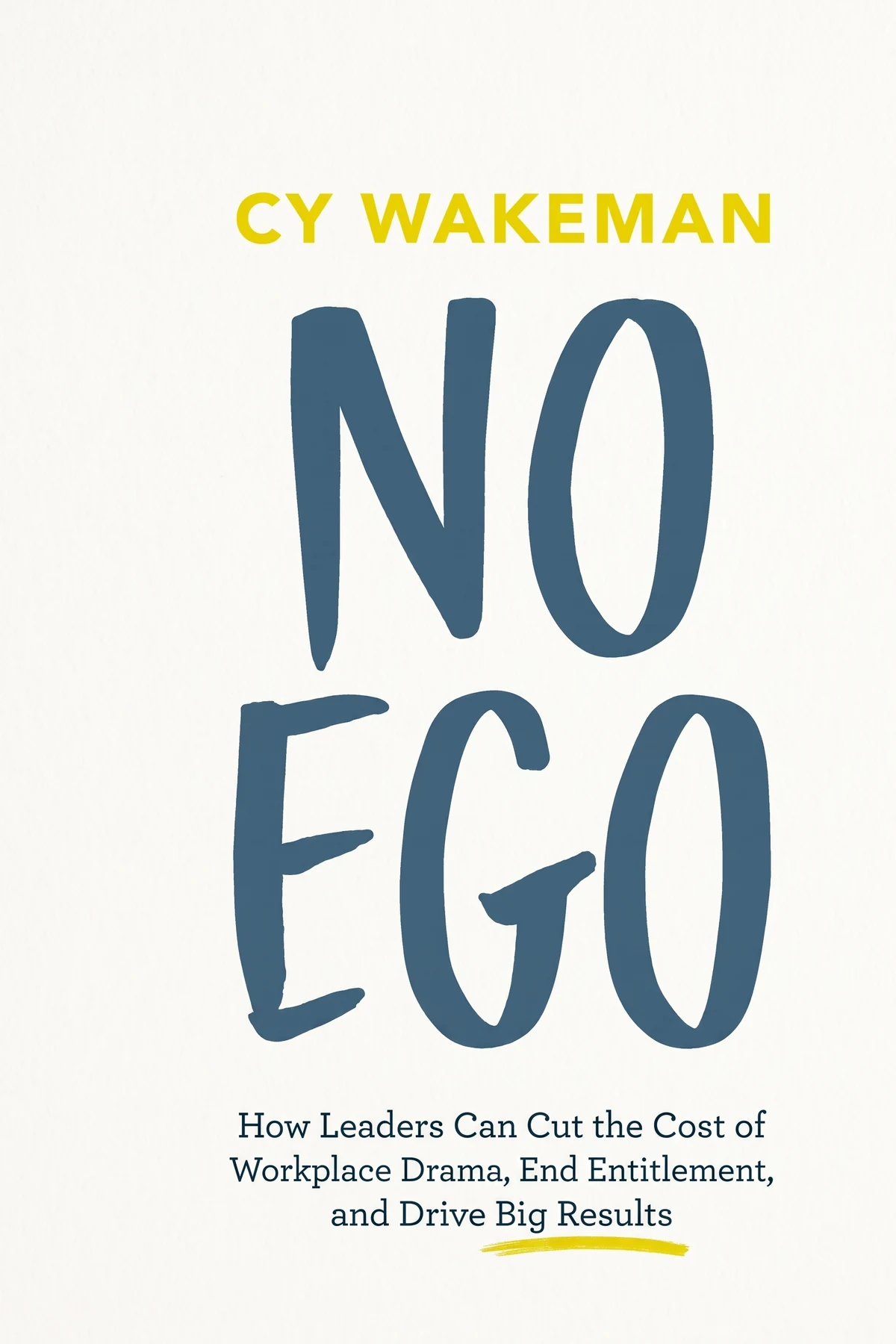
Shows leaders how to cut the time and money lost to workplace drama by replacing venting and coddling with questions, honest feedback and accountability, so teams spend less energy on stories and more on results.
56 sec
If you manage people, much of your week may disappear into complaints, hurt feelings and the chase for buy-in, with little to show for it. In No Ego, leadership consultant Cy Wakeman argues that this effort is often part of the problem: her research found employees lose more than two hours a day to workplace drama. The cause, she says, is the ego, the inner voice that turns ordinary events into stories of blame.
Her approach, which she calls Reality-Based Leadership, replaces coddling with a steady return to the facts. The throughline is simple: when leaders trade comfort for accountability, drama shrinks and results grow. Along the way you get the questions she uses to end a venting session, a way to read engagement surveys that screens out excuses, and a staged path toward a team that owns its results.
2 min 01 sec
Keeping an open door sounds like good leadership. One new manager found it filled her days with stories that were mostly imagined, and the data she later gathered put a startling price on that habit.
1 min 54 sec
An afternoon ice cream social once looked to one employee like proof of a management conspiracy. Her reaction reveals where most suffering at work really comes from, and it is not where leaders usually look.
1 min 50 sec
A project manager arrived with a list of reasons his project would fail. Wakeman neither indulged him nor shut him down, and her questions shifted his thinking enough to keep a major project on track. The difference was in what she asked.
1 min 56 sec
Suspicion about a colleague’s motives feels like insight. Wakeman treats it as a warning light pointing somewhere less comfortable, and she offers a handful of small daily checks for catching the ego before it writes the script.
2 min 18 sec
A struggling student asked what he needs might request a new laptop, headphones and a tutor. Most engagement surveys would count his wish list as fully as anyone’s, and that is where the money starts to leak.
2 min 10 sec
Commitment, consequences, feedback and reflection all play a part in accountability, but one stage carries more weight than the rest. Getting the order and the balance right decides whether people grow or simply wait to be rescued.
1 min 15 sec
No Ego asks leaders to give up a comfortable role. Listening to every complaint and trying to keep everyone happy feels kind, yet Wakeman’s view is that it trains people to wait for someone else to fix their world. She carries the same logic into change and buy-in. Traditional change management, she argues, is outdated; the aim is business readiness, a team that prepares itself to adapt to whatever comes. And buy-in is not something a leader should beg for. Committing, or moving on, is the employee’s responsibility.
None of this requires harshness. Wakeman asks for compassion, transparency and patience alongside the high bar. Start with the next person who comes to vent, and ask what they know for sure. Before your next engagement survey, add a statement that shows how accountable each respondent is. When someone makes a mistake, keep the feedback short and the reflection long, and do not rescue them from the outcome.
Remember the ice cream social at 2:00 in the afternoon. Most of the drama at work is like that: a plain fact wrapped in a story, waiting for someone to ask what is really going on.
Many managers spend hours listening to complaints, chasing buy-in and trying to keep everyone happy, yet morale stays low and results stall. Cy Wakeman argues that this kind of care often makes things worse. Her research found that employees lose more than two hours a day to drama, and she traces most of it to the ego, the inner narrator that turns ordinary events into stories of blame and unfairness. Her alternative, Reality-Based Leadership, asks leaders to stop supplying answers and comfort and to start asking questions that bring people back to the facts and to their own part in them. She shows how to recognize ego-driven thinking in yourself and others, how to read engagement surveys through the lens of accountability, and why commitment and buy-in are the employee's job rather than the leader's. The book closes with a staged model for growing accountability, built on challenge, real consequences, short feedback and long self-reflection, along with a reminder to lead with compassion. Readers get practical questions to use in the next difficult conversation and a clear case for spending their energy on the people willing to grow.
Managers whose days fill up with complaints, venting sessions and conflict between team members.
Founders and HR leaders who run engagement surveys and suspect the results reward excuses.
Team leads who want employees to own problems instead of handing every one back to the boss.
Cy Wakeman took her first management job in the late 1980s and, instead of relying on conventional methods, taught her employees a reality-based mindset grounded in personal accountability. She later moved into consulting and training and founded the firm Reality-Based Leadership. The National Speakers Association has awarded her its Certified Speaking Professional designation. She has written four books, and No Ego, published in 2017, makes her case for accountability over engagement.

Listeners describe this book as a fast-paced read that offers functional tips and leadership advice. They value its approach to eliminating workplace drama and its focus on individual accountability to drive real results. Listeners appreciate the various examples shared and think it is mandatory reading for executives, with one listener mentioning how effective it is for fostering a culture of accountability within large organizations.
Finally got around to reading Wakeman, and her reality-based framework is a breath of fresh air for any manager drowning in office politics. The central question—'What do you know for sure?'—is a total game-changer for redirecting unproductive conversations that usually spiral into gossip. In my experience, people often mistake their internal narratives for objective reality, which is exactly where the emotional waste starts to pile up. While her tone can be a bit sharp, the emphasis on radical accountability is exactly what most corporate cultures are missing these days. It’s a quick read that cuts straight to the chase about why traditional engagement strategies often fail to deliver bottom-line results. We've started using her techniques in our weekly syncs, and the reduction in 'venting' has already boosted our actual output significantly.
Show moreAfter hearing Cy speak on a podcast, I knew I needed this manual for my entire leadership team to help clear the air. The ice cream social anecdote alone is worth the price of admission because it perfectly illustrates how the ego distorts even the most benign management gestures into conspiracies. We’ve spent far too much time coddling entitlement in our department, and this book provided the exact script we needed to shift back to results. By focusing on facts rather than the 'stories' employees tell themselves, we’ve managed to reclaim hours of lost productivity every week. Frankly, it’s refreshing to read a business book that doesn't treat employees like fragile children who need constant emotional validation. It’s about empowerment through ownership, not through endless hand-holding and listening to complaints.
Show moreThis book should be required reading for anyone moving into a supervisory role for the first time. The concept of 'emotional waste' is something I hadn't seen quantified before, and seeing the data on how much time is lost to drama was eye-opening for our whole board. Wakeman’s approach to the open-door policy is controversial but absolutely necessary in today's entitlement-heavy culture. She teaches you how to be a facilitator of self-reflection rather than just a complaint department for your staff. Truth is, we are doing our employees a disservice when we don't hold them accountable for their own happiness and performance. This is the first management book I’ve read in years that actually offers a concrete way to drive big results through culture.
Show moreAs a middle manager in a high-stress environment, I found several useful tools here, though the repetition got a bit tiresome by the halfway mark. Wakeman is right that 'venting' is often just a fancy word for staying stuck in a victim mentality, and her questions are great for breaking that cycle. However, the book hammers the same 'accountability' drum on every page without much nuance for complex situations. I appreciate the focus on 'no-ego moments' and self-reflection, as it forces the leader to look in the mirror too. It's a solid 4-star read if you can ignore the slightly repetitive structure and focus on the practical application of her reality-based questions. Definitely helpful for anyone struggling with a team that loves to complain but hates to actually take action.
Show moreWakeman’s core argument is that the ego is an unreliable narrator, and honestly, that’s a lesson most of us need to hear in the modern workplace. The book is structured around practical mental processes designed to strip away the fluff and focus on what’s actually happening in the office. I particularly liked the section on filtering employee engagement surveys through the lens of accountability rather than just catering to the loudest voices. Why are we giving the same weight to the opinions of a chronic malcontent as we do to our top performers? It’s a radical shift, but it makes perfect sense if you want to build a resilient, high-functioning team. The writing is punchy and fast-paced, making it easy to finish in a single weekend.
Show moreLook, if you're tired of listening to people complain about things they have no intention of changing, buy this book and take notes. It's a no-nonsense guide to ending the cycle of workplace drama by forcing people to look at their own part in every conflict. While I don't agree with every single conclusion Wakeman draws—some of it feels a little too 'corporate' for my taste—the results speak for themselves. We’ve implemented the 'What do you know for sure?' technique, and it has drastically cut down on the gossip and speculation that used to derail our meetings. It’s not a warm-and-fuzzy book, but it is an effective one for getting things done without the usual emotional baggage.
Show morePicked this up for a work book club, and it sparked one of the most intense and productive discussions we’ve had in months. We’ve been struggling with 'buy-in' on a few new initiatives, and the chapter on resistance to change was particularly illuminating for our leadership team. By helping our staff recognize their own ego-driven resistance, we’ve been able to move past the drama and get back to serving our community. I appreciate how Wakeman emphasizes that our circumstances are just the context for success, not the barrier to it. It’s a challenging philosophy because it demands so much personal responsibility, but that’s also why it works so well. I'm excited to keep these practices going at the library to improve our overall morale.
Show moreCut the drama, get the results—that’s the bottom line here, and Wakeman delivers the roadmap to do it. The book is remarkably efficient, ditching the usual fluff found in management literature for hard-hitting questions that actually work. I’ve found that the more I use her reality-based tools, the more my 'emotionally expensive' employees either step up or move on, both of which are wins for the organization. There’s a lot of talk about empathy in business lately, but Cy reminds us that true empathy is helping someone find their power through accountability. It’s a quick, punchy read that provides a much-needed reality check for anyone in a position of power. Essential for building a culture that actually values performance over feelings.
Show moreThe irony is palpable throughout every single chapter of this book. For a work titled 'No Ego,' Cy Wakeman spends an awful lot of time being self-congratulatory and condescending toward the very people leaders are supposed to support. She makes a solid point about removing drama, but then she ruins it by suggesting that any employee who doesn't immediately 'jump' should probably just be shown the door. It feels like a relic of old-school, command-and-control management disguised as modern psychological insight. To be fair, the bit about not believing everything you think is decent advice, but I couldn't get past the 'my way or the highway' attitude. It’s a 160-page lecture that could have been a three-paragraph LinkedIn post for much better effect.
Show moreIf I could give this a zero-star rating, I would because the premise is fundamentally flawed and lacks any awareness of systemic issues or power dynamics. Wakeman argues that our suffering comes from our 'stories' and not our reality, which is a dangerous thing to say to people facing genuine workplace discrimination. It feels incredibly dismissive to tell someone that their unhappiness is a personal choice rather than a reaction to a toxic or oppressive environment. The author claims to be against ego, yet the entire book is a testament to her own perceived superiority over 'emotionally expensive' workers. I found the tone incredibly cold and lacking in basic empathy. It’s a 'leadership' book for people who don't actually like leading human beings or dealing with the reality of the human experience.
Show moreWakeman argues that most workplace drama comes from the ego, which turns ordinary events into stories of blame and unfairness. Her research found employees lose more than two hours a day to that drama. Instead of coddling people and trying to keep them happy, she says leaders should help them face reality and take accountability, mainly by asking questions that bring them back to the facts and to their own role.
Her favorites are simple. What do you know for sure? What is your part in this? What would make this successful? Where could you add value? They replace the leader’s habit of giving answers with self-reflection. In one example she gives, a series of these questions helped a discouraged project manager stop listing why things failed and instead find a fix that kept an important project on track.
Wakeman says most surveys weigh every opinion equally, so the wish lists of checked-out employees count as much as feedback from people who own their results. She suggests adding statements that reveal accountability, such as whether coworkers stop someone from doing their best work, then filtering responses through them. Leaders can then act on real organizational problems and invest their time in employees willing to change.
Wakeman lists challenge, experienced accountability, feedback, self-reflection and collegial mentoring. People need meaningful challenges, should feel the natural results of their decisions, and should receive short, factual feedback. Self-reflection is the most important phase, so it should run much longer than the feedback. Finally, feedback should come from colleagues, customers and vendors as well as the manager.
It suits managers who spend too much time on complaints and conflict, leaders who run engagement surveys or change programs, and anyone tired of chasing buy-in. Wakeman’s tools are practical: questions for venting sessions, survey items that measure accountability and a staged model for growth. She also asks leaders to apply them with compassion, checking their own ego first.
Margaret Heffernan





Joseph A. Maciariello




AUDIO SUMMARY AVAILABLE
Get the key ideas from No Ego by Cy Wakeman, plus 5,000+ more nonfiction titles.









