


16 min 20 sec
Available in: English
Lead from the Outside: How to Build Your Future and Make Real Change
A practical guide for women, people of color and other outsiders who want to lead. It shows how to name your ambition, face your fears, find hidden ways in, manage money and win with limited resources.
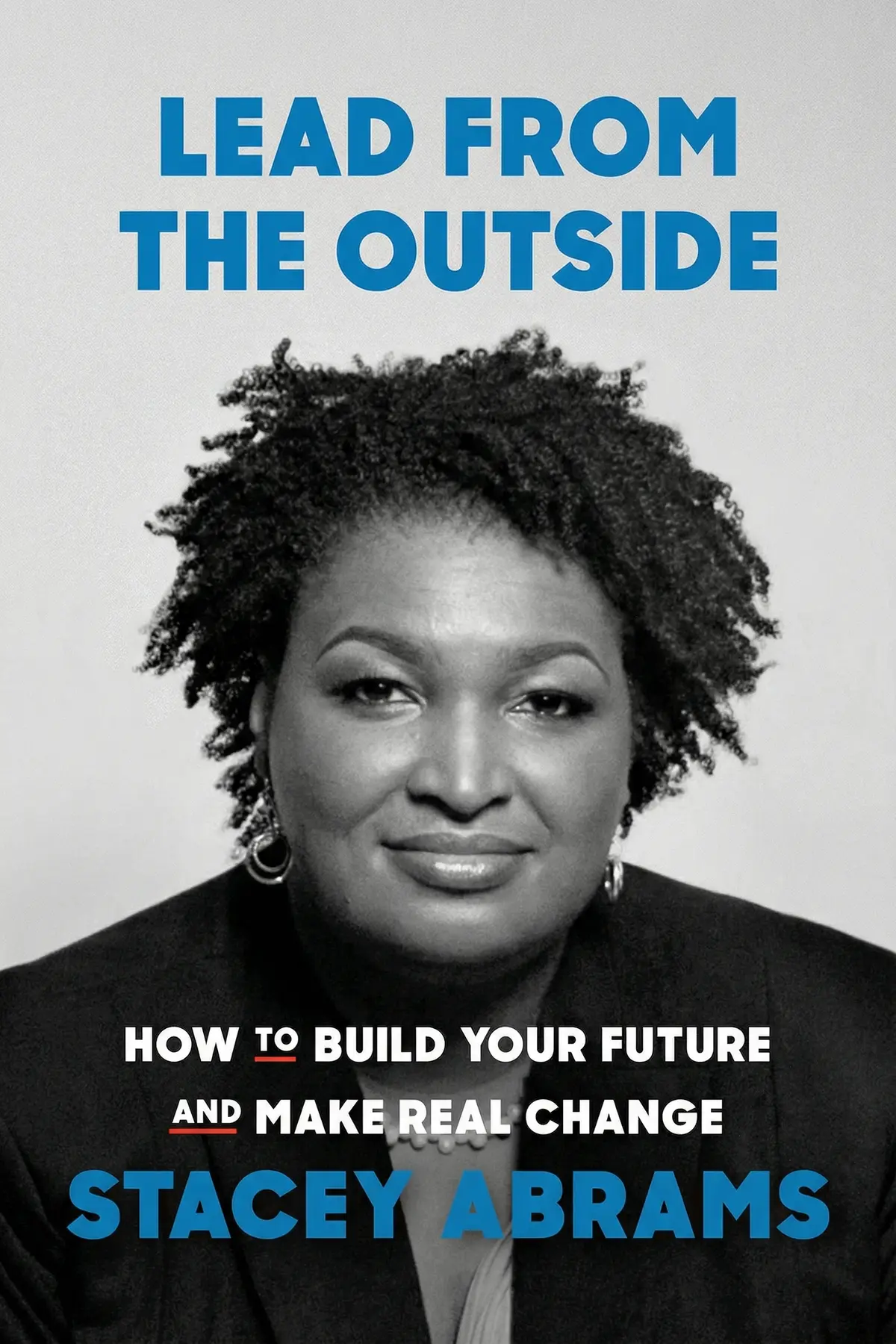
Table of Content
1. Introduction
1 min 01 sec
If the system was never built for you, working hard and waiting to be noticed is a slow plan. In Lead from the Outside, Stacey Abrams, the first Black woman to win a major party’s nomination for governor, offers outsiders a different plan, and it starts with a spreadsheet. As a college freshman getting over a painful breakup, she sat in a computer lab and typed out her goals for the next 40 years. She still uses that sheet.
Her argument is that women, people of color, LGBTQ+ people and anyone else long kept from power can lead. They have to name their ambition and fears honestly, build the access, money and support that insiders inherit, and get inventive with the little they have. The lessons end in tools you can use this week: a map for your ambition, a four-pile sort for a crowded week, and a game of Jenga in place of the myth of balance.
2. Name what you want before judging your odds
1 min 35 sec
A young graduate almost skipped a prestigious scholarship because she was sure she would lose. She did lose. So why does she call that attempt the moment her whole career changed direction?
3. Turn the fear of being different into strength
1 min 43 sec
Even her closest supporters said the state was not ready for someone like her. The fear they voiced is one many outsiders carry, and Abrams found a way to turn it into an advantage.
4. Find the side doors gatekeepers leave open
1 min 59 sec
The same college degree can be worth more than ten times as much to one family as to another. When the main entrance is rigged, Abrams shows where the other entrances are.
5. Build a board of advisors who see differently
1 min 41 sec
A new boss was failing with her team, and the person who rescued her ranked below her and offered no legal expertise. Her story shows why one mentor is rarely enough, and whose help to look for.
6. Financial fluency that makes you a credible leader
1 min 51 sec
A young lawyer was earning close to six figures with a credit record she dreaded showing anyone. How she faced it turns personal money trouble into a skill that leaders are judged on.
7. Admit the mistake before the client hears it
1 min 40 sec
Minutes before an important call, a first-year attorney found a line that destroyed her own advice. She had every reason to stay silent. What she did instead became a lesson in how leaders handle being wrong.
8. A Jenga tower that beats work-life balance
1 min 50 sec
Chasing perfect balance between work and life leaves most people feeling like failures. Abrams swaps that ideal for a block-stacking game, and a four-category sort that helps decide which blocks you can pull.
9. Win with the few resources you already hold
1 min 45 sec
Badly outnumbered and facing a flood of bills, a small group of legislators seemed to have no options. One overlooked rule changed that, and it shows how to find leverage in a position that looks weak.
10. Conclusion
1 min 15 sec
Abrams’s book is a manual for people who were never handed the map. Her wager is that the outside position, unfair as it is, also teaches things insiders rarely learn: how systems actually work, how to do much with little, and how a difference can become a strength. What she asks in return is honesty about what you want, what scares you, what you owe and where you were wrong.
The work can start on one sheet of paper. Write two newspaper headlines about yourself, one three to five years ahead and one seven to ten years out. Let them decide which Jenga blocks stay in the tower. Then open her five-column ambition map, starting with what you want and why. Look at the people around you and ask which seat on your board of advisors is still empty.
None of this promises a fast win. Abrams lost the Rhodes and watched 40,000 voter applications get canceled, and she kept organizing. On Crossover Day, 75 outnumbered Democrats could not outvote the majority, yet by using every minute the rules allowed, they stopped some of its bills.
About this book
What is this book about?
Work hard and doors will open is the classic promise of success. Stacey Abrams argues that it breaks down for anyone starting from the outside: women, people of color, LGBTQ+ people and others long kept away from power. For them the field is not level, so waiting to be noticed is a slow plan. Abrams draws on her own path through corporate law, Atlanta city government, the Georgia legislature and voter registration work. She turns each obstacle into something to work on: ambition you have never allowed yourself, fear of being too different, closed networks, money trouble, mistakes and an overloaded calendar. Her stories include a Rhodes Scholarship she did not win, an unlikely mentor in a city law department, a tax memo she corrected half an hour before a client call, and a rule about 20-minute questions that slowed a whole legislature. Readers get a working kit to match: a spreadsheet for mapping ambition, a board of advisors with four kinds of mentors, a four-pile sort for priorities, a Jenga tower that replaces work-life balance, and power mapping for long campaigns.
Book Information
Who it's for
Professionals feeling shut out
Women, people of color and LGBTQ+ professionals who feel shut out of the rooms where decisions get made.
Newcomers and career changers
Early-career workers and career switchers looking for hidden ways into closed industries.
Leaders short on resources
Organizers, founders and team leads trying to make change with few resources.
About the Author
Stacey Abrams
Stacey Abrams served in the Georgia House of Representatives from 2007 to 2017, leading its Democrats as minority leader from 2011. She was the Democratic nominee for governor of Georgia in 2018 and 2022, and in 2019 she became the first African-American woman to deliver the response to the State of the Union. She founded Fair Fight Action to fight voter suppression. She holds degrees from Spelman College and Yale Law School, and she has also written novels and a children's book.
Ratings & Reviews
Ratings at a glance

What people think
Listeners find this an outstanding book that offers priceless advice and important life lessons. The prose is captivating, and listeners admire the author's sincerity, with one listener noting how she shares her mistakes with refreshing transparency. Listeners celebrate the leadership insights, with one highlighting its focus on leadership for introverts, while others enjoy the female perspective. Listeners appreciate the book's pragmatic method, with one listener describing it as a roadmap to success.
Top reviews
Prim
Ambition is more than just a vague hope or a wish, and Stacey Abrams defines this distinction with a level of clarity that is genuinely electrifying. She argues that if you can walk away from your goals for weeks at a time, you aren't dealing with ambition—you are just dreaming. I found her focus on 'the outside' to be a refreshing change of pace from the typical corporate leadership manuals that dominate the shelves. This book isn't a traditional memoir, though it draws on her time at Spelman and Yale to ground her advice in reality. It functions more as a workbook for those of us who weren't born with a seat at the table. To be fair, her transparency regarding her own financial mistakes and debt was the most impactful part for me. She doesn't just tell you to be better; she shows you how she navigated her own failures to become a powerhouse. Truly a roadmap for anyone who feels like they are starting from behind.
Show moreMalee
Stacey Abrams is clearly a powerhouse, and her educational background from Spelman and Yale shows in her sharp, analytical writing style. After hearing her speak, I wanted to dive deeper into her philosophy on power and collaboration. Look, she doesn't just talk about winning; she talks about the 'slow-burn' and the necessity of staying alive to fight another day. This book is a masterclass in how to assess a situation from the sidelines and then move in with a team to get things done. I loved the emphasis on teamwork and mentorship, especially the idea that we must sometimes work with our least favorite colleagues to achieve a common end. Her honesty about her failures in the Georgia legislature and her personal life makes her advice feel earned rather than preached. It is a rare political book that provides actual, usable strategies instead of just vague platitudes and self-congratulation.
Show moreJob
Wow, this wasn't the typical dry political memoir I was expecting from a former minority leader. Most politicians make lousy writers because they are too afraid of being controversial, but Abrams writes with a refreshing transparency that is hard to find. She gets right to the point: what is the problem, why is it a problem, and how do you solve it? I actually went to the website she mentioned and did the exercises because her definition of ambition resonated so deeply with me. Not gonna lie, I was impressed by how she balanced her career in government with being a novelist and an entrepreneur. This book proves that being an 'outsider' isn't a permanent disadvantage if you know how to leverage your unique perspective. It’s an excellent read for anyone who wants to understand how power actually works in the real world.
Show moreWoravit
After hearing so much about her work in Georgia, I wanted to understand the strategy behind the person and this book delivered. Abrams is a brilliant tactician who knows how to change the rules of engagement when the traditional path is blocked. Her focus on how to acquire and wield power when you aren't the one in charge is a masterclass for anyone in middle management or community organizing. I found the 'Ambition vs. Wish' section to be particularly convicting, as it forced me to reevaluate my own career goals. The book is well-written, and her narration on the audiobook version is excellent, bringing a level of warmth and authority to the text. She doesn't shy away from the hard stuff, like how money and credit scores can be used as weapons against those trying to rise. It’s a powerful, necessary read for our current political and social climate.
Show moreSomboon
Picked this up because I’ve always felt like an outsider in professional spaces, and I needed something that spoke to that specific struggle. Abrams delivers a tactical roadmap to success that feels both deeply personal and widely applicable to anyone who has been marginalized. I was particularly impressed by how she addresses leadership for introverts, which is a perspective often ignored in these types of books. Her writing style is engaging, though she occasionally leans into the 'workbook' style a bit too heavily for a casual read. One minor gripe is her use of a certain Harriet Tubman quote that has been debunked, which felt like a rare oversight in an otherwise meticulously researched book. Nevertheless, the truth is that her advice on building a 'slow-burn' victory is invaluable for anyone facing long odds. You will find many obstacles in your life, but after reading this, you’ll realize you shouldn’t be one of them.
Show moreNong
As a natural introvert, I usually find leadership books exhausting and performative, but this one felt surprisingly accessible. Abrams understands that not everyone wants to be the loudest person in the room, and her advice on 'leading from the outside' reflects that. She encourages women and minorities to aim higher than they think they can go, while providing the tactical tools to actually get there. I particularly liked the section on how to handle a loss; since she didn't win her governor's race initially, her perspective on failure is much more authentic than a 'winner-takes-all' narrative. My only complaint is that some of the chapters felt a bit repetitive towards the end. But in my experience, the core message about not letting fear block your critical thinking is something every aspiring leader needs to hear. She’s a brilliant strategist, and it shows in every chapter.
Show moreWaree
Finally got around to reading this, and frankly, her transparency about her financial struggles was the highlight for me. So many successful people act like their path was a straight line, but Stacey Abrams is brutally honest about her debt and the mistakes she made. That kind of vulnerability makes her leadership advice feel much more attainable for the rest of us. The book is less of a story and more of a handbook, which I appreciated because I could flip to the sections I needed most. Some of the advice is very specific to the American political landscape, which might be a drawback for some, but the general philosophy is solid. I’ve read a lot of these types of books, and this is one of the few that acknowledges the actual, physical toll of being 'the first' or 'the only' in a space. It’s a grounded, practical guide for real people.
Show moreOm
Does everyone need to read this to be a leader? Maybe not, but for those of us who don't see ourselves represented in standard leadership books, it is a godsend. Abrams uses her life events only to illustrate her points, which keeps the focus on the reader's own journey. I liked how she laid things out simply; it made daunting tasks like running for office or starting a business seem manageable. Got to say, I was impressed by her academic pedigree and how she used her law degree to navigate the complexities of government. While I wish there was more about her actual day-to-day life in the Georgia House, the focus on strategy was probably more useful in the long run. If you don't ask, nothing will happen, and this book gives you the courage to start asking. It’s an insightful, thoughtful, and highly motivating read for anyone looking to make a difference.
Show moreMo
The chapter on personal finance felt a bit jarring for someone reading this from a European context where credit scores don't dictate your entire life. Frankly, it is a very American book, and while the leadership principles are solid, the practical financial tips don't always translate across borders. I didn't know much about Abrams before this, aside from her political career, so I enjoyed the glimpses into her life as a romance author and a lawyer. However, the book often prioritizes policy and philosophy over the 'story' of her life, which made it feel a bit dry in sections. It is clearly written for members of minorities who want to climb the ladder, but it isn't quite the memoir I was expecting. It is a good collection of tips, but the heavy focus on the US system might limit its reach for international readers who can't relate to the specific economic hurdles she describes.
Show moreNarong
To be fair, the inclusion of that debunked Harriet Tubman quote about slave mindsets really pulled me out of the experience for a moment. It’s a common mistake, but someone with her level of education and research background should have caught that during a fact-check. Beyond that, the book is a decent collection of leadership guidelines, though I found the structure a bit scattered at times. It isn't chronological, which makes it hard to track her personal growth alongside her professional achievements. I did appreciate her honesty regarding her debt and the obstacles she faced as a Black woman in Georgia politics. However, if you are looking for a deep-dive memoir, this isn't it. It functions much more as a self-help guide or a statement of philosophy than a narrative of her life. It’s not a bad book, but it felt a little too much like a campaign manifesto dressed up as a leadership manual.
Show moreQuestions about this book
What is the main idea of Lead from the Outside?
Stacey Abrams argues that the usual promise, work hard and doors will open, fails people starting from the outside, such as women and people of color. Instead of waiting for a fair system, outsiders should name their ambition and fears, find hidden ways into closed networks, build mentors and money skills, own their mistakes, and use limited resources creatively over a long campaign.
What is Work-Life Jenga in Stacey Abrams's book?
Abrams rejects work-life balance because it assumes every part of life deserves equal time, which almost nobody manages. She compares time to a Jenga tower: surprise demands keep pulling blocks out, and your job is to make smart moves and rebuild when it falls. Borrowing from Eisenhower, she splits tasks into four groups, starting with Gotta Do, followed by Need to Do, then Oughta Do, and finally Might Get Around To.
How does Stacey Abrams suggest finding mentors?
She recommends a board of advisors built on purpose. First know your own strengths and weaknesses. Then decide what you need: a sponsor who praises you to insiders, an adviser with a different background, a situational mentor for short-term questions, or a peer mentor facing similar challenges. Manage it yourself by scheduling check-ins and asking plainly for help.
How can I apply Lead from the Outside?
Start with Abrams’s ambition map: five columns covering what you want, why, your strategies, the help you need and who can give it, and when. Write newspaper headlines about yourself three to five and seven to ten years ahead to clarify priorities. List the assets you already hold, such as information or access, and look for side doors like alumni contacts or volunteer roles.
Who should read Lead from the Outside?
It suits anyone who feels they are starting from outside the circles of power, especially women, people of color and LGBTQ+ people. It also helps early-career workers breaking into closed industries, people struggling with debt who want to lead, and organizers or founders trying to win with limited resources against stronger opponents.
Featured in
Readers also enjoyed

A Bigger Prize: How We Can Do Better Than the Competition
Margaret Heffernan





A Year with Peter Drucker: 52 Weeks of Coaching for Leadership Effectiveness
Joseph A. Maciariello


60 Seconds & You’re Hired!
Robin Ryan

AUDIO SUMMARY AVAILABLE
Listen to Lead from the Outside in 15 minutes
Get the key ideas from Lead from the Outside by Stacey Abrams, plus 5,000+ more nonfiction titles.
- 5,000+ titles
- Listen as much as you want
- 7-day free trial
- Cancel anytime









