
14 min 23 sec
Available in: English
Impact Players: How to Take the Lead, Play Bigger, and Multiply Your Impact
By Liz Wiseman
Shows why some professionals become the people teams turn to in a crisis, and how to build their habits: finding what matters now, leading without permission, finishing hard problems and making work lighter for others.
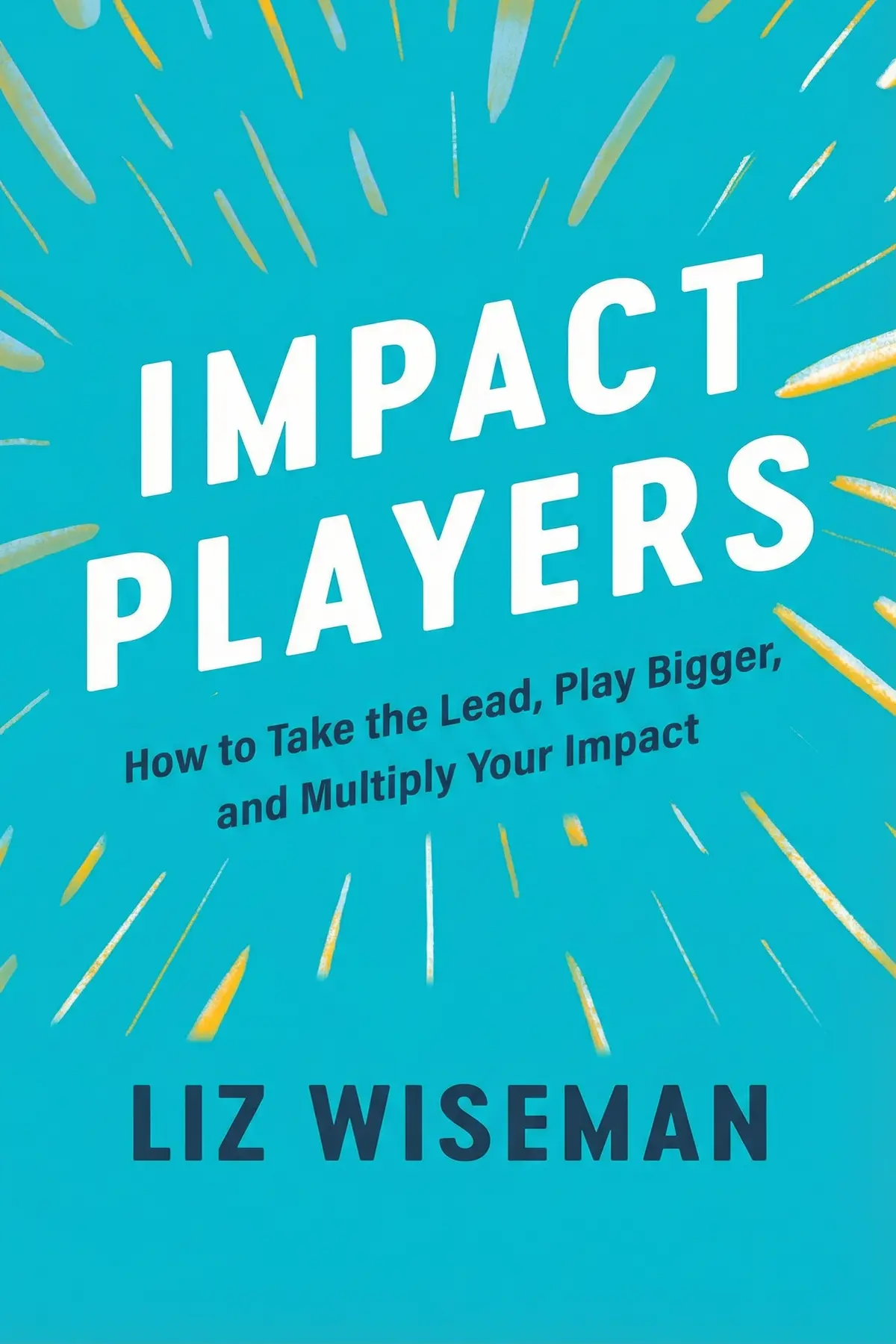
Table of Content
1. Introduction
1 min 03 sec
Plenty of capable, hardworking people do their jobs well and still get passed over when the important work is handed out. In Impact Players, leadership researcher Liz Wiseman argues that the gap between them and the colleagues everyone wants is rarely talent or effort. It is a way of seeing the job. Most professionals, she says, work with a Contributor Mindset: they do what they were asked and treat problems as interruptions. Impact Players treat the same problems as openings, and they take on the job that is needed as well as the job they hold.
That outlook, in Wiseman’s case, shows up in a handful of habits anyone can practice: reading what matters most right now, stepping into leadership gaps, finishing what others hand off, asking for correction and making work lighter for everyone nearby. Each habit comes with a person who lived it, from a Belfast office worker to a Salesforce engineer, and with a small move to try at your next meeting.
2. A mindset that turns problems into openings
1 min 55 sec
An aspiring actor met a famous star on set and skipped the obvious request for a career boost. What she offered instead led somewhere far better, and it reveals the line between good workers and indispensable ones.
3. Aim your work at what matters now
1 min 53 sec
The strongest young soccer players barely watch their own feet during a match. Their habit explains why some employees always seem to be working on exactly the right thing, and others feel invisible.
4. Lead before anyone appoints you
2 min 04 sec
A mother with an office job and no political power set out to calm a conflict that had divided her city for years. Her first step was small, and the habit behind it works in any meeting room.
5. Carry every problem to the finish line
2 min 00 sec
A single coding mistake froze millions of hours of engineering work at a major software company. The engineer who found it could have stopped once the fix went live. What he did next is the real lesson.
6. Ask for feedback and attract the best mentors
2 min 15 sec
A young man with no engineering background ended up in a Stanford computer science doctorate and running an AI company. The habit that carried him there takes a few minutes, and most people skip its last step.
7. Lighten your boss's workload and become easy to work with
2 min 06 sec
A gifted executive stays late every night improving her colleagues’ work, and it is making everything worse. Her story, set beside a twenty-three-year-old’s three slides, shows what effort others actually value.
8. Conclusion
1 min 07 sec
Wiseman’s Impact Players have much the same skills and work ethic as many of their colleagues. What sets them apart is where they point their attention. Padman looked at a famous actress and saw a family that needed help. Williams looked at a divided city and saw a march she could start. Vaishnav looked at a bug that was already fixed and saw a problem that could come back. Each time, the value came from seeing past the edge of the job and acting before anyone asked.
The shift starts small. Before your next one-on-one, write the single sentence that ties your work to your boss’s top priority, and open with it. Pick one ambient problem everyone tolerates, such as the meeting with no agenda, and fix it yourself. When a problem lands on you, carry it until it cannot return, and afterward tell the people who advised you what their advice made possible.
Keep that up for a few months and the way others see you begins to change. You become the colleague who gets handpicked when things go wrong, because you were already looking.
About this book
What is this book about?
Many smart, hardworking people do their jobs well and still never become the person a team calls on when things get hard. Liz Wiseman argues the difference is rarely talent or effort. It is a way of seeing work. Most professionals, she says, operate with a Contributor Mindset: they handle what they were given and treat problems as distractions. Impact Players treat the same problems as openings, and they do the job that is needed as well as the job they hold. Wiseman traces that mindset through a set of practical habits, each shown through a real person: an actor who offered to babysit and ended up co-hosting a podcast, a Belfast office worker whose petitions grew into a peace movement, a Salesforce engineer who refused to stop at a quick fix, and a young manager at SAP who explained his ambitions in three slides. Readers get concrete tools they can use right away, including the W.I.N. method for finding what matters most now, a simple question that rescues meetings without an agenda, a way to close the feedback loop with mentors and a habit of communicating so clearly that others find you easy to work with.
Book Information
Who it's for
Early-career and passed over
Early-career professionals who work hard but are rarely picked for the important projects.
Experienced staff, career switchers
Experienced employees and career switchers who want to be seen as leaders before holding the title.
Team managers
Managers who want language for the habits that make some team members stand out.
About the Author
Liz Wiseman
Liz Wiseman is chief executive of the Wiseman Group, a Silicon Valley leadership research and development firm whose clients have included Apple, Google, Microsoft and Nike. A former Oracle executive, she served as Vice President of Oracle University and global leader for Human Resource Development. She has appeared on the Thinkers50 ranking and in 2019 was recognized as the world's top leadership thinker. She writes for Harvard Business Review and Fortune, lectures at BYU and Stanford, and wrote Multipliers and Rookie Smarts.
Ratings & Reviews
Ratings at a glance
What people think
Listeners consider this book a fundamental read, with one listener noting its worth for both leaders and team members. The subject matter generates positive reactions, as one listener emphasizes its potent concepts and listeners value the level of advice, with one listener calling it a blueprint for evolving into an Impact Player. They also appreciate the management elements, with one review highlighting its effectiveness for coaching specific employees. However, the tempo receives criticism, as several listeners find the experience tedious, and the author quality gets inconsistent reviews.
Top reviews
Pan
Finally got around to finishing Wiseman’s latest, and it’s essentially a field manual for anyone tired of just ‘doing their job.’ While some might see the advice as a recipe for burnout, I found the distinction between a typical contributor and an Impact Player to be incredibly sharp. The book lays out a clear roadmap for navigating those messy, ambiguous problems that usually paralyze most teams. I particularly appreciated the ‘step up, step back’ framework because it emphasizes that leadership isn't just about being the loudest person in the room. Some of the corporate-speak can get a bit thick at times, but the core message is vital. If you’re looking to increase your value without just clocking more hours, this is a must-read. It shifted my perspective on what it means to be truly indispensable in a modern organization. It's hands-down one of the most practical guides for career growth I've found lately.
Show moreNannapat
Wow, talk about a perspective shift. I picked this up during a period of deep work fatigue, and it genuinely helped me reframe how I view my daily tasks. Instead of seeing ambiguous projects as a burden, I’ve started viewing them as the ‘opportunity lens’ Wiseman describes. The idea of ‘making work light’ really resonated with me because we often forget that being a high performer doesn’t mean being a martyr. You can be an Impact Player while also bringing levity and joy to your team, which actually prevents the very burnout critics of this book fear. Look, the advice is intense and it demands a lot from the reader, but the rewards of becoming a ‘hero maker’ are worth the effort. This is easily the most impactful leadership book I’ve encountered in the last two years. I’m already planning on gifting copies to my entire department.
Show moreSaengdao
This is hands-down the best personal leadership book I've encountered recently. It perfectly captures why some people with the same talent levels end up with vastly different career trajectories. It isn't just about work ethic; it’s about having ‘game’ and knowing how to apply your efforts where they actually move the needle. Wiseman breaks down the invisible barriers that keep good contributors from becoming transformational impact players. I loved the emphasis on being easy to work with and reducing the phantom workload for others. In a world where everyone is stressed, being the person who makes work feel lighter is a superpower. The 5 key differentiators are now taped to my monitor as a daily reminder. This isn't just a book you read; it’s a manual you live by if you want to be a superstar. Highly recommended for graduates.
Show moreWanphen
As a manager who struggles to help middle-of-the-road employees find their spark, this book provided some much-needed language for coaching. Wiseman’s research into how 170 different leaders perceive ‘star’ talent is eye-opening, even if the sample size feels a little narrow for global generalizations. Truth is, many people think they are doing a great job just by following instructions, but this book highlights the ‘phantom workload’ they might be creating for their bosses. It’s a great tool for helping team members understand the subtle shifts in mindset—like focusing on the job that needs to be done rather than just their official description—that lead to big promotions. I’ll admit the middle sections drag a bit, and the pacing could be tighter. However, the chapter on building high-impact teams makes the whole read worthwhile. It’s practical, actionable, and mostly avoids the fluff found in similar titles.
Show moreRod
The chapter on ‘Ask and Adjust’ was the highlight for me, as it reframes feedback as a tool for agility rather than a critique of character. I think Wiseman does a solid job of identifying the traits that make certain people ‘superstars,’ but I do have some concerns about how these ideas might affect diversity and inclusion. If a manager only rewards those who ‘step up’ without being asked, they might overlook talented individuals who have different cultural norms or communication styles. Gotta say, the framework is incredibly robust, but it requires a very self-aware leader to implement it fairly. The contrast frames between contributors and high-impact players are helpful for visualizing where you currently stand. It’s a bit dry in the middle, and I found myself skimming some of the more repetitive examples. Still, the core five differentiators provide a great vocabulary for professional development and performance reviews.
Show moreSom
After hearing several colleagues rave about this, I finally dove in and I can see why it’s sparking so much conversation. It’s a powerful exploration of the ‘mental game’ required to succeed in high-pressure environments. While I’ve read Marcus Buckingham’s work on individual strengths, Wiseman focuses more on the collective needs of the organization, which is a different but equally important lens. The book provides a practical guide on how to be the person the boss trusts with the most critical assignments. Some might find the focus on ‘service’ a bit much, but in the right culture, these behaviors really do create a ‘lift’ for everyone involved. I did find the author’s tendency to reference her own accomplishments a little distracting at times. Nevertheless, the actionable advice on becoming a problem solver who anticipates roadblocks is worth the price of admission. It’s a strong addition to any business library.
Show moreAva
Ever wonder why some people always get the best projects while others are left with the grunt work? This book answers that question by looking at the specific behaviors that build trust with leadership. To be fair, a lot of this is common sense—be proactive, finish what you start, and don't be a jerk. However, seeing it all laid out in a research-based framework makes it much easier to implement and, more importantly, to teach to others. I’m planning on recommending this to all my graduating students because it bridges the gap between ‘doing school’ and ‘doing work.’ It’s a bit heavy on the corporate jargon, and I wish there was more focus on the ‘why’ of employee disengagement. But as a tactical guide for career advancement, it hits the mark. It’s a solid resource for anyone wanting to be more than just a line item.
Show moreLook
Is this book useful? Yes, but you have to dig through a lot of fluff to find the gems. Having loved Multipliers years ago, I had high hopes for this one, yet it felt a bit like a retread of common sense dressed up in new, made-up jargon. Wiseman is clearly a brilliant thinker, but the writing here is incredibly repetitive, hammered home by lists that make your head spin after fifty pages. To be fair, the concept of ‘finishing stronger’ by taking full ownership is a lesson many young professionals desperately need to learn. But for seasoned leaders, much of this will feel like stuff you already know but haven't put a name to yet. It leans heavily into a capitalist mindset that doesn't always account for personal life barriers or neurodiversity. It's a decent one-time read, though I wouldn't call it transformative.
Show moreRoo
Paced like a marathon when it could have been a sprint, this book is a mixed bag of brilliant insights and tedious filler. The central premise—that impact players solve the problems that actually matter—is essential for anyone looking to climb the ladder. However, the author takes far too long to get to the point in every single chapter. I found myself getting bored with the constant lists and repetitive success stories that all started to sound the same after a while. Personally, I think the most valuable part is the section on how to handle ambiguity without becoming paralyzed. It’s a solid 3-star read: great for the concepts, but frustrating in its execution. If you can push through the jargon, there’s a roadmap here that works. Just don't expect a quick or particularly exciting read. It feels like it could have been a long-form article.
Show moreMan
Not what I expected, and frankly, a bit out of touch with the reality of the modern workplace. The author spends a lot of time encouraging employees to take on extra responsibilities and solve ‘unmet needs’ that aren't in their job description. In my experience, that’s just a fast track to being taken advantage of by leadership for no extra pay or recognition. It feels like it was written by a senior executive who hasn't been in the trenches for a long time. While there’s a brief mention of burnout, the bulk of the advice suggests you should just work harder and ask for less help than your peers. If you value your work-life balance or have a family to care for, this ‘siren song’ might do more harm than good. It’s full of buzzwords and anecdotes that feel curated to support a very specific, narrow version of success.
Show moreQuestions about this book
What is the main idea of Impact Players by Liz Wiseman?
Wiseman argues that the most valued people at work are set apart by mindset more than by talent or effort. Most professionals have a Contributor Mindset and treat problems as distractions from their assigned tasks. Impact Players see those problems as opportunities, do the job that is needed as well as their own, step up without being asked, finish what others escalate, seek feedback and make work lighter for those around them.
What does W.I.N. mean in Impact Players?
W.I.N. stands for What’s Important Now. It is the point where something your organization values meets a priority of your direct boss or stakeholder. Wiseman suggests comparing your organization’s business model with your stakeholder’s top three priorities, finding where your own skills overlap, and then telling your boss in one short statement how your work supports what matters to them.
How can I become an Impact Player at work?
Start with small moves the book describes. Open one-on-one meetings by linking your work to your boss’s top priority. Fix ambient problems, such as meetings without an agenda, by asking what the group most needs to achieve. When a problem appears, stay with it until it is solved for good, rallying help as needed. Ask for feedback, act on it and report back to your mentors.
What are ambient problems according to Liz Wiseman?
Ambient problems are small, persistent inefficiencies that everyone complains about but nobody fixes, and they add up to large waste over time. Wiseman points to an estimate that no planned agenda exists for 63 percent of meetings. She also describes one employee who saw colleagues losing time on presentation slides, built a tool to help, and saved hundreds of hours once her company rolled it out globally.
Who should read Impact Players?
It suits professionals who do solid work but are not yet the people teams call on in a crisis, especially those early in their careers or moving into new roles. Managers also benefit, since the book describes habits they can spot and encourage in their teams, from closing the feedback loop to communicating so clearly that others find you easy to work with.
Featured in
Readers also enjoyed

A Bigger Prize: How We Can Do Better Than the Competition
Margaret Heffernan





A Year with Peter Drucker: 52 Weeks of Coaching for Leadership Effectiveness
Joseph A. Maciariello



60 Seconds & You’re Hired!
Robin Ryan

Acting with Power: Why We Are More Powerful Than We Believe
Deborah Gruenfeld
AUDIO SUMMARY AVAILABLE
Listen to Impact Players in 15 minutes
Get the key ideas from Impact Players by Liz Wiseman, plus 5,000+ more nonfiction titles.
- 5,000+ titles
- Listen as much as you want
- 7-day free trial
- Cancel anytime









