

14 min 51 sec
Available in: English
How to Be a Leader: An Ancient Guide to Wise Leadership
By Plutarch
Ancient advice on why you should want to lead, how to keep a reputation that can survive constant scrutiny, how to win people over, and why experience and steady service matter at every age.
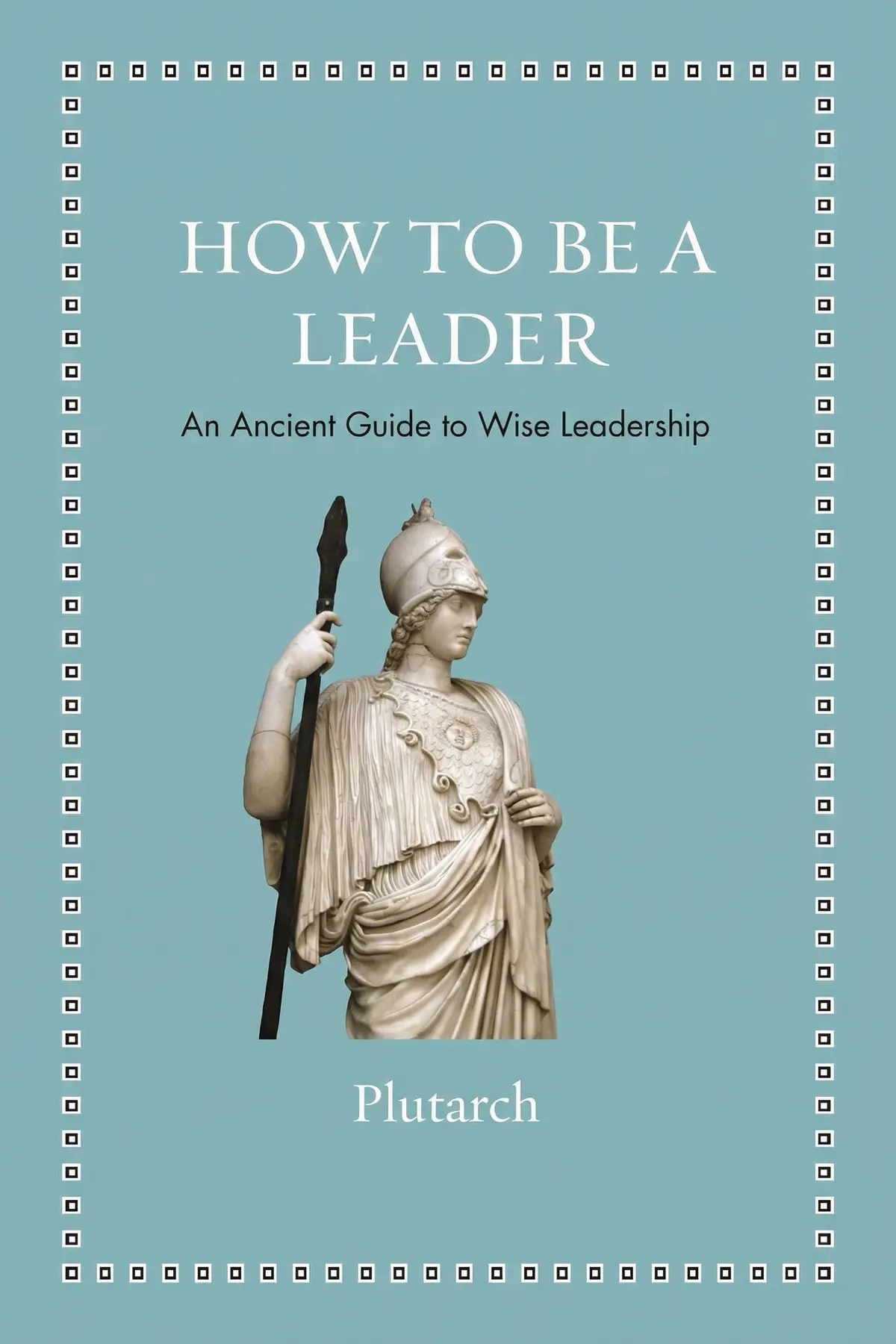
Table of Content
1. Introduction
1 min 07 sec
Most people who reach a leadership role were never taught what to do once they arrive, and many chase it for reasons that later work against them. In How to Be a Leader, the Greek writer Plutarch, who lived under Roman rule in the first century CE, argues that the trouble usually begins with motive: people who lead for glory make reckless choices that harm the very communities they serve. His advice is two thousand years old, yet it reads like a briefing for anyone stepping into a management job today.
Plutarch’s case is that good leadership is built from the inside out. A sound motive, a clean character and a mind ruled by reason come first. Only then do eloquence and experience make a leader effective for a lifetime. He argues through contrasting lives: Pericles against Alcibiades, a frightened tyrant against a generous Spartan king, a persuasive statesman against a capable one who could not win the argument. Each contrast leaves something you can try with your own team this week.
2. Choose leadership for reasons that will hold
2 min 04 sec
Two people can want the same job for opposite reasons, and one of those reasons tends to wreck the place it touches. A Roman who refused his own statue offers a simple test of which kind you are.
3. Build a reputation that survives the spotlight
2 min 11 sec
Praise for leaders is rare and criticism is constant, and it reaches far beyond their public work. One Athenian thrived under that glare; another, more gifted, was driven out of his city twice.
4. Rule yourself first, then lead others
2 min 10 sec
A tyrant who held a whole city in his grip still slept above a trapdoor, afraid of his own people. A Spartan king found a very different route to security, and his wife complained about it.
5. Win people over instead of just being right
2 min 08 sec
Two Athenian statesmen held the same correct view about war and peace. One kept his city safe for the rest of his life; the other died in the disaster he had predicted.
6. Lean on seasoned leaders to steady a group in crisis
2 min 02 sec
Aesop told of a fox who refused help getting rid of her ticks, and Plutarch saw in it a warning about every organization that rushes to replace its older leaders.
7. Keep serving by adapting the pace to your age
1 min 56 sec
One Roman statesman retired to dinners and baths; another stayed in politics into old age, which the first found oddly fixated. Plutarch knew which one he admired, and his reason goes beyond duty.
8. Conclusion
1 min 13 sec
Plutarch’s leader is close to the opposite of the hero who grabs the stage. Cato turned down his statue. Theopompus gave power away and called his throne stronger for it. Pericles kept a hand in his toga and walked one steady path to the council chamber. In each case, what made the leader effective was settled long before any crowd was watching: why they wanted the role, how they lived and whether reason or fear ran their choices. Eloquence and experience then turned that character into influence that lasted.
The advice is easy to test. Before taking on a role, ask whether you would still want it with no credit attached. Behave in private as if your conduct will one day be public, and include the colleague you disagree with, the courtesy Scipio forgot with Mummius. When a decision matters, prepare to persuade, since Nicias shows that a correct view nobody accepts can still end in disaster. And if your career runs long, keep serving at a pace that fits your years.
The finest tribute, Cato understood, is people wondering why there is no statue.
About this book
What is this book about?
Many people want to be in charge. Few stop to ask why, or what should guide them once they get there. Plutarch, writing in the first century CE, believed those two questions decide whether a leader steadies a community or throws it into turmoil. His answer starts with character. Leaders should be driven by duty and honor. Wanting glory is the danger. They should live so cleanly that criticism finds nothing to grip, and they should govern by reason, caring for the people in their charge the way a benevolent god cares for the universe. Only then do the outward skills count: speaking well enough to persuade free citizens, and the judgment that comes with age. Plutarch makes his case through vivid contrasts: Pericles and Alcibiades, a paranoid tyrant and a generous Spartan king, a statesman who won the argument for peace and one who lost it. Readers get a compact, practical guide to leading people who are free to say no, along with a case for staying useful long after the first ambitions fade.
Book Information
Who it's for
Founders and first-time managers
New managers and founders who want to lead people who are free to say no.
Weighing a promotion
Ambitious professionals weighing a promotion and unsure whether they want it for the right reasons.
Experienced leaders looking ahead
Experienced leaders thinking about mentoring, crisis roles or what comes after a full-time career.
About the Author
Plutarch
Plutarch was a Greek writer who later became a Roman citizen and served as a priest at the Temple of Apollo in Delphi. He is classed as a Middle Platonist philosopher, and he also worked as a historian, biographer and essayist. His Parallel Lives pairs biographies of famous Greeks and Romans, and his Moralia collects essays and speeches. He wrote in Greek for both Greek and Roman readers, and his Parallel Lives sets famous Greeks and Romans side by side in paired biographies.
Ratings & Reviews
Ratings at a glance
What people think
Listeners find that this compilation provides enduring wisdom regarding statesmanship and individual character, although views on its worth are mixed because the source material is available for free on the internet. They value the straightforward, contemporary translation along with the historical cases that still apply to today's political and management landscapes. Furthermore, they emphasize how the work prioritizes a focus on personal character rather than providing a set of strict, mechanical rules. They also point out the useful editorial commentary, with one listener mentioning that the content was clear enough to be effectively utilized as a teaching program for high school cadets.
Top reviews
Saowalak
Picked this up for a graduate seminar and ended up keeping it on my desk for daily reference. The accessibility of this translation is its greatest strength, as it allows the reader to engage directly with Plutarch’s mind without the barrier of archaic language. I was especially impressed by the essay "To an Uneducated Leader," which serves as a stern warning against the dangers of power when it is not tempered by philosophy. In my experience, students often find the classics intimidating, but this specific edition makes the material feel vibrant and necessary. We used it to discuss the ethics of leadership and the importance of civic duty in a way that felt completely relevant to 2024. The layout is clean and the historical notes are just enough to provide context without being distracting. This is a five-star example of how to make ancient philosophy accessible to a modern audience. Highly recommended for educators and leaders alike.
Show moreWilliam
Wow, it is incredibly refreshing to read leadership advice that doesn't feel like a corporate HR manual or a series of cheap tricks. Plutarch gets to the heart of what it means to be a person of influence, focusing on integrity and the long-term health of the community. I was moved by the anecdotes of ancient leaders who put their private interests aside for the sake of the public good. This book doesn't give you a checklist; it gives you a mirror to examine your own motivations and character. The translation by Beneker is smooth and poetic, making it a joy to read aloud or highlight. It’s the kind of book you want to buy for every young person entering politics or public service. Even if you aren't a fan of history, the psychological insights here are worth the price of admission alone. It’s easily one of the best books I’ve read this year on the nature of power.
Show morePat
After hearing about this series for months, I'm glad I started with this collection of essays. The wisdom contained in these pages is genuinely timeless, proving that the challenges of leadership are a permanent part of the human condition. Plutarch’s writing is filled with historical examples that serve as both warnings and inspirations for anyone in a position of authority. I particularly appreciated the succinct descriptions before each chapter, which helped me focus on the key takeaways while reading. The book is physically beautiful and feels high-quality, which makes the purchase feel worthwhile compared to just reading a PDF online. Whether you are leading a small team or an entire organization, there is something in here that will make you pause and think. It’s a sobering and yet encouraging read that emphasizes the importance of wisdom over raw ambition. I will definitely be looking for more titles from this translator in the future.
Show moreFilm
Ever wonder if the political chaos of today is actually a new phenomenon? Reading Plutarch’s advice on how to be a good leader quickly dispels that notion by showing that the same ego and power struggles have existed forever. Frankly, I found the focus on character-driven leadership much more refreshing than the typical "seven steps to success" garbage you find in the business section today. Beneker’s translation is crisp and doesn't get bogged down in overly academic jargon, which makes it perfect for a quick evening read. I particularly liked the section on whether an old man should remain in politics, as it feels incredibly relevant to our current geriatric political landscape. There are a few moments where the cultural gap is a bit wide, but the core message remains powerful. This is a great choice for anyone tired of modern corporate speak.
Show moreSupranee
Finally got around to reading this translation by Jeffrey Beneker, and the clarity is truly impressive. Instead of the dry, Victorian prose often found in older versions of Plutarch, this text feels immediate and conversational. The book covers everything from the importance of self-control to how a leader should handle praise and criticism from the public. In my experience, ancient texts can be hit or miss, but these specific essays are remarkably cohesive. I was particularly struck by how Plutarch emphasizes that a leader’s primary job is to improve the character of the citizens. My only minor complaint is that some of the specific historical anecdotes require a bit of outside Googling to fully appreciate the context. Still, it’s a wonderful resource for anyone in a management position who wants to ground their practice in philosophy. It’s a quick read that stays with you long after you finish.
Show moreMai
Not what I expected from a 2,000-year-old text, but the advice here is surprisingly applicable to modern management. Plutarch avoids the rigid, step-by-step instructions of modern self-help books in favor of a more holistic philosophy of leadership. He argues that you cannot lead others effectively until you have first learned to lead yourself and master your own impulses. I found the section on avoiding tyranny and building genuine respect within a community to be the most impactful part of the collection. To be fair, some of the examples involving ancient Spartan or Athenian generals feel a bit remote, but the underlying principles are solid. This is a great gift for a new manager who appreciates history and wants a broader perspective on their role. It’s a handsome little book that packs a surprising punch in terms of actual wisdom. I'll definitely be checking out other titles in the Ancient Wisdom for Modern Readers series.
Show moreOrathai
The chapter on whether an old man should engage in politics was particularly striking given our current global leadership landscape. Plutarch argues with such conviction that experience is a non-negotiable asset that it almost changed my mind about retirement ages in government. Jeffrey Beneker does an excellent job framing these essays with brief introductions that set the stage without over-explaining the material. Got to say, the bilingual format is a nice touch for those of us who still remember a tiny bit of college Greek. The book is small and portable, making it easy to digest in short bursts during a commute or a lunch break. While it focuses heavily on the public sphere, I think anyone in a position of influence could benefit from Plutarch’s insights on humility. It isn't perfect, as some of the cultural attitudes are obviously dated, but it's a high-quality production. Truly a timeless guide for the aspiring statesman.
Show moreIsaiah
This book provides a solid, if somewhat basic, introduction to Plutarch’s political thought for a modern audience. To be fair, most of the advice boils down to common sense: don't be a jerk to your constituents and listen to those with more experience. It is fascinating to see how little human nature has shifted over two millennia, yet I found the specific focus on ancient Greek city-state politics a bit hard to translate to a corporate environment. I appreciated the brevity of the essays, especially "To an Uneducated Leader," but I didn't walk away with many actionable steps. It’s a nice enough addition to the series, though I preferred the volume on anger management much more. It's a decent coffee table book for those who want to look intellectual without diving into a massive biography.
Show moreCharles
As someone who has collected several volumes from the Princeton series, this one felt a bit lighter than the others. The translator offers three specific essays from the Moralia that focus heavily on the public life of a statesman. Personally, I found the historical examples a bit repetitive after a while, even if they do provide a colorful look at ancient life. It’s a good reminder that character matters more than technique, but the lack of modern parallels in the text itself left me doing a lot of the heavy lifting. Not gonna lie, I was hoping for more of a bridge between the ancient world and today’s specific leadership challenges. It is definitely readable and accessible, just not as life-changing as the marketing blurb suggests. A middle-of-the-road entry for a generally excellent series.
Show moreRin
Look, I love the classics as much as anyone, but charging this much for an ebook of Plutarch feels a bit like a cash grab. All of these essays are available for free on sites like Gutenberg or Perseus if you don't mind a slightly older translation. Truth be told, I was expecting significantly more modern commentary or perhaps a deeper analysis to justify the price point. While Jeffrey Beneker does a fine job with the translation, there isn't enough new material here to make it a mandatory purchase for a casual reader. If you really want a physical copy for your shelf, go ahead and buy it, but otherwise, just stick to the public domain versions. The wisdom itself is five stars, but the value proposition of this specific edition is quite low.
Show moreQuestions about this book
What is the main idea of How to Be a Leader by Plutarch?
Plutarch argues that leadership starts with character. Leaders should be moved by duty and honor rather than glory, live so cleanly that criticism has nothing to grip, and govern by reason, caring for the people they lead. On that base, the ability to persuade and the judgment that comes with age make a leader effective, and he believes a true leader keeps serving for life.
Why does Plutarch say leaders should not seek glory?
In his view, leaders hungry for fame stop deciding calmly and take rash steps that bring them attention while harming their city, which makes societies turbulent. He also notes that the public criticizes leaders far more readily than it praises them. His model is Cato the Elder, who refused a statue and said he preferred people wondering why none existed.
What does Plutarch teach about persuasion in leadership?
Where people cannot simply be ordered, as in democratic Athens, a leader must win them over. Pericles persuaded Athens to stay out of the wars spreading across Greece and kept the peace while he lived. Nicias held the same view but could not convince anyone, reluctantly led a campaign in Sicily and died in the disaster. Being right was not enough.
Does Plutarch think older leaders are better?
He sees strengths in both ages but gives older leaders the edge in wise leadership. Using Aesop’s fable of the fox and the ticks, he warns that new leaders arrive hungry for glory and power. Older ones bring maturity and moderation, which count most in crises, and they are needed to train the next generation, since nobody learns to lead from a book.
How can I apply Plutarch's leadership advice today?
Ask whether you would want a role with no credit attached. Act as if your private conduct will become public, and treat rivals with visible courtesy, the step Scipio Aemilianus missed when he left his colleague Mummius off a feast list. Share authority as Theopompus did, prepare your arguments as carefully as your plans, and later in your career, adapt your workload instead of stopping.
Readers also enjoyed




A Year with Peter Drucker: 52 Weeks of Coaching for Leadership Effectiveness
Joseph A. Maciariello



A Guide to the Good Life: The Ancient Art of Stoic Joy
William B. Irvine

Acting with Power: Why We Are More Powerful Than We Believe
Deborah Gruenfeld
AUDIO SUMMARY AVAILABLE
Listen to How to Be a Leader in 15 minutes
Get the key ideas from How to Be a Leader by Plutarch, plus 5,000+ more nonfiction titles.
- 5,000+ titles
- Listen as much as you want
- 7-day free trial
- Cancel anytime









