
10 min 58 sec
Available in: English
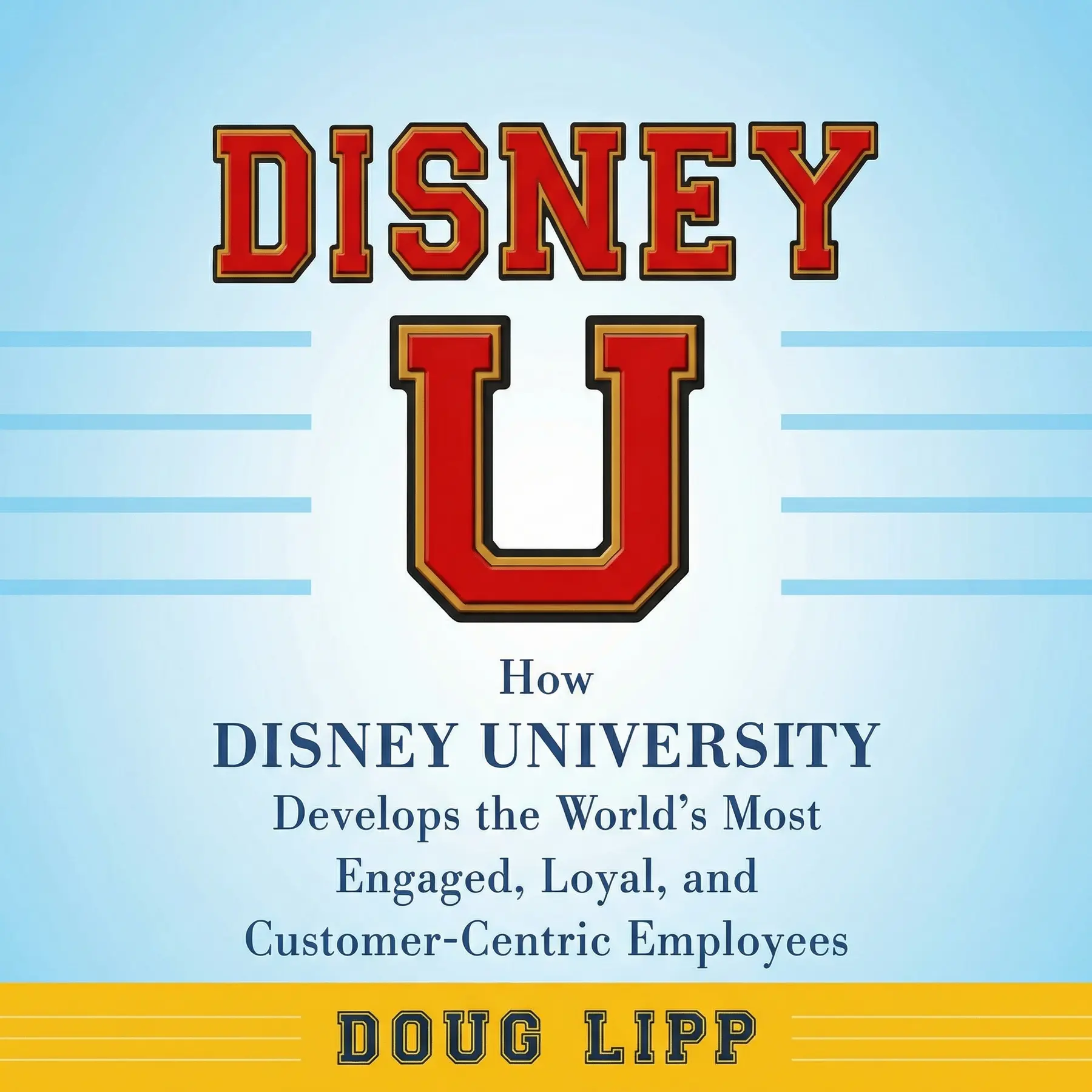
Disney U: How Disney University Develops the World's Most Engaged, Loyal, and Customer-Centric Employees
By Doug Lipp
Shows how Disney trains staff to treat every customer as a guest of honor. Its methods are sharing values, teaching company history, choosing respectful words, listening to feedback and keeping work fun, and any organization can borrow them.
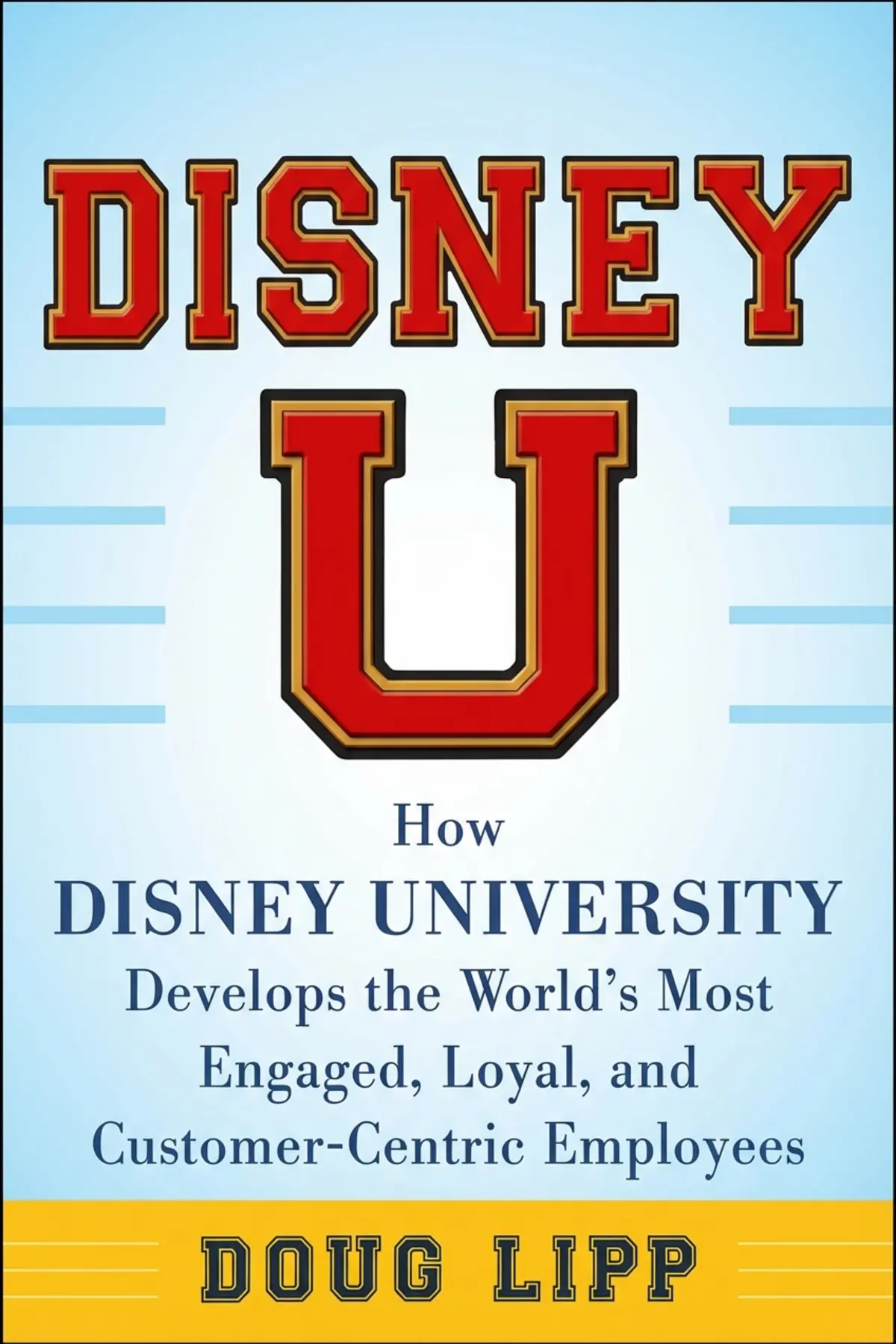
Table of Content
1. Introduction
58 sec
If you lead a team that serves customers, more pay can feel like the only lever you have, and it rarely keeps people caring for long. In Disney U, consultant Doug Lipp argues that people stay engaged when they share a company’s values, not merely its paychecks. Lipp once headed the training team at Disney University. That belief shaped the school Van France founded to train Disney’s employees, and Lipp shows how it helps one company keep children dreaming of the same characters their parents loved.
The whole book rests on one idea. A company’s character lives in its staff, so a leader’s real work is to give those people meaning, a sense of history, words that make them feel special and support when things go wrong. Along the way you’ll hear why managers met in the tower of Cinderella’s Castle, why Snow White needs technical training, and why the Paris park sells wine while Tokyo’s kept alcohol out.
2. Give your staff a reason beyond the paycheck
1 min 41 sec
A fast-growing company can leave its newest employees struggling without anyone in charge noticing. One habit of Disney University’s founder caught the problem, and it goes hand in hand with a kind of reward no bonus can replace.
3. Pair solid systems with human artistry
1 min 50 sec
Disney spends heavily on rides and park design, yet Lipp says those are only half of what brings families back. The other half depends on how one performer moves, smiles and talks to a child.
4. Change with the times without losing your roots
1 min 43 sec
Nokia, Kodak and Blockbuster show what happens when a company stands still, but changing too fast can be just as fatal. A small fix to Disney’s welcome program shows how to strike the balance.
5. Words that turn customers into guests
1 min 47 sec
Disney renamed its employees, its customers and even its crowds, and Lipp says the new words changed how people felt. A rule about alcohol then showed how the same choice can delight one country and offend another.
6. Pull a shaken team together, then let it play
1 min 40 sec
When a beloved leader died just after Walt Disney World opened, cast members struggled to smile through their shifts. What managers did next, high inside a famous castle, left the company stronger.
7. Conclusion
1 min 19 sec
Disney U makes a modest-sounding claim with large consequences. The thing customers remember is made by the staff, and staff give their best when they feel part of something. Rides, castles and clean paths matter, yet the moment a child meets Snow White depends on one trained, cared-for person. Everything Disney does in Lipp’s account sends employees the same message: they belong to the story. That runs from history lessons to its own vocabulary to emergency meetings in a castle tower.
None of this requires Disney’s size. You can explain your organization’s values to the newest person on the team, and answer their practical questions before telling them the company’s history. You can pick one tired word in your workplace and replace it with one that shows respect. And when a hard week hits, you can gather people and ask for their ideas instead of deciding alone.
Then there is the advice the book closes on, which sounds almost too light for a business book: make work enjoyable. Van France believed a team that has no fun cannot give the public any, and Lipp adds that happier staff work better. The guest’s experience starts backstage.
About this book
What is this book about?
Children today dream of meeting Cinderella or Peter Pan at a Disney park, just as their parents did a generation ago. Doug Lipp once led the training team at Disney University. He argues that much of that staying power comes from how Disney prepares the people who work in its parks. His case is that pay and perks alone produce employees who care only about themselves. Disney teaches its cast members the company's values and history. It trains them in both the people skills and the technical craft that make a visit feel like a fairy tale, and it gives them a vocabulary that makes staff and visitors feel valued. Managers stay close enough to spot problems early, collect feedback and bring everyone together when a crisis hits, as they did after Roy Disney's death in 1971. The book is built on stories: founder Van France's walks around Disney University, the reordering of the Disney Traditions program, and the different alcohol rules in Tokyo and Paris. From them, readers get practical ideas for onboarding, culture and service that work at any size.
Book Information
Who it's for
Redesigning frontline onboarding
Team leads, HR and training managers redesigning onboarding for staff who serve customers.
Motivating beyond pay
Founders and service business owners who rely on pay and perks to motivate people and want something deeper.
Leading teams through change
Managers leading teams through a loss, fast growth or a move into new countries.
About the Author
Doug Lipp
Doug Lipp is a consultant, speaker and author based in Fair Oaks, California. He is president and CEO of G. Douglas Lipp & Associates, a firm focused on leadership and customer service. He once headed the training team at Disney University, at Disney's corporate headquarters, and was on the start-up team for Tokyo Disneyland. He is fluent in Japanese and has published books in English and Japanese. He also helped build a global consulting firm with a Stanford professor and has given more than 1,500 keynote talks.
Ratings & Reviews
Ratings at a glance
What people think
Listeners consider the book accessible and well-crafted, with one listener suggesting it is a mandatory read for business leaders. The training content also earns praise, as one listener notes it provides practical ideas for orientation programs. Additionally, they enjoy the narrative quality, with one review focusing on the accounts of Disney's beginnings. Listeners value the book's perspective on employee engagement, and one listener mentions it revives memories of their own tenure at Disney.
Top reviews
Tak
Finally got around to reading Doug Lipp's work and it truly lived up to the hype for me. The core message is powerful: training shouldn't be a 'car wash' where you just spray information at people and send them out. Instead, Lipp shows how Van France instilled a spirit and an emotional connection into every cast member. I loved the distinction between the 'science' of building a park and the 'art' of maintaining morale. The book is packed with specific details, like why the sidewalks are curved to match human movement and how the simple act of using an open hand instead of a pointing finger changes a guest's perception. It’s an inspiring read that reminded me why I love the brand so much. If you want to understand how to capture the hearts and minds of your staff, this is the blueprint. It proves that when you take care of the cast, the cast takes care of the guests.
Show moreRosa
Wow, I never realized how much grit goes into keeping 'Snow White' having only good days. Doug Lipp does a phenomenal job explaining that a happy crew is the only way to produce a happy show. I was particularly moved by the story of the two bricklayers—one just laying bricks, the other building a cathedral. That shift in perspective is exactly what is missing in many modern workplaces. The book emphasizes that leadership must be seen on the front lines; if Walt could walk the park, every leader can. I’ve already started implementing the 'five-minute huddle' idea with my own team to improve our internal communication. The focus on 'brutal honesty' and using metrics from employee polls to drive change is a refreshing take on HR. This isn't just a book about a theme park; it's a manual on how to build a culture that lasts. It’s easily one of the best business books I’ve read this year.
Show moreOrawan
To be fair, I went into this expecting a dry HR textbook, but Lipp weaves together storytelling and strategy in a way that’s hard to put down. Look, training isn't just about showing someone how to do a job; it’s about creating an emotional connection to the brand. I loved the section on 'Van-style' training for the Disney Store, where they sent employees out as secret shoppers to malls. It’s that kind of creative, experiential learning that actually sticks. The book brought back memories of my own trips to the parks and helped me see the 'why' behind the cleanliness and the smiles. It's a must-read for anyone who wants to understand the 'people maintenance' that keeps a company healthy. The message that 'creativity is free' even when budgets are tight is something I’ll be keeping at the front of my mind. A truly great read that is both practical and deeply heart-centered.
Show moreCooper
This book offers a fascinating look at the 'art' of maintaining Disney’s magic through human resources. Doug Lipp provides a behind-the-scenes perspective on how Van France built Disney University from the ground up to support Walt’s monumental vision. Personally, I was struck by the focus on the 'internal customer' and how providing quality service to employees directly translates to the guest experience. The SCSE model—prioritizing safety, courtesy, and show over simple efficiency—is a framework I plan to adapt for my own team. While some of the anecdotes about early Disneyland feel a bit nostalgic, the data regarding the massive drop in turnover from 83% to 28% is incredibly compelling for any business leader. It is a quick, engaging read that manages to be both a tribute and a practical guide. I found the storytelling style much more accessible than your typical, dry management textbook. It’s an easy skim that leaves you with plenty of actionable ideas.
Show moreNora
As someone who has worked in the service industry for a decade, seeing how Disney handled their mid-70s turnover crisis was a revelation. Lipp explains that their house was on fire, and they used the Disney University to radically shift the culture. The transition from a 17% retention rate to 72% is mind-boggling and shows the power of acting on employee feedback. I really appreciated the 'Disney Dimensions' section, which discussed how communication silos can lead to missed opportunities, like the merchandising gaps with The Little Mermaid. It’s a great reminder that even a giant like Disney makes mistakes. The book is well-written and moves at a fast pace, making it perfect for a weekend read. My only complaint is that a few of the 'exercises' at the end of the chapters felt a little academic. Still, the focus on 'plussing the show' even when budgets are tight is a lesson every manager needs to hear.
Show moreYaowaluk
Picked this up on a whim because I'm a lifelong Disney fan, but I walked away with some actual strategies for my office. The best parts were the descriptions of how Disney narrows down training focus to a few concise terms. By doing less, they actually achieve more in terms of culture. I also found the anecdote about the Tokyo cleaning crew 'destroying the mood' in the Haunted House by cleaning the cobwebs hilarious. It shows the delicate balance between standard procedures and the 'art' of the guest experience. The writing is clear and the tone is mostly humble, though it does border on hagiography for Van France at times. Gotta say, the results they achieved in the 70s with employee retention are hard to argue with. It’s an easy skim that provides a good mix of nostalgia and corporate wisdom. Highly recommended for anyone in a leadership or training role.
Show moreMikael
The chapter on 'Disney Dimensions' alone is worth the price of admission for anyone struggling with communication silos. It was eye-opening to read about the 'Little Mermaid' merchandise failure and how it prompted the company to bring together executives from every business unit. Lipp shows that even vice presidents need to go 'back to basics' sometimes. I liked how the book balanced the 'science' of the business with the 'art' of the show. The focus on details, like how the training team would perfectly align sugar packets at the coffee station, might seem over the top, but it reinforces a culture of excellence. While some of the later chapters felt a bit like they were padding the page count, the core lessons on mentorship and role modeling are invaluable. It’s a very interesting look at how a massive organization keeps its soul while scaling globally.
Show moreFatima
Is it a business manual or a biography of Van France? At times, I found it difficult to distinguish between the two while reading Disney U. Frankly, the text feels somewhat repetitive, often circling back to the same praise for the University’s founder without adding new layers of insight. I did enjoy the summaries at the end of each chapter, as they helped distill the core concepts for my work. However, some sections felt like filler, especially the long-winded descriptions of employee sports activities and the 'Olympics' they held. The truth is, the book often reads like a magazine article that has been stretched out to fit a full-size spine. Despite these minor gripes, the anecdotes are genuinely charming. The story about the Tokyo cleaning crew accidentally making the Haunted Mansion 'too clean' by removing the artistically placed cobwebs was a highlight. It’s a decent choice if you’re a Disney enthusiast, but maybe less essential if you’re looking for a rigorous business study.
Show moreAndrew
Ever wonder why Disney employees are so consistently friendly? This book attempts to answer that by looking at the legacy of Van France and his 'Four Circumstances.' While I learned a lot about the orientation process and the 'Spirit of Disneyland,' the book was a bit hit-or-miss for me. Some chapters are brilliant, like the one on maintaining 'on-stage' versus 'backstage' behavior. Others feel like they are just repeating the same mantra about cleanliness and smiles. I did like the practical questions at the end of the chapters, though I didn't find myself actually doing the exercises. It’s definitely more for the hardcore Disneyland aficionado than the casual business reader. If you enjoy anecdotes about Walt walking the park and giving 18-year-old kids a voice in design, you will enjoy this. Just be prepared for a bit of a repetitive structure as you move through the different eras of the company’s history.
Show moreTong
Not what I expected given the glowing recommendations I’ve seen on LinkedIn. To be fair, the historical context of Van France and Walt Disney’s partnership is interesting, but the management advice felt superficial and dated. I found the chapter regarding the meetings in Cinderella’s Castle to be particularly tedious; it seemed to go on forever without offering a concrete takeaway for modern managers. The book relies heavily on Disney-specific jargon that doesn't always translate well to other industries. Also, the author’s tone can be a bit too 'cheerleader' for my taste, glossing over real organizational struggles in favor of magical storytelling. I was hoping for more rigorous data-driven strategies rather than just stories about picking up trash and smiling backstage. It’s an okay read for a die-hard fan, but if you’re looking for a serious guide on corporate evolution or human resource planning, there are much more substantive books available on the market today.
Show moreQuestions about this book
What is the main idea of Disney U by Doug Lipp?
Doug Lipp argues that a company’s character and strength come from its staff. Disney keeps employees engaged in several ways. It teaches its values and history at Disney University, trains both people skills and technical craft, uses its own respectful vocabulary, listens to feedback and pulls together in hard times. Pay matters, but Lipp says shared values give staff a deeper connection to the company, and that shows in how they treat guests.
Who was Van France?
Van France founded Disney University, where Disney trains its cast members. Lipp describes him walking around the university to see how staff were doing. That is how he noticed that, as the parks grew, the program for new hires had become too small and outdated, so he designed a new one. France also believed that a team unable to have fun at work could not expect the public to have fun.
Why does Disney call employees cast members and customers guests?
Lipp calls this the language of success: vocabulary unique to a company that makes staff and customers feel valued. At Disney, employees are cast members, customers are guests and crowds are an audience. The terms can sound odd at first. Lipp argues that they change how people feel and draw them into the Disney world in a way that generic jargon, such as going the extra mile, never does.
How can a small business apply the ideas in Disney U?
Lipp says many of Disney’s ideas work at any size. Share your values with staff instead of relying only on bonuses. Answer new hires’ questions about schedules and pay before telling the company story, as Disney learned with its Traditions program. Stay close enough to spot problems early and gather the team when a crisis hits. Plan enjoyable moments too, since Lipp argues happier staff are more productive.
Why is alcohol not sold at Tokyo Disneyland but served in Paris?
When Tokyo Disneyland opened, Disney kept the American rule against alcohol in the park. Japanese visitors welcomed it, and many wrote thank-you letters. One housewife said her husband would not have spent time with the family if sake had been sold. In France, the press criticized the same rule as insensitive, so the Paris park now serves wine. Lipp uses the contrast to show that global companies must adapt to each culture.
Readers also enjoyed

A Bigger Prize: How We Can Do Better Than the Competition
Margaret Heffernan





A Year with Peter Drucker: 52 Weeks of Coaching for Leadership Effectiveness
Joseph A. Maciariello



AUDIO SUMMARY AVAILABLE
Listen to Disney U in 15 minutes
Get the key ideas from Disney U by Doug Lipp, plus 5,000+ more nonfiction titles.
- 5,000+ titles
- Listen as much as you want
- 7-day free trial
- Cancel anytime









