

13 min 07 sec
Available in: English
Build: An Unorthodox Guide to Making Things Worth Making
By Tony Fadell
Tony Fadell, who helped build the iPod, the iPhone and Nest, gives mentor-style advice on choosing ideas worth years of work, selling them through the problem they solve, hiring well and leading without coddling.
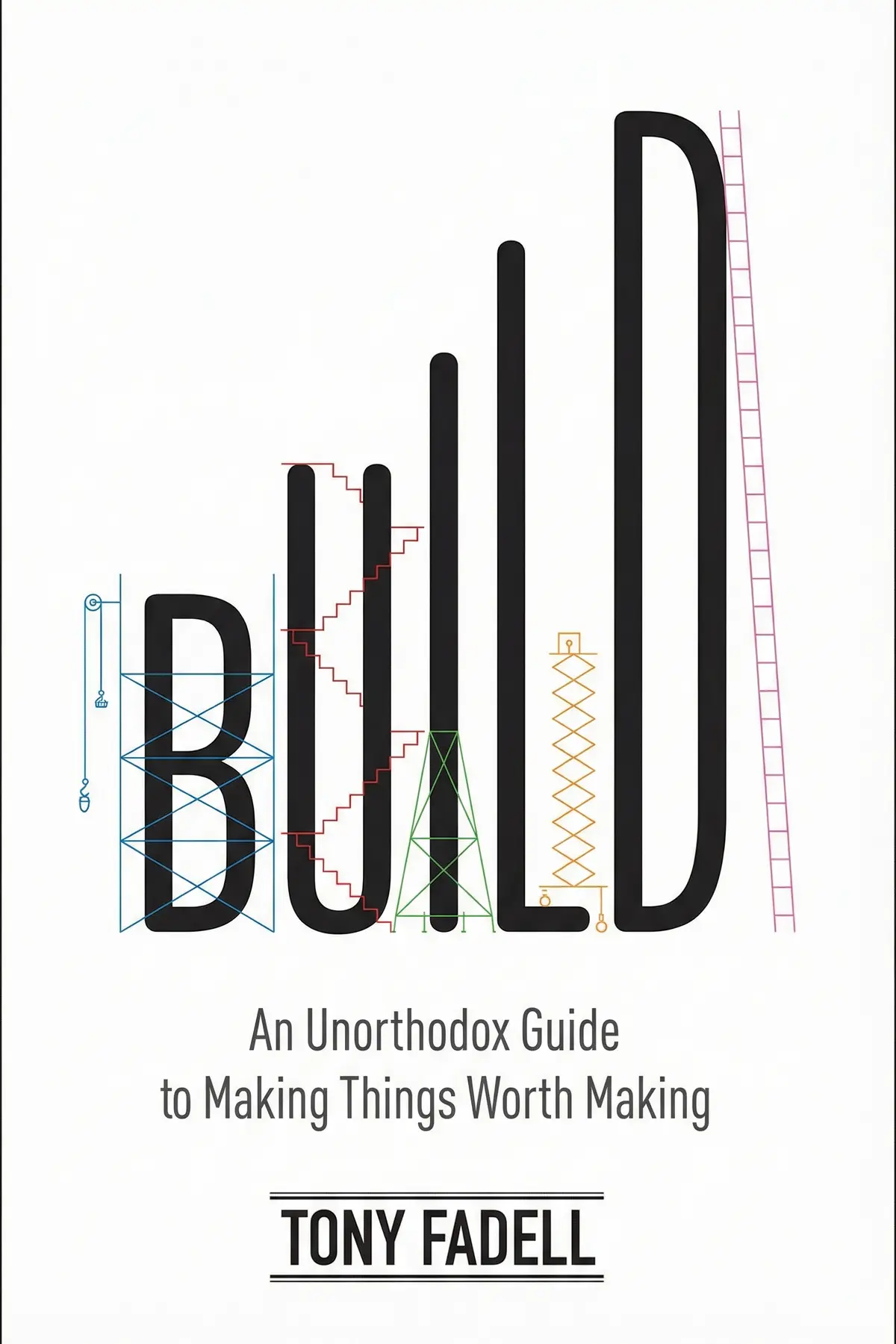
Table of Content
1. Introduction
1 min 02 sec
Plenty of people with an idea or a new team lie awake at midnight, wishing they had a mentor to call and knowing they don’t have one. In Build, Tony Fadell, who worked on the iPod and the iPhone and later co-founded Nest, sets out to be that mentor. His first lesson comes from his own failure: the company where he spent four years made a smartphone in 1994, and almost nobody wanted it.
That flop taught him more than caution. Across his career, Fadell argues, things worth making come from people who care about every detail at every stage, from the first job to the CEO’s chair, and who refuse to accept mediocrity anywhere. What follows is his playbook for each stage: a three-part test for ideas worth a decade, a way to sell any product by naming the pain first, interview tactics that expose difficult hires, and a case for canceling the free massages.
2. Spend your early career doing, failing and learning
1 min 53 sec
Years before Apple announced the iPhone, a small company shipped a phone with a touchscreen, apps and email, and it flopped. Fadell spent four exhausting years on it, and he calls that time a gift.
3. Pick ideas that work like painkillers
1 min 43 sec
Most ideas feel exciting for a week and then fade. Fadell uses a simple medical image to separate the ones worth a decade of your life from the ones nobody would miss.
4. Sell the problem before you sell the product
1 min 46 sec
Everyone remembers how Steve Jobs introduced the iPhone. Fadell points to the less famous minutes that followed, where Jobs did something any founder, marketer or employee can borrow for their next pitch.
5. Manage outcomes and let your team do the work
1 min 53 sec
Steve Jobs once inspected single pixels through a jeweler’s lens. Many would call that micromanaging. Fadell sees something else in it, and draws a sharp line between high standards and doing everyone’s job.
6. Build a team that can solve tomorrow's problems
1 min 55 sec
A 22-year-old with no thermostat experience became central to building Nest. Her story shapes Fadell’s hiring rules, including a blunt policy and an interview exercise that shows how candidates really think.
7. Read support pages to turn customer rage into delight
1 min 41 sec
Free meals, free laundry and free massages look like a generous way to keep people happy. Fadell argues they do the opposite, and that a leader’s attention belongs somewhere far less glamorous.
8. Conclusion
1 min 14 sec
Build reads like a long conversation with the mentor most people never had, and its advice changes shape as a career grows while its core stays fixed. Early on, care means throwing yourself into work you love and learning from what fails, as Fadell did with a phone nobody wanted in 1994. As a manager, care means setting the standard and trusting others with the method. As a chief executive, it means caring about everything, down to the help pages people read when they are angry.
The same test applies to what you build. An idea earns its years if it has a clear why, eases a real pain for many people and refuses to leave you alone. Tell its story by naming the frustration first. Write its press release on day one, and when the product matches that page, let it go.
Start with the stage you are at. If you are starting out, choose the job where you will learn the most. If you manage, begin the list of worries and ideas this week. If you run the company, read one support article yourself.
Nest took ten years to leave Fadell’s head. The care that got it out is the part anyone can copy.
About this book
What is this book about?
Most people building a career, a product or a company eventually hit a moment of late-night doubt and wish they had someone experienced to ask. Tony Fadell wrote Build to be that person. He draws on a career that began with a failed early smartphone at General Magic, ran through the iPod and the iPhone at Apple, and led to Nest and its learning thermostat. His advice follows the stages of a working life. Early on, he urges throwing yourself into work you love and learning from what fails. As a product maker, he offers a test for ideas worth years of effort: a clear why, a problem many people share, and an idea that will not leave you alone. He calls the best ideas painkillers, not vitamins. As a manager, he asks you to focus on outcomes and trust your team with the method. As a hiring manager, he shows how to probe candidates and build teams across generations. As a CEO, he argues that the job is to care about everything, down to the support pages, and to skip the free perks. Readers get a practical playbook for each stage, held together by one demanding standard: never settle for mediocre.
Book Information
Who it's for
Choosing what to build
Founders and product builders deciding which idea deserves years of their life.
First-time managers
New managers tempted to keep doing their old job instead of leading the team.
Early-career professionals and CEOs
Early-career professionals unsure whether to take risks, and CEOs weighing perks against standards.
About the Author
Tony Fadell
Tony Fadell is an American engineer, designer, entrepreneur and investor. He started his Silicon Valley career at the startup General Magic, then joined Apple in 2001, where he led development of the iPod's hardware, software and accessories and contributed to the first three versions of the iPhone. In 2010 he co-founded Nest Labs, which announced the Nest Learning Thermostat in 2011 and was bought by Google in 2014. He is credited with more than 300 patents, and Time named him among the world's most influential people in 2014.
Ratings & Reviews
Ratings at a glance
What people think
Listeners find this book loaded with practical lessons and view it as one of the finest business books ever published, offering significant value to entrepreneurs and those in the tech community. The author’s narrative style is lauded for its enduring anecdotes and capacity for weaving life stories, and the overall writing is well-regarded. Listeners characterize the book as deeply immersive, with one listener observing that it maintains interest starting from page 1, and they specifically value the focus on creating remarkable products and effective product development.
Top reviews
Prae
Finally got around to reading this and it’s easily one of the most practical manuals for builders I’ve ever encountered. Tony doesn't just talk about the glory days of the iPod or iPhone; he digs into the actual mechanics of how to navigate a career from a junior engineer to a CEO. The structure is fantastic, numbered like software versions, which makes it feel like a reference guide you can return to when you hit a specific roadblock. While some might find his 'mission-driven asshole' persona a bit much, you can’t argue with the results. He provides a masterclass in how to stay focused on the product when everything else is trying to distract you. It’s opinionated, aggressive, and incredibly engaging from the very first page. If you are trying to create something that actually matters in the world, this is the blueprint you've been waiting for.
Show moreRod
Wow. I didn't expect a business book to be this much of a page-turner, but Fadell’s storytelling is world-class. He takes you through the failure of General Magic and the high-stakes pressure of the Nest launch with such vivid detail that you feel like you’re in the room. The truth is, most leadership books are written by people who haven't actually built anything, but Tony has the scars to prove his points. I particularly loved the sections on 'Build Your Product'—his focus on the 'why' before the 'how' is something every entrepreneur needs to hear. He manages to weave life stories into actionable advice without it feeling forced or preachy. It’s an energizing read that left me ready to tackle my own projects with a renewed sense of urgency. This is a definitive guide for anyone in tech who actually wants to ship products instead of just talking about them.
Show morePetch
Ever wonder what it takes to actually disrupt an industry? This book gives you the unvarnished truth. Fadell’s 'Build' is less of a memoir and more of an advice encyclopedia that covers everything from quitting your job to managing a board of directors. I was particularly struck by his focus on 'the struggle'—he doesn't sugarcoat how difficult it was to get the first iPod out the door or the sheer volume of failures he faced before Nest became a household name. The writing style is punchy and direct, which I appreciated. No corporate buzzwords, just straight talk about what works and what doesn't. He emphasizes that if you aren't doing what you love in your old job, you're in the wrong place. This book is a shot in the arm for anyone stuck in a middle-of-the-road company creating middle-of-the-road crap.
Show moreChamlong
This is a rare look behind the curtain of the most influential products of our time, and it’s worth every penny. Most people know Tony as the 'father of the iPod,' but this book shows he’s also a master of business strategy and marketing. Frankly, the advice on how to pitch to VCs and how to handle a crisis is better than what you’d get in an MBA program. He breaks down complex concepts into digestible, bulleted chapters that respect the reader's time. I found myself highlighting something on nearly every page. His take on 'unorthodox' methods isn't just about being different for the sake of it; it's about being relentlessly focused on the end-user experience. It’s a masterclass in craftsmanship. If you’re serious about your career in tech, this should be required reading alongside the classics.
Show morePita
Gotta say, the chapter on 'Breakpoints' was a complete game changer for my current startup. Understanding that a company of 15 people operates fundamentally differently than one of 50 saved me from a lot of management headaches this month. Fadell writes with a sense of urgency that is infectious. He challenges the reader to stop settling for 'mediocre' and to put skin in the game. I loved the section on 'The Method to the Marketing'—it’s a reminder that even the best product in the world won’t sell itself without a compelling story. This is easily one of the best business books I’ve read in years because it’s so grounded in the reality of making things. It’s packed with timeless anecdotes and life stories that make the lessons stick. Truly an essential read for any entrepreneur.
Show moreNongnuch
As someone who has worked in hardware for a decade, I found Fadell’s insights into the 'break points' of a company—especially the shifts that happen at 18 and 40 employees—to be startlingly accurate. The book feels like sitting down for a beer with a mentor who has seen it all and isn't afraid to tell you when you're being an idiot. My only real gripe is the tone. Tony clearly prizes the high-intensity, work-over-weekends culture of the early Apple days, and at times it feels a bit dated in our modern era of work-life balance. To be fair, he’s honest about the cost of that success. It’s a dense read packed with applicable lessons on marketing, management, and design thinking. Even if you don't agree with his abrasive leadership style, the product development advice is pure gold. This isn't your typical fluff-filled business memoir; it’s a gritty look at the reality of innovation.
Show moreCee
Picked this up because I wanted to understand the transition from being an individual contributor to a manager. Fadell’s advice that you should spend 85% of your time managing once you move up is a tough pill to swallow, but it’s probably the most important lesson in the book. He captures the 'Gen X' startup energy perfectly—intense, demanding, and uncompromising. While I don't love the 'asshole' nomenclature he uses, I do respect his transparency. He’s not trying to be your friend; he’s trying to show you how to build a world-changing company. The anecdotes about Steve Jobs and the culture at Apple are fascinating, though they do highlight just how brutal that environment was. It’s a solid 4-star read because the product development framework is second to none, even if the personality behind it is a bit polarizing.
Show moreYok
After hearing Tony on several podcasts, I wanted to see if the book lived up to the hype, and for the most part, it does. It’s a deeply opinionated guide that doesn't care about being 'nice' or 'politically correct' in a corporate sense. Personally, I found the advice on how to build a team and how to be a CEO the most valuable, as those are the areas where most founders struggle. He has a very specific 'workaholic' perspective that won't appeal to everyone, but his track record speaks for itself. The book is well-designed, easy to navigate, and full of practical tips that you can implement immediately. My only criticism is that it feels a bit like a curated version of history where Tony is the hero of every story. Still, the quality of the advice makes it a must-have for your shelf.
Show morePia
The chapter on the different types of 'assholes' in the tech world was definitely the most memorable part of this book, though perhaps not for the right reasons. Look, Tony Fadell is obviously a genius when it comes to product, but his 'mission-driven' philosophy often feels like a thinly veiled excuse for toxic management. He treats business like a war zone where anyone not working through the holidays is just 'mediocre.' I found some of the advice on breakpoints and the 18-month rule for projects to be genuinely helpful for my own team coordination. However, the constant ego-stroking and the way he dismisses competitors as 'dumb' or 'vindictive' gets exhausting after 200 pages. It’s a strange mix of brilliant hardware insights and a dinosaur-like attachment to 'hustle culture.' Read it for the technical wisdom, but maybe take the leadership advice with a massive grain of salt.
Show morePrayoon
Not what I expected from an 'unorthodox' guide, as many of the takeaways felt quite traditional for the Silicon Valley set. Fadell is clearly a brilliant engineer, but the arrogance that permeates the text is hard to ignore. He spends a lot of time categorizing the people he dislikes and very little time acknowledging the incredible teams that actually executed his visions. Just as a 'coprolite scent' can ruin a good meal, the righteous tone here occasionally spoils the interesting stories about General Magic and Nest. To be fair, there are 'good bites' of wisdom scattered throughout, especially concerning project timelines and the necessity of making hard decisions quickly. It’s a useful book if you can filter out the ego, but it definitely paints a picture of a leader who would be incredibly difficult to work for.
Show moreQuestions about this book
What is the main idea of Build by Tony Fadell?
Fadell argues that things worth making come from people who care about every detail and refuse to accept mediocrity at any stage of a career. He offers mentor-style advice for each stage: learning by doing early on, choosing ideas that solve real pain, selling through the problem, managing outcomes instead of methods, hiring carefully and leading a company without coddling its staff.
What does Tony Fadell mean by painkillers versus vitamins?
Vitamins are nice to have, but you could skip them for life and never notice. Painkillers remove a problem quickly and visibly, so you feel it at once when one is missing. Fadell says the best product ideas are painkillers. They also need a clear why, must solve a problem many people share, and should be ideas you cannot stop thinking about, as with the ten years he spent on the thermostat that became Nest.
What is the virus of doubt in Build?
It is Fadell’s name for a storytelling technique he saw Steve Jobs use when unveiling the iPhone in 2007. First you remind people of something annoying or tedious in their lives. Then you let them wonder whether it could be better. Finally you show how your product solves it. Fadell says a product with a weak story can lose to competitors who tell a better one.
What hiring advice does Tony Fadell give?
Fadell recommends teams that span generations and backgrounds, from 20-year-olds with passion to 70-year-olds with wisdom. Include colleagues who will work with the hire, such as an engineer when hiring a designer. Nest refused arrogant, controlling or dismissive candidates. To spot them, ask why they left their last job and what they did about any problem, then solve a real workplace problem together at a whiteboard.
How can I apply Build to my own product?
Fadell suggests writing a press release for the product when development begins, highlighting what makes it stand out. When the product is nearly done, reread it. If the product roughly matches, release it instead of delaying for more features. Before committing to an idea at all, give it time and see whether it stays with you, and check that it eases a real pain for many people.
Readers also enjoyed

A Bigger Prize: How We Can Do Better Than the Competition
Margaret Heffernan





A Year with Peter Drucker: 52 Weeks of Coaching for Leadership Effectiveness
Joseph A. Maciariello


AUDIO SUMMARY AVAILABLE
Listen to Build in 15 minutes
Get the key ideas from Build by Tony Fadell, plus 5,000+ more nonfiction titles.
- 5,000+ titles
- Listen as much as you want
- 7-day free trial
- Cancel anytime









